



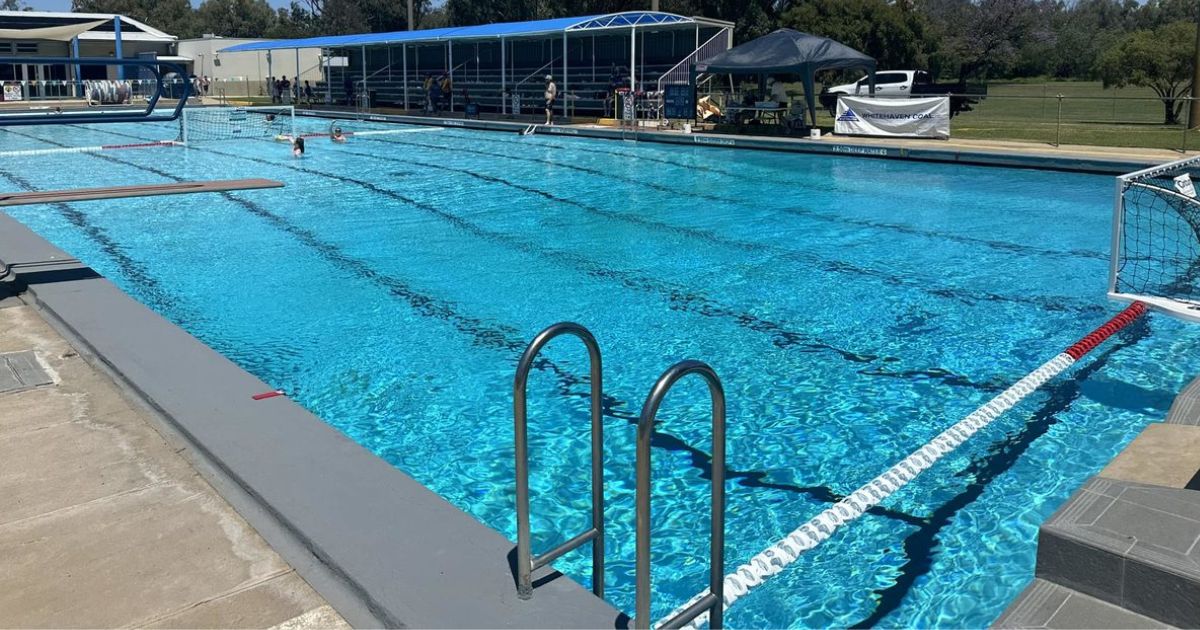
NARRABRI Shire Council has adopted an amended Aquatic Facilities Management Policy and Plan following extensive submissions by user groups and community members on the original draft plan tabled in April.
The Aquatic Facilities Management Plan supplements the policy by providing guidance on the day-to-day operations of the shire’s aquatic facilities in Boggabri, Narrabri and Wee Waa.
The 2026 draft Aquatic Facilities Management Plan responds to changes in legislation, industry standards, risk management expectations, and organisational accountability.


“It strengthens council’s ability to operate the aquatic facilities safely, consistently, and defensibly while reducing exposure to regulatory, legal, and operational risk,” the business paper states.
Concerns were voiced about increasing pool entry and lane hire costs as part of the submission process into the original plan.
The council’s general manager, Eloise Chaplain, told the meeting staff had been active and engaging during the submission period.
“The staff have been quite active during the submission period, engaging with community and having further meetings with different groups … particularly the water polo group … to make sure what we’ve got here is clear to the community,” she said.
“You can see some changes that have been made because of that.
“Mainly around clarity. And now we’re bringing it back to council for adoption.”
Mayor Darrell Tiemens queried staff about the cost of running the facility and said it was subsidised to about $2m per year.
Cr Tiemens said his conversation with other councils and mayors also indicated that Narrabri Shire was not alone in experiencing great cost in running aquatic facilities.
The council’s director of corporate and community services, Mark Watt, acknowledged Cr Tiemens’ concerns and said that swimming facilities were generally costly to operate.
“They consume a high level of electricity. They have a high level of … staff to man, monitor and to supervise those facilities,” he said.
Mr Watt said the operation of the facilities was also dictated by various guidelines.
He acknowledged that attendance at the aquatic facilities had seen an increase in attendance.
Mr Watt said the council was considering reviewing services across its operations, including pools.
Part of that includes looking at solar energy to assist in reducing electricity costs.
Cr Greg Lamont queried submissions previously made by community groups and if they were satisfied.
“I noted here there were no submissions after that. Did you have those discussions,” Cr Lamont queried.
“Yes, we did have our first initial meeting with … the water polo club,” Mr Watt said.
“That was, I felt, a positive meeting.
“They were very receptive to the points of discussion during that meeting.
“And we continue to talk to that group … to address their concerns.”
Mr Watt said staff have further meetings they want to hold with other specific user groups.
Cr Ryan Whillas noted that community engagement had been undertaken as part of the process.
“There have been changes … slight changes … as you noted, which is really great to hear,” he said.
“It’s great to show that we are listening to the community.
“It’s great to see that engagement in the community.
“That’s why these go on display.”
Cr Tiemens also acknowledged the feedback received.
“We don’t always get a lot of feedback from people,” he said.
“But it was good to see the community engaged in this particular matter.
“Swimming, and swimming lessons, are so important.”
Cr Lamont concluded the discussion on the matter saying that the council had demonstrated how the process works.
“They raised issues, we sat there with them and spoke about those issues, and we’re going to continue that engagement which is a positive,” he said.
“Running swimming pools are a cost loser wherever you go.
“Whatever usage we can get, we should be encouraging and adjusting our fees to satisfy all stakeholders.”
To order photos from this page click here