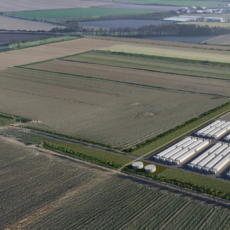




PFAS levels in Narrabri’s town water supply have remained stable in the latest round of testing.
Results from testing carried out on the Namoi reservoir show levels are well below the Australian drinking water guidelines.
PFHxS results returned a reading of 2ng/l, below the guideline of 30ng/l, and PFOS was 5ng/l, below the recommended 8ng/l.


PFOA and PFBS were undetected.
The Tibbereena Street bore continues to supplement water supplied from the Elizabeth Street bore.
The latest testing of the Elizabeth Street bore showed no detection of PFxS, PFOA or PFBS, with PFOS at 1ng/l.
The Tibbereena Street bore was at 2ng/l for PFOS, while PFHxS, PFBS and PFOA were not detected.
The Killarney bore remains switched off with testing continuing to show the bore above current guidelines.
Results from 21 July saw the bore at 29ng/l for PFHxS; 24ng/l for PFOS; PFBS at 6ng/l and PFOA at 2ng/l.
In its update, Narrabri Shire Council said the results show that the Narrabri town water supply continues to be safe for consumption.
Results for shire-wide PFAS testing was completed in late June, showing all other towns outside Narrabri are compliant, the council’s update read.
The Alma, Baan Baa, Bellata, Boggabri, Gwabegar, Maitland and Pilliga bores were tested as part of the regime.
As part of its latest update, the council also detailed work on PFAS projects.
Its infrastructure team continues to work on short, medium and long-term strategies to secure Narrabri’s water supply, as reported in this publication following the July council meeting.
Director of infrastructure Warren Faulkner provided councillors and the community with a PFAS update at the meeting, outlining the current status of water projects.
In discussing the temporary water treatment plant, Mr Faulkner explained the cost to treat the water supply significantly exceeded the funded amount received.
Therefore, the temporary plant would instead treat the PFAS-affected Killarney Bore only.
“We are getting some firmed-up estimates on what the cost is to just run off the PFAS-contaminated bore,” Mr Faulkner said.
“I’m pretty confident [the cost] will require us to go back to the minister to request some further funding to be able to bring that bore back online.”
In providing an update around the Saleyards Bore, Mr Faulkner said the water quality of the bore may require additional treatment before it’s added to the Narrabri water supply.
“We are now approaching the NSW health department to find out what that may mean and look like,” he said.
In response to a query from Cr Ethan Towns, Mr Faulkner outlined the costs for both a temporary water treatment plant as well as a permanent water treatment plant.
“The pre-construction estimate on 120 litres per second for a temporary water treatment plant to go into our reservoirs was $12m,” he said.
“A permanent water supply treatment plant to treat six megalitres per day, peak production, would be in the order of $30m to $40m.”
Mayor Darrell Tiemens also asked about the ongoing costs of running a treatment plant.
“The PFAS that comes out is still a contaminated material that needs to be disposed of. We cannot dispose of it to the tip. It has to be incinerated or taken to a facility in Queensland,” Mr Faulkner explained.
He added that the high iron and manganese levels also required additional filtering costs.
“If we don’t take that iron and manganese out before it goes through the filters, we can expect that by running 120 litres per second through it, it is in the order of $300,000 a year operating costs. For all three bores.
“If we do take out the iron and manganese beforehand, it’s probably in the order of $100,000. But you still have to include in the cost of taking out the iron and manganese.”
General manager Eloise Chaplain said the council’s infrastructure team was working hard on reviewing short, medium and long-term strategies.
“As soon as we have the rest of the figures, the rest of the strategies determined, essentially different options that we can do, different costings connected to each – what it means upfront, what it means ongoing – we’ll present that to councillors,” she said.
Cr Tiemens said he would re-approach the minister regarding the PFAS issue and additional infrastructure costs required, emphasising that it “shouldn’t be something that’s borne by the ratepayers”.
To order photos from this page click here