


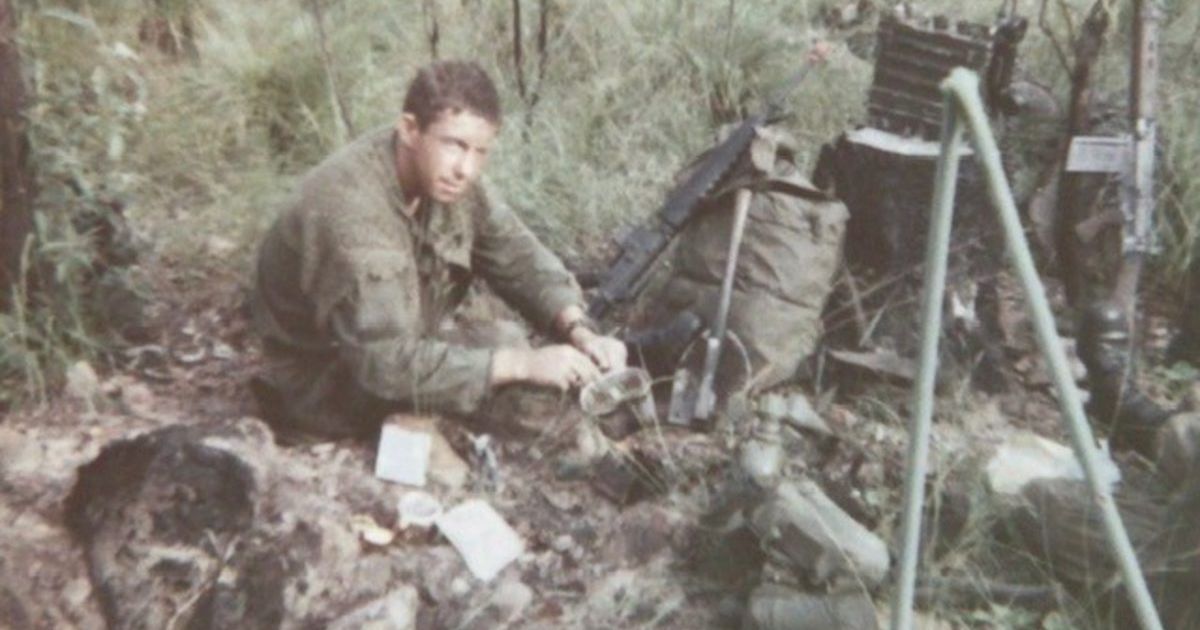
WE commemorate Vietnam Veterans’ Day on 18 August 2026. It is difficult to ascertain precise figures relating to Australia’s participation in this controversial war that divide the nation like no other. Around 61,000 Australians from all three services spent time in South Vietnam. More than 500 died on active service and over 3,100 were seriously wounded. Despite their low numbers about 40 per cent of these statistics were national servicemen.
To increase the strength of the Australian Army, the government introduced a national service scheme. All men turning 20 years of age were required to register under the National Service Act, with failure to do so carrying penalties that included imprisonment and a criminal record. Twice a year, from 1964 to 1972, a ballot was conducted.
Numbered wooden marbles, each corresponding to a birth date, were placed in a barrel and drawn in a lottery-style ballot. Those whose birth dates were selected were called up for national service. Many came to know it as the “death ballot”. Conscripted men were required to serve five years in the army – two years full-time followed by three years part-time in the army reserve. The first


11 of the 16 ballots were done in secret. Growing criticism and suspicion of secrecy of the ballot led to increasing pressure on the government to publish the birthdates. Each ballot was then televised. The Royal Australian Navy and the Royal Australian Air Force did not participate in this scheme.
In March 1966 the prime minister announced that national servicemen would be sent to Vietnam to fight in units of the Australian Regular Army. About 38 per cent of US troops were drafted (conscripted). New Zealand did not participate in a national service scheme for the Vietnam War.
More than 800,000 young Australian men registered during the period, of whom about 63,000 were called up and more than 15,300 went on to serve in Vietnam. The entry and exit provisions differed between the national serviceman (conscript) and the regular soldier (volunteer). The latter enlisted as a career choice. It was often said that the only way to distinguish a conscript from a regular soldier was the service number inscribed on their dog-tags. In every other respect they trained, served and fought together as one fighting force, without fear or favour.
In the early years, Australia’s participation in the Vietnam War was not widely opposed. As Australia’s commitment increased, more conscripts entered the conflict and casualties mounted. Of the 18 who perished in the battle of Long Tan, 11 were national servicemen. Vietnam became the first war that Australians could follow nightly on television. Graphic images and reports brought the realities of the conflict into family living rooms.
By the late 1960s, many Australians believed the war against communist forces was being lost. In the early 1970s, more than 200,000 people marched in Australia’s major cities in protest against the war.
Returning home from Vietnam was very different from the experience of those who returned from the first and second world wars. Many soldiers arrived home individually by air, often under the cover of darkness, and some have recalled leaving Sydney
Airport through a side or tradesmen’s entrance to avoid hostile demonstrations and intense media attention.
Some veterans reported being spat upon or splashed with red paint, while others were subjected to abuse and labelled “baby killers”. Many returning men were denied membership by the Returned and Services League of Australia (RSL) clubs and were told to come back when they participated in a real war. Although historians continue to debate how widespread such incidents were, there is no doubt that many Vietnam veterans felt unappreciated and isolated upon their return.
Little attention was given to the important civic works Australian servicemen also undertook in Vietnam, including constructing schools and buildings, drilling bores, erecting windmills and assisting with community projects, including an orphanage.
Those who returned by sea with their battalion had several days to unwind with their mates before arriving home. By contrast, many who flew home individually had been on jungle patrol only days earlier and had little opportunity to adjust from the stresses of combat to civilian life.
Many found their civilian jobs were in fact not protected under the National Service Act as promised and learnt that non-compliance by certain employers was never investigated.
Many Australians’ lives were permanently changed by the war. Some service personnel developed qualities such as resilience, discipline and leadership. Others carried difficult memories that made it hard to cope with stress and readjust to everyday life. Post-traumatic stress disorder was not identified under the wounded-in-action provisions as a war-caused disability to be awarded a campaign medal until 2022. The impact on conscripts and their families varied according to individual circumstances and the support they received.
In June 1973 the government passed the National Service Termination Act. The National Service Act 1951 and its subsequent amendments were later repealed by the Defence Legislation Amendment Act 1992. The government retained the power to introduce conscription under the Defence Act, but only in time of war and with the approval of parliament. The reforms sought to remove many of the anomalies associated with compulsory military service during the Vietnam war. At the time, the parliamentary secretary to the attorney-general, Peter Duncan, expressed the hope that repeal of the National Service Act would “remove this last vestige of an unhappy and divisive episode in our history”.
As we commemorate Vietnam Veterans Day, we honour all who served in Vietnam, remember those who made the supreme sacrifice, acknowledge those who returned carrying physical and emotional scars, and recognise the enduring support and sacrifices of their families.
Their service remains an important part of Australia’s military history and deserves to be remembered with gratitude and respect.
To order photos from this page click here