


For some, history, its documents and memorabilia, can be consigned to the rubbish tip.
Some examples noted recently include the fact that famed navigator and ‘discoverer’ of Australia Captain Cook’s letters to his wife of 50 years, Elizabeth, were put into a little fire and burned up by his widow after his death.
There are many stories of ‘Dad’s things’, photos and other personal historic items burned in the backyard after his death.


But our historic documents are valued by many.
Some treasures have been found at Narrabri rubbish tip over the years, thrown out as unrecognised or unimportant memorabilia.
For example, The Courier has an archive of photos recovered from the tip and brought in, people have found all sorts of interesting bits and pieces including colonial furniture.
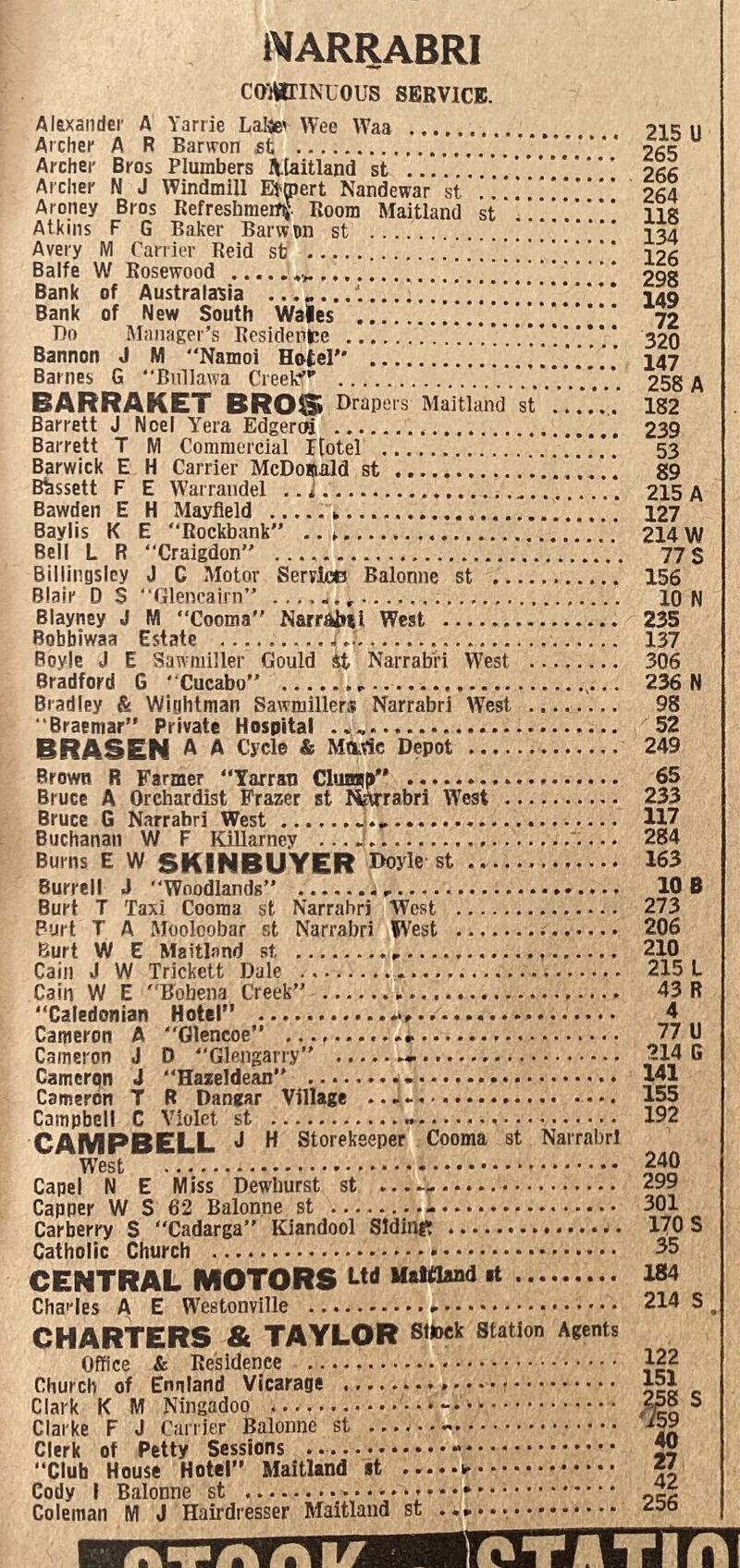
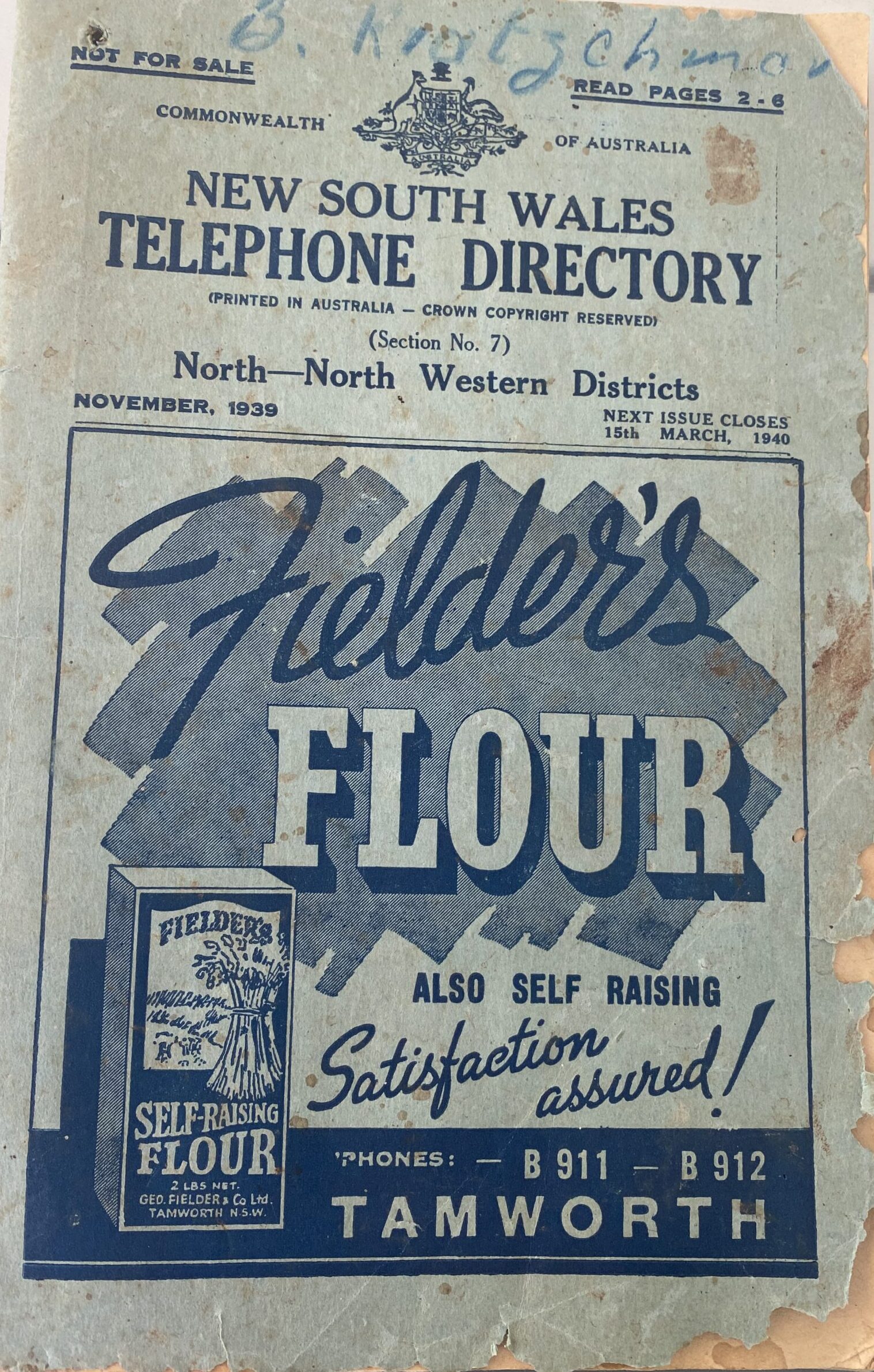
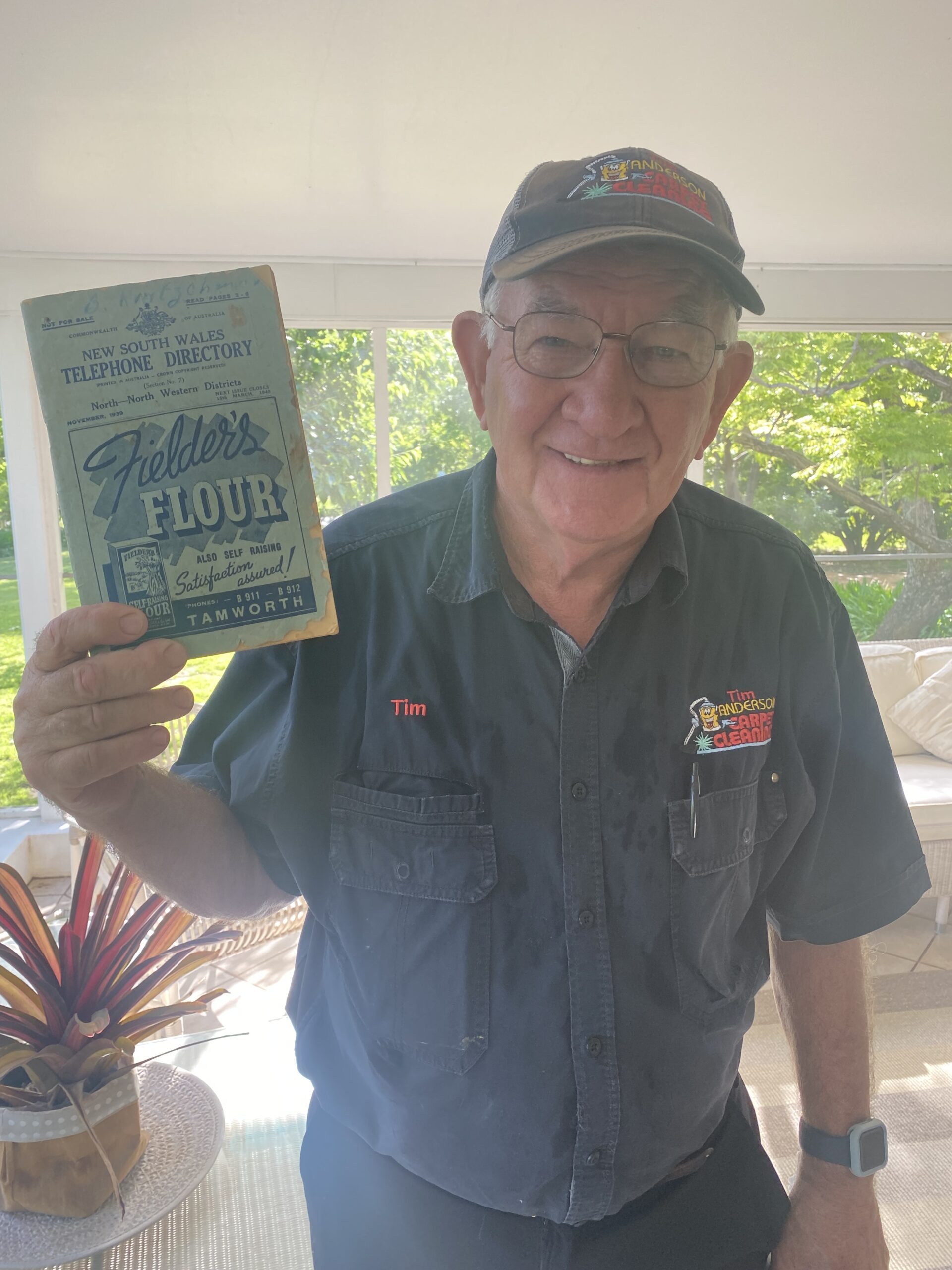
Narrabri’s Tim Anderson is a keen follower of years gone by and was pleased to find a piece of local history at the tip – the 1939 North West telephone directory.
He found it some 20 years ago, before the rules prohibiting ‘scavenging’ at the tip were imposed.
“The directory has a complete list of phone subscribers for all the North Western centres” said Tim “including of course Narrabri, Boggabri and Wee Waa and every small village exchange.”
Family names and businesses familiar with us today from more than 80 years ago fill the pages.
Edgeroi had one phone listing – the railway station- simply ‘1.’
The Courier also enjoyed a simple ‘1.’
The 1939 phone book has a name scribbled across the top – it’s hard to decipher but looks like B. Kratzchanar.
The vintage phone book will go to the Narrabri Museum.
For today’s mobile phone and internet communicator, the telephone system of the 1930s and 40s is a world away.
Those were the days of ‘telephone exchanges’ – ‘central’ – with operators plugging and unplugging leads into sockets to connect locals.
They could also offer helpful local advice if they knew so and so was not at home or could be contacted somewhere else by the caller.
The manual exchange, with ‘wind up hand sets’ to ring through to the exchange and wall mounted phones complete with separate speaking and listening ports, still remains fresh in the memories of many, as does the progress to dial phones and ‘automatic ‘phones and STD (not sexually transmitted diseases, the modern acronym, but subscriber trunk dialling.)
The 1939 North West phone book explains how to use what was even then a communication innovation not open to everybody.
The query “are you on the phone” didn’t mean ‘are you talking to someone’ it meant ‘do you have a telephone?’
Long distance, ‘trunk calls’ with a three minute time limit could be booked, with the telephonist helpfully warning when time was up and offering an extension.
‘Person to person’ calls could be booked so the caller only spoke to a specific listener and charged accordingly, three pence extra for calls of 100 miles or less and sixpence for calls further afield.
There was no quiet murmuring into the phone for the trunk calls, a strong voice was needed.
And overseas calls, an expensive rarity for private subscribers, needed to be booked ahead.
And of course, phones of the era were the vehicles for telegrams and lettergrams which could be dictated to the operator over the line.
There was always a degree of trepidation when the ‘telegram boy’ hove into view clutching a message to be delivered personally – it usually meant something urgent, for better or worse.
In the 1940s, for families with relatives on active service, it usually meant for worse.
The late RAAF Flt. Lieutenant Wal. McLellan recalled that his mother Ada McLellan received no less than three separate ‘ missing in action’ telegrams at her Gibbons Street home during the years he was on active service in Burma.
Fortunately, each was followed up with a confirmation Flt. Lt. McLellan was alive.
Read more local history stories here:
- What a beauty! A piece of history restored for Wee Waa
- A special tribute to days gone by
- People and places: Liz Campbell