


Rural towns including Narrabri, Wee Waa and Boggabri could be forced to compete with the likes of urban and peri-urban centres such as outer areas of Newcastle, Sydney and Wollongong when it comes to recruiting doctors.
As of July, the federal government policy in relation to the supply of general practitioners shifted to include larger regional centres and some outer metropolitan areas to its priority classification.
Concerns have been voiced by parliamentarians and health officials that the change will make it harder to attract doctors to rural areas.


Federal Member for Parkes Mark Coulton described the Labor government’s policy shift as an attack on regional Australia that would see doctors from more remote and regional areas flocking into more highly populated areas.
“That is because of changes to a program that was designed to give an advantage to regional towns and to allow those regional towns to draw from a broader pool,” Mr Coulton told members of the House of Representatives in Canberra last week.
“Now we’re going to see those doctors sucked into peri-urban and larger regional areas and probably end up working in larger ‘churn through’ medical centres.”
The Distribution Priority Area classifications use a system called the Modified Monash Model, which breaks up the designation of areas from MMM1 to MMM7 based on their location.
Metropolitan areas are classified as MMM1, while peri-urban areas near major metropolitan centres are MMM2. Larger regional centres, including Tamworth and Armidale, fall into the MMM3 classification.
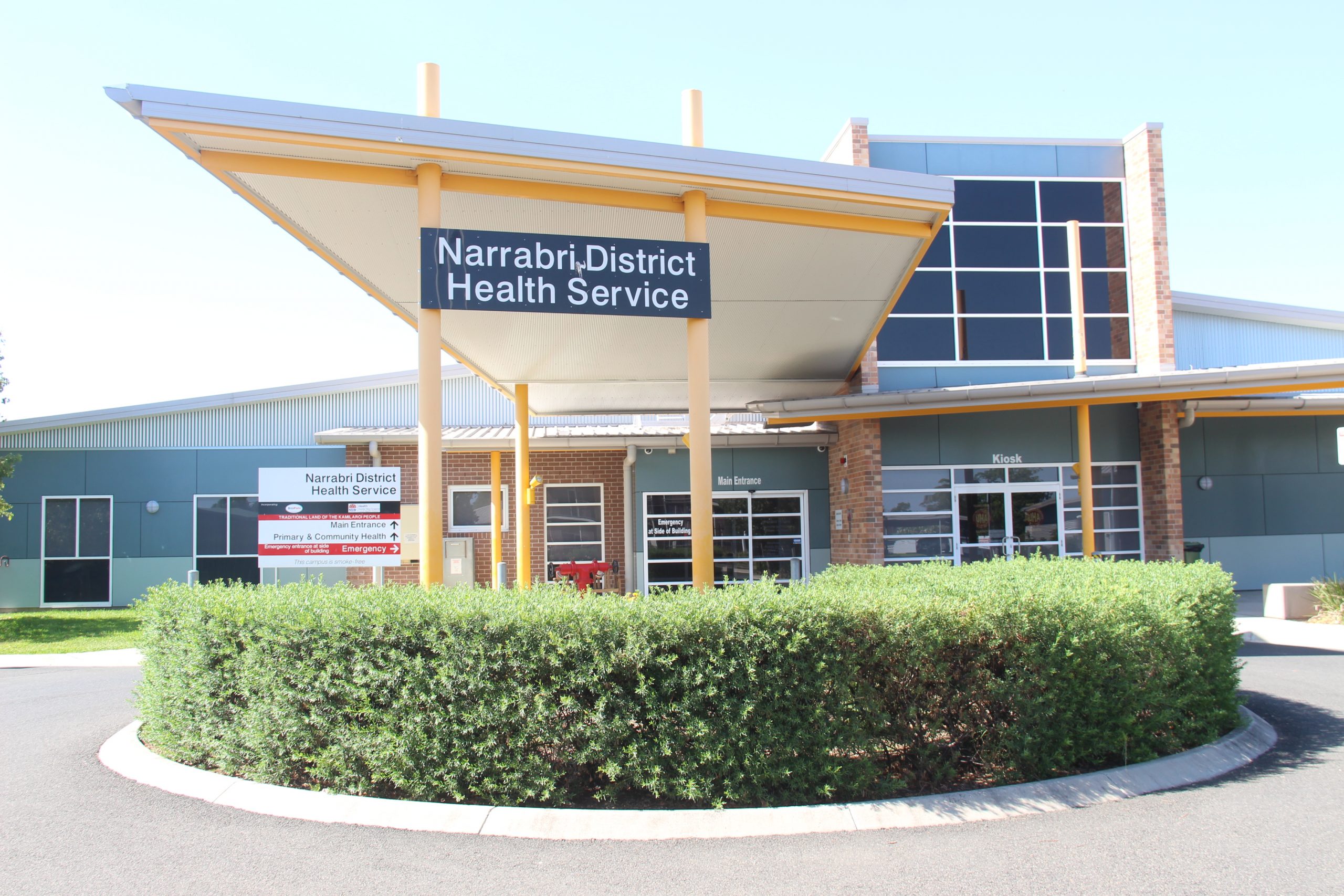
Narrabri is classified as MMM4, which includes smaller regional centres. More rural areas, including Boggabri and Wee Waa, are MMM5, while Walgett and western communities are MMM6. The most remote parts of NSW are MMM7.
These classifications also determine the incentives and support for general practitioners.
“If you’re a woman in Bourke and you want to have a baby, the nearest birthing centre is Dubbo. That’s four hours drive one way,” Mr Coulton told parliament when voicing concerns about the change in policy.
“If you haven’t got a doctor in Bourke so you can have prenatal care and care for your young child, that is a serious concern.
“We had these distribution priority areas so that towns like Bourke and Brewarrina and Nyngan could give doctors an incentive.”
The Rural Doctors Association of Australia has also spoken out about the shift in policy that would put regional areas at odds with larger regional and city locations.
The association said that they are not only hearing reports of doctors already resigning but are seeing ads by recruitment agencies and large corporate medical practices seeking Overseas Trained Doctors (OTDs) to relocate.
Association president Dr Megan Belot said that the policy change was a travesty and will see many rural and remote communities left without care.
“There has been a long-standing policy that required OTDs, who want to live and work in Australia, to spend time caring for rural and remote communities (classified MMM3-7) before receiving an unrestricted Medicare provider number,” Dr Belot said.
“Labor has scrapped this requirement by adding all large regional centres (MMM2) and some outer metro areas (MMM1) to the Distribution Priority Area (DPA) classification.
“As quickly as it was announced, city medical practices started targeting doctors in rural areas to move to cities including Canberra, Hobart, Sunshine Coast and Wollongong.
“At RDAA we had a direct call from a recruitment agent looking to reach rural doctors with their job advert for positions in Canberra.
“This is exactly what we warned Minister for Health Mark Butler of before the election, and we are horrified to now see it evolving exactly as we were concerned that it would.”
Dr Belot said at a minimum, practices in areas that are classified as large regional and outer metro (MMM1-2) should be restricted from recruiting OTDs domestically, protecting the investment already made by medical practices in real rural locations (MMM3-7).
The Royal Australian College of General Practitioners warned that the federal government policy changes aimed to boost GPs in regional and outer metro areas will see GPs leaving rural and remote communities.
RACGP president Adjunct Professor Karen Price said the change would likely have unwanted consequences.
“As Australia’s largest representative body for GPs in rural and remote Australia, addressing the GP workforce shortage in rural and remote communities across the country is our top priority,” she said.
“Earlier this year, we welcomed the previous federal government’s decision for MMM3-7 locations to be automatically reclassified as Distribution Priority Areas.
“However, we warned at the time that we would not support it being further expanded to MMM2 areas because of the risk that this will pull doctors away from more rural communities that need them.
“Robbing Peter to pay Paul will not solve the GP shortage in communities across Australia. And that is what the unintended consequence of this policy will be, it will draw GPs from more rural areas to MMM2 areas.
“The GP shortage is an extremely complicated problem, and there is no quick fix solution. We need more medical students choosing general practice as their career – currently only around 16 per cent of graduates are choosing GP training.”
Announcing the change in policy in July, the federal government said it was delivering more GPs for areas in need.
Minister for Health and Aged Care Mark Butler said the Albanese government is delivering on one of its core election commitments to make it easier for thousands of Australians in outer suburbs and regions to see a GP.
“The previous government neglected our hardworking GPs for more than a decade, with regional Australia suffering the most from their inaction,” he said.
“I am proud to be able to quickly deliver on our election commitment to provide more doctors for regional Australia. These much-needed GPs will be able to move into these areas of need and get to work immediately, providing Australians with essential care close to home.”
Areas such as Cairns, Townsville, Kiama, Torquay and Two Rocks, among others, will now be DPA classified.
Areas with chronic GP shortages such as the NSW Central Coast, Caboolture, and Narangba – Burpengary catchments will also be given priority DPA access.
To order photos from this page click here