


The endangered Shark Bay bandicoot is adapting to a feral predator-free life, almost two years after the species was reintroduced to Pilliga State Conservation Area.
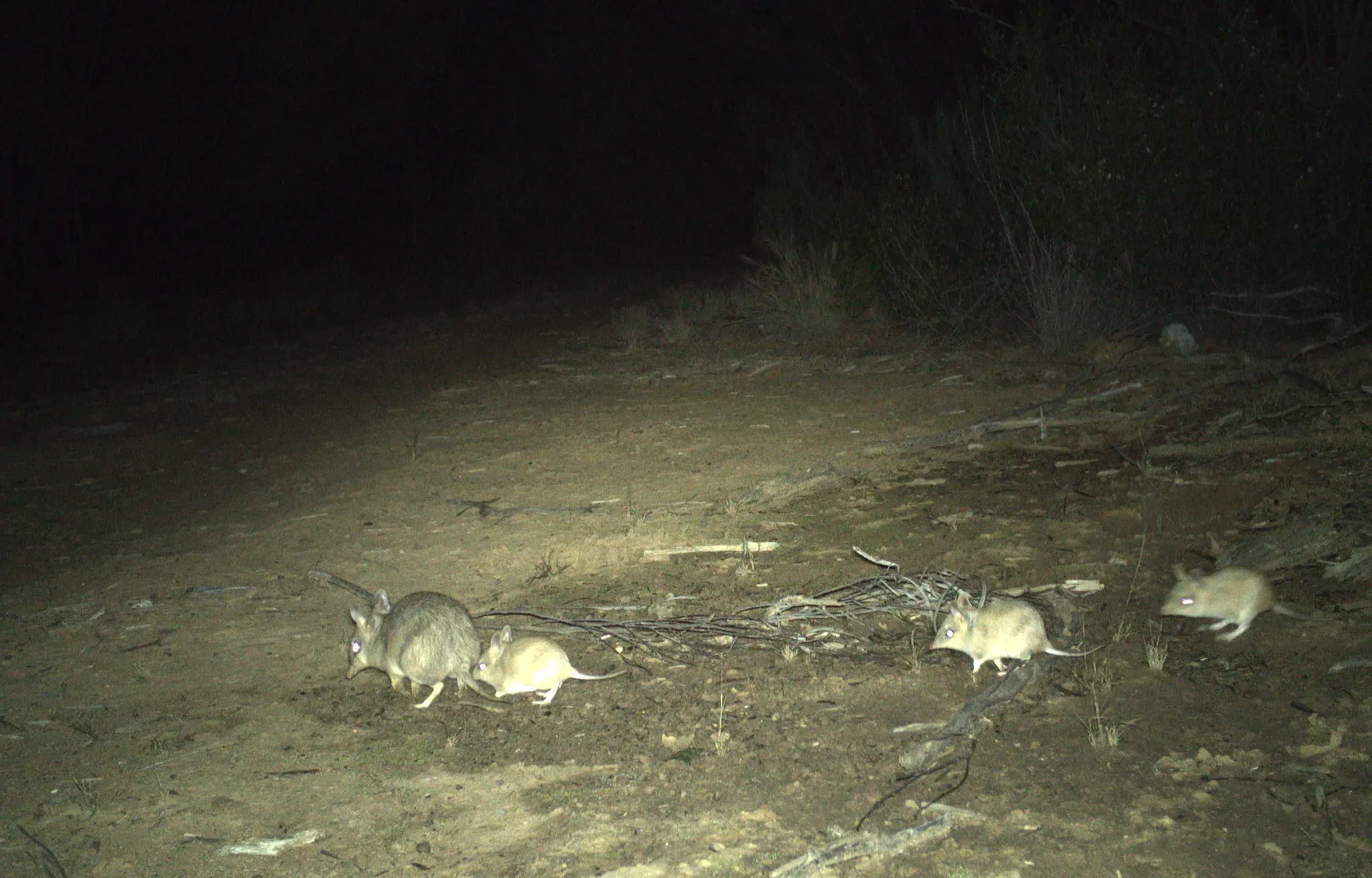
A recent photograph of a female bandicoot with three young at foot inspired confidence amongst ecologists who have closely monitored the species since it was flown 3000 kilometres from Western Australia.
The reintroduction in August 2023 was conducted by Australian Wildlife Conservancy (AWC) in partnership with NSW National Parks and Wildlife Service as part of a program to restore at least six regionally extinct mammals to a 5800 hectare feral predator-free exclosure.


Maisie Duffin, AWC field ecologist, said the bandicoot family portrait is one of many signs that the population is experiencing a smooth transition to its new home.
“It definitely made our day seeing the photo of the three young bandicoots scurrying to keep up with their mum,” Maisie said.
“We were sifting through thousands of motion sensor camera images when we came across that gem.”
“Aside from being completely adorable, it gave us great confidence that the bandicoots are breeding and that the population in the Pilliga is growing.”
Sixty-six Shark Bay bandicoots (also known as Western Barred bandicoots or Marl) were part of the original cohort released to the Pilliga.
Prior to their arrival, the bandicoot had been absent from the wild in the north west of NSW for more than 150 years, driven to extinction mainly due to the impact of introduced predators such as cats and foxes.
During a post-reintroduction trapping survey in August last year, ecologists captured 85 bandicoots, 44 of which were born in the Pilliga.
While most of the bandicoots captured were adults, more than half of the females (68 per cent) lured in by bait balls of peanut butter, oats and fish, were in breeding condition.
“Having been involved in the initial reintroduction of Shark Bay bandicoot to the Pilliga, it is exciting to see them now breeding – a promising sign that they are well on their way to establishing a viable, self-sustaining population,” said David Kelly, manager, threatened species for the National Parks and Wildlife Service.
Ecologists will continue monitoring the bandicoots over the coming years to track the status and trajectory of the population.
The team is also expecting to capture more bandicoot pictures through the permanent deployment of motion sensor cameras across the fenced area.
The bandicoot development marks an exciting chapter for AWC, which has a base in Narrabri, after recording a promising increase in bilby numbers in the Pilliga.
Earlier this year, the AWC reported that ecologists had been witnessing a bilby burrowing frenzy.
The prolific foragers and diggers play an important role as ecosystem engineers, turning over 20 tonnes of soil annually through burrowing and digging for food.
Their digging improves water infiltration and creates fertile microhabitats where plant seeds can germinate.
“The bilbies with their engineering colleagues, the bettongs, have turned over a lot of soil in their search for food and when digging burrows,” said senior wildlife ecologist, Dr Vicki Stokes earlier this year.
“These activities will improve the ecosystem health of the Pilliga forest over time.”
During a recent population survey in the Pilliga, the team encountered several baby bilbies.
“Two of the female bilbies had tiny baby bilbies (called joeys) in their pouches,” Dr Stokes said.
“We’ve also had increasing bilby activity on motion-sensor cameras across the fenced area, indicating that the population is doing well.”
To order photos from this page click here