


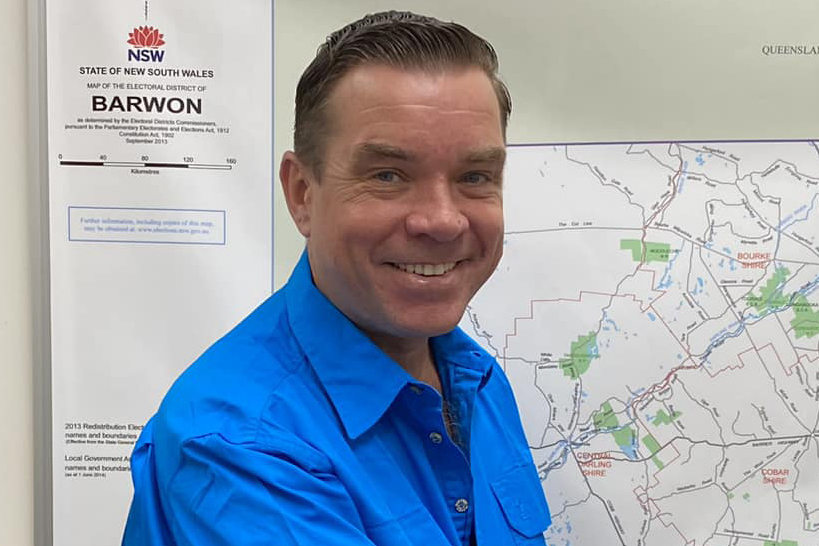
After a bit of time on the road, heading out to Narrabri, Lake Cargelligo and the Hilltop Shooting Complex, in the Southern Highland, I was back in parliament last week for the first of two consecutive sitting weeks.
It was a busy one, with a few pieces of important legislation going through, meetings, committees and events to attend.
Between the sitting weeks I took part in the Wall to Wall Ride for Remembrance, an annual event paying tribute to police who died in the line of duty or while on service, which was especially poignant after the recent events in Porepunkah, Victoria, where two officers were killed and the death of an officer in Tasmania back in June.
After parliament rises, next week I will be back on the road again starting with the Running on Empty Festival out at Cobar.
Narrabri Shire Council
There are 13 councils (and the Unincorporated Area) in my electorate. My team and I are in regular contact with all of them, but it is always good to get out and meet with them face to face. Getting around to all of them takes time, but over the course of the year I generally manage to drive out and meet with all of my mayors and councillors.
In the first week of September, I met with Narrabri Shire Council. We discussed some of the things that they have been working on, and concerns that they have – including the costs of facilities needed to deal with the provisions of the Companion Animals Act, abandoned cars in the shire that are not on council land, as well as PFAS contamination with two of their water supply bores.
These are issues on which my team and I are working with the council. One of the key elements of the relationship between local members and councils is communication and meetings like this are an important way for the council and I to exchange information.
Second dwellings on rural properties
Rural property owners generally run into obstacles when they are looking for approval to build a second dwelling on their land. I have heard stories about people having to decommission a bathroom or a kitchen in an existing home, or having to demolish it altogether, to clear the way for approval to build another home on a property. Given that we have a nation-wide shortage of
housing, and that the costs of building new homes have gone up with the cost-of-living crisis, this seems wasteful and illogical.
On August 6 a Select Committee on Rural Housing and Second Dwellings Reform was established, chaired by John Ruddick MLC, to look into making it easier for owners to construct a second dwelling.
This is not an attempt to turn rural landowners into property moguls, we are only talking about allowing farmers to house workers, or other family members or to provide a supplementary income through short-term or long-term rentals.
The inquiry is looking for submissions from people with a knowledge of, or interest in, second dwellings on rural land.
Filming traffic accidents and posting online
When a young person died in a traffic accident in August, we heard an appalling story about a person taking out their phone, filming the scene of the accident and posting it online. The terrible consequences of the actions of the person who filmed the accident were that some of the family and friends of the young person who passed away only found out about the accident by seeing that footage on social media causing them a great deal of distress, compounding the trauma and grief they experienced.
Even worse, the person who filmed the incident tried to earn money from that footage. These details were revealed in social media chats at the time with people talking about how “abhorrent”, “disgusting”, and “depraved” it was to film a person who was dying and to post it online. There were even calls for the woman to be charged, but there is no way for police to take any action because technically such behaviour is not illegal.
Recently in parliament I delivered a Private Members Statement about filming traffic accidents and posting the footage online.
We are not talking about censoring the legitimate collection of news, only the widely shared opinion that such behaviours should be discouraged or in some way made illegal. There may be good reasons for people to film others at the scene of an accident, but most people agree that it is offensive, disrespectful and an invasion of a person’s privacy at a moment when they are vulnerable, to be filming people who are injured, dying or dead. It is also an affront to the friends, families and loved ones when they find out about the death of someone they know in a social media post.
I have been talking to the Attorney General to see what can be done in legislation to stop people pulling out their phones at the scene of accidents and posting it online.
Wall to Wall Ride for Remembrance
I spent ten years as regional manager of the Western Region of the NSW Police Force, and in that time I really got to know the impact of the death of an officer in the line of duty, or died as a result of their service.
Part of my job was to organise the Wall to Wall Ride for Remembrance, an event that sees thousands of police on motorcycles converge on Canberra to meet for a service at the National Police Wall of Remembrance. I take part every year I can. There was a strong turnout this year, three names were added to the wall – Detective Leading Constable Neal Thompson and Senior Constable Vadim de Waart-Hottart, the officers recently killed in Victoria, and Constable Keith Anthony Smith, who was shot in Tasmania in June.
Money raised by the event goes to Police Legacy, looking after the families of officers who went to work but never came home.
To order photos from this page click here