



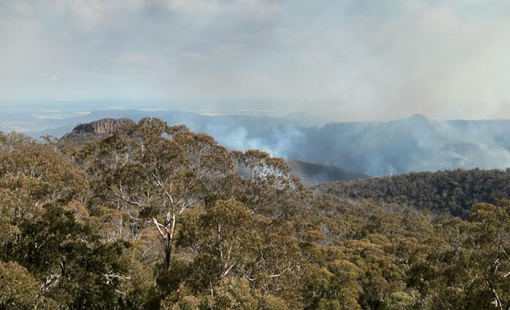
National Parks and Wildlife Service, with support from the NSW Rural Fire Service, has successfully completed a major hazard reduction burn west of Scutts Hut Fire Trail and south of Kaputar Road in Mount Kaputar National Park near Narrabri.
Several months of detailed planning — including environmental assessments, mapping of threatened species and ecological communities, community engagement and extensive on-ground preparation — culminated in the safe and effective completion of the operation.
The 7215-hectare burn was conducted in a rugged volcanic landscape where wildfires have historically been large and intense.


NPWS Northern Inland director John Whittall said the successful hazard reduction burn is a vital step in protecting both Mount Kaputar National Park’s unique species and the surrounding communities.
“By reducing fuel loads in this rugged volcanic landscape, we’re helping to minimise the risk of severe wildfires in the future,” he said.
“Large-scale burns like this are only possible through strong collaboration between NPWS and the Rural Fire Service. Together, we’ve delivered a safer environment for residents and visitors, while
preserving the park’s incredible biodiversity.
“We thank the community for their patience and ongoing support and encourage everyone to take the opportunity to experience this spectacular national park.”
The operation significantly reduced fuel loads, helping to protect nearby communities and conserve vulnerable species such as the brush-tailed rock-wallaby, pink slug, and Kaputar rock skink, as well as their unique ecological habitats.
The burn was coordinated by an NPWS incident management team in Narrabri and involved more than 20 NPWS personnel across the Northern Inland branch, supported by 10 firefighting appliances and a light aircraft.
To order photos from this page click here