


Narrabri Shire Council warned that a water sample had exceeded new PFAS thresholds which would come into effect in mid 2025 by late 2024.
In a submission to the state government’s Select Committee on PFAS Contamination dated November 27, 2024, council also outlined its concerns about the cost burden as a result of new guidelines and engaging additional resources to complete and verify testing results.
“In line with recent NSW Health advice, council has recently commenced a testing regime across its drinking water supply assets,” council’s submission read.


“The first analysis has revealed that one sampling location of the eleven in total has a minor exceedance of the new acceptable thresholds.
“This particular asset services the township of Narrabri. Given this exceedance, council is currently arranging for the site in question to be re-examined and retested to ensure data accuracy. The introduction of the new guidelines and applicable thresholds has created an additional cost burden which was previously unbudgeted. Council has needed to engage additional resources to complete testing and to verify those results.
“This comes at a significant additional cost on an already financially strained local government authority.”
Council also warned that a significant amount of community fear and uncertainty surrounds the issue of PFAS contamination.
“To assist in proactively managing community enquiries, and generally raising community awareness, careful consideration should be given to the creation of additional readily accessible and centralised information resources for the community and water authorities, including those of a technical nature,” council’s submission read.
Prior to the new water guidelines relating to PFAS chemicals coming into place in July, council’s water testing had been within the previous guidelines.
The revised guidelines meant that PFOS could not exceed 8 ng/l, PFOA 200 ng/l, PFHxS 30 ng/l and PFBS 1000 ng/l. The previous guidelines which came into effect in 2018
were 70ng/l, 560 ng/l, 70 ng/l and no value for PFBS.
Narrabri’s elevated PFAS concentration was also acknowledged in a select committee report handed down in September.
“Cases in which PFAS has affected water supplies in New South Wales are discussed in the following chapters with an exploration of the responses in each case, and where there could be improvement including in the areas of monitoring, testing, reporting, precautionary advice and remediation,” the select committee’s report read.
“2024 PFAS screening of drinking water conducted by regional LWUs and supported by NSW Health, which discovered elevated PFAS levels in Tarcutta within the Wagga Wagga City Council local government area, Narrabri within the Narrabri Shire Council local government area and Warialda within the Gwydir Shire Council local government area.”
One of the report’s recommendations was that the state government support PFAS blood testing for willing participants in local government areas including Narrabri “where elevated PFAS levels are found in drinking water supply systems”.
“Of 83 local water utilities tested in 2024 under the program supported by NSW Health: One, in Warialda, returned results that did not meet the ADWG [Australian drinking water guidelines] current at the time of testing; A further two – Tarcutta and Narrabri – returned results that did not meet the new proposed ADWG; and a further one returned a result level with the new proposed ADWG, with a subsequent result below the new proposed ADWG.
“The committee is deeply concerned at evidence that local water utilities (LWUs) are not resourced appropriately to address the PFAS contamination that has been detected in regional New South Wales including Warialda, Tarcutta, Narrabri and Dubbo.
“This is particularly the case in the face of the new Australian drinking water guidelines (ADWG) which set more stringent water quality standards and the associated water security implications of having water supplies cut off.”
Narrabri Shire mayor Darrell Tiemens addressed the matter on national television late last week, and said the issue of PFAS and water contamination was not unique to Narrabri and was being faced more broadly across the nation.
“Many towns are facing situations where they are finding PFAS in their water supply. PFAS is typically from firefighting foam and that’s what we believe to be the cause,” Cr
Tiemens told ABC News Breakfast.
PFAS – particularly PFOS and PFOA – stopped being used as active ingredients in firefighting foam by Fire and Rescue NSW in 2007.
Similarly, in 2007 the RFS commenced the removal and disposal of PFAS based foams. However, the prevalence of PFAS, known as a ‘forever chemical’, has been a significant issue in several locations across NSW and Australia.
“We’ve been working with the state government for about 10 months now. We’ve put out a lot of warnings within the last 10 months, warning them that if we weren’t taken seriously that we would be in a situation where we would be facing a water crisis,” Cr Tiemens said.
“In the last week or so, we’ve had the state government jump on in a major way and we’ve been given a grant to upgrade the pump in one of our bores but that doesn’t provide long-term resilience. We need that PFAS removed from our water supply.”
Cr Tiemens said if the contamination was a result of firefighting foam, which he described as the likely cause, then it would not be the responsibility of council to remediate the issue.
“There’s a general principle in law that if you mess something up, you clean it up,” Cr Tiemens told the national television news program.
“Our staff have been working like trojans over the last 10 months trying to escalate it up the line to try to get some action on this.”
State Water Minister Rose Jackson also addressed the PFAS contamination issue on 2Max FM late last week telling the community the NSW government was working closely with Narrabri Shire Council and Cr Tiemens.
“We’ve given some money to upgrade the existing pump that is still operational, the Elizabeth Street bore. Our view is if that can happen, that will increase the capacity of that bore by almost double which is great, that’s going to help a little bit. That’s not a long-term solution,” Ms Jackson told Anthony Welchman on air last week.
“There are two things that we can do. We can look for other bore sites, and we’ve dropped some test bores and unfortunately one of those sites came back PFAS positive so we’ve had to look at another one. Another one hasn’t which is good.
“Another bore, or more bores, is a long-term solution.
“Or a water treatment plant of some sort is a longer term solution too. We’d have to get that there, get it hooked up. That’s going to take a bit of time but we’re pretty urgently seeking options of where we might find one and how we might get it there.”
When pressed about it looking likely that a new bore could be operated, Ms Jackson agreed and said it was probably the best solution.
“The government will stump up money for that, of course,” Ms Jackson said.
“The mayor has been pretty clear that the council doesn’t have funds for that which we accept.”
Ms Jackson said the test bore site was looking good and would need a pump and to be connected to the town water supply system.
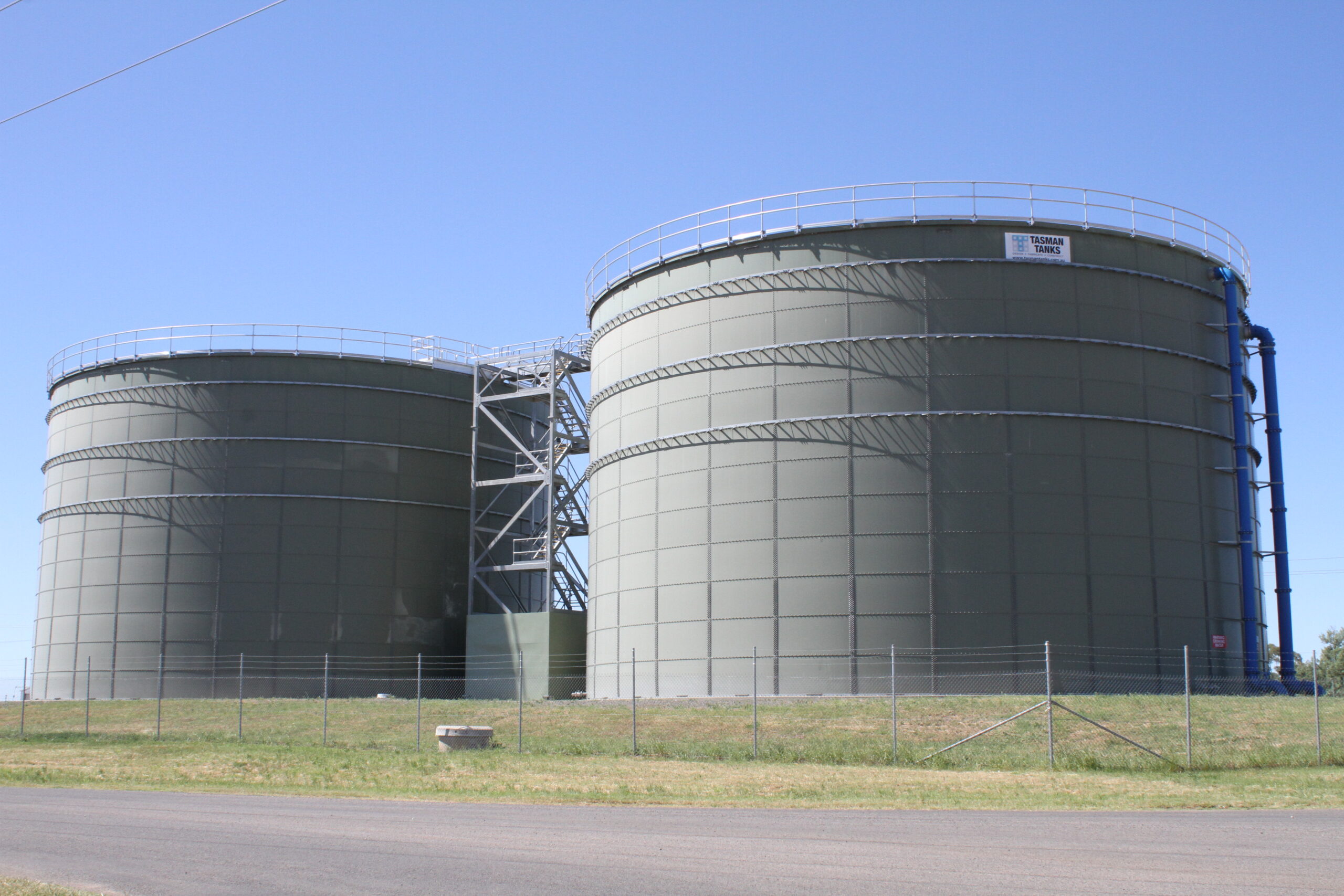
In a reservoir update earlier this week, council advised that work was ongoing, including upgrading the Elizabeth Street bore next week.
“We’ll continue to keep you informed as we move forward,” the update read.
State Member for Barwon Roy Butler said the scale and cost of tackling the water supply issues in Narrabri exceed the capacity and budget of nearly any council. Financial help and expertise from the NSW government are necessary, said the MP who was advised of the issue at a meeting with council in early September. “Narrabri Shire alerted agencies to the PFAS detection in November last year. I have real concerns as to why it has taken so long for action to be taken,” Mr Butler said in his fortnightly update this week.
“Narrabri is now on water restrictions, and there is no quick solution. With temperatures rising, this is not good enough for the community of Narrabri. Water security should be a priority for all levels of government.”
To order photos from this page click here