


Victor (Vic) Thomas Melbourne, farmer, innovator, pioneer of the Namoi Valley cotton industry, mentor to generations of growers, traveller, storyteller, father, grandfather and great-grandfather, passed away peacefully on October 4, 2025 at 94-years-of-age.
His life, stretching across almost a full century, mirrored the development of Australian agriculture and the extraordinary resilience of families who carved their livelihood out of the land.
Vic was not merely a witness to this transformation. He was one of the men who shaped it.


Born in Narrabri on February 19, 1931, Vic was the eldest son of Claude and Ethel Melbourne, née Hayne.
He was big brother to Leslie, who predeceased him, to his sister Edna, also deceased, and to his youngest sister Betty, who survives him.
All four children were born in a private hospital operating in Narrabri at the time, grounding the Melbourne family in the district from the very beginning.
Vic spent his early years on the family property, ‘Fairlight’, at Mulgate Creek.
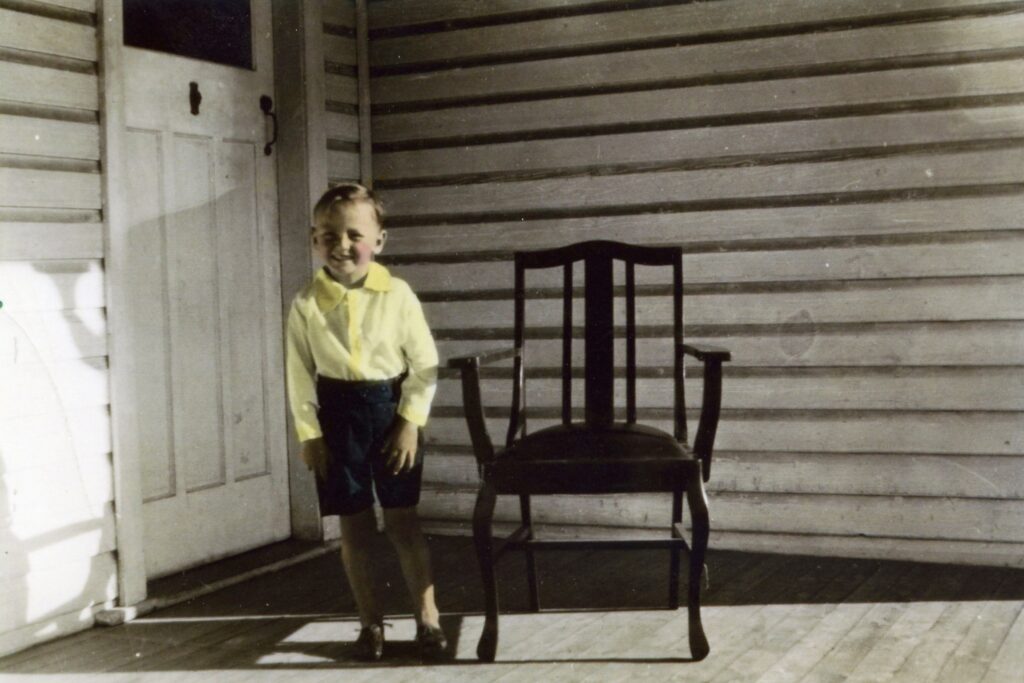
Vic Melbourne as a child.
This was a childhood framed by long summer days, freezing winters and the early responsibilities that often fall to country children.
‘Fairlight’ was a working property and a home which required contribution rather than indulgence.
Yet it was also a place of warmth, with wide verandahs, animals roaming freely, and the kind of rugged beauty that forms strong memories.
Education, though not easily accessed in rural New South Wales in the 1930s, was something Ethel insisted upon.
She supervised the children’s early lessons through correspondence, ensuring structure and routine even without a formal classroom.
When a temporary teacher, Miss Schaeffer, boarded at ‘Fairlight’ for a year, the children experienced their first taste of daily schooling.
This period coincided with the arrival of the 1st Australian Armoured Division in the district during the Second World War.
Vic later recalled the thunder of tanks near the property, the distinctive clanking of machinery, and the sight of soldiers training on nearby land.
He collected souvenirs, listened to military drills, and observed the world far beyond the boundary fences of Fairlight.
As Vic was ready to begin more formal education, Ethel collaborated with the neighbouring Scott and Bailey families to create a subsidised school under the guidelines of the NSW Department of Education.
These schools, hundreds of which existed across the state, provided teachers who lived with local families in rotation.
The first teacher, Miss Woods, arrived to guide the small group of students: Vic, Nora Scott, and Bruce and Laurence Bailey.
Lessons were held in an old cottage furnished with basic materials: a blackboard, a handful of desks, pencils, inkpots and a supply of paper.
The curriculum was simple but delivered with commitment.
Though resources were sparse, it was an environment where curiosity grew.
The subsidised school closed in 1937 when the Baileys moved away.
For a time, education for the Melbourne children again became uncertain.
Money was tight during the Depression and daily travel from ‘Fairlight’ to Narrabri was not feasible.
The solution was for Vic to live with his maternal grandparents, Thomas and Julia (Ann Julia) Hayne, at ‘Tibbereena’, west of Narrabri.
From their home he would walk or ride into school.
These journeys, often undertaken in the heat or cold, instilled in him a discipline and resilience that never left him.
Vic progressed to Intermediate schooling in Narrabri and was one of only two students in his year to matriculate.
This achievement reflected not only intelligence, but a drive for knowledge that shaped him for life.
From a young age, Vic devoured what he called his ‘periodicals’ – magazines purchased from the newsagency that covered everything from engineering to global agriculture.
These publications fed his imagination and planted ideas that later guided his approach to farming.
Among the stories discovered decades later in a salvaged tea chest from ‘Fairlight’ were two of Vic’s early school projects: The Cotton Industry in the Mississippi Valley and Watering the Desert in California.
These documents, tragically destroyed in the ‘Yarral’ homestead fire years later, revealed a young mind already captivated by the possibilities of large-scale irrigation and cotton production.
Alongside schooling, Vic learned the practical skills of farm life.
As a boy he ran rabbit trap lines at night with a hurricane lantern.
He quickly discovered the seasonal economics of the fur trade.
While lower-quality summer skins fetched little, he realised they could be held over until winter when prices were higher.
It was an early lesson in market timing that would serve him throughout his life.
As he grew older, Vic harnessed the horse teams before dawn so Claude could begin ploughing as soon as breakfast was finished.
He later operated the kerosene tractor into the night, recognising that lights were installed for a reason and that productivity could be doubled by extending the workday.
By the early 1950s, with his father’s support, Vic purchased ‘Yarral’, the property that became synonymous with his life’s work.
He examined the history of the farm and the Barker family who had settled it in the 19th century.
Records of the Gamilaraay language link the name Yarral to stone, and later European interpretation associated it with money.
With no significant stone on the property, the name may have been chosen as an aspirational gesture.
If the intention was prosperity, Vic certainly honoured that meaning through years of disciplined and strategic growth.
Later, Vic travelled to California with his close friend Bob Poore (dec.) on an agricultural study tour focused on irrigation.
The trip echoed the childhood project found in the tea chest and marked a turning point in his professional trajectory.
It exposed him to modern irrigation systems, large-scale water management and the potential of cotton as a commercial crop in arid regions.
This knowledge, combined with his own experience and insight, placed him at the forefront of cotton development in the Namoi Valley.
Of course, the trip also had moments of leisure: evenings listening to jazz in New Orleans, drinking Colt 45 beers, and adventurous nights in Las Vegas.
Those who knew Vic understood that the balance of hard work and enjoyment became a defining rhythm of his life.
In 1953 Vic met Valerie Turner in Sydney.
Their long-distance relationship, sustained over three years, eventually culminated in their marriage on September 15, 1956.
They honeymooned at the Gold Coast, which in those days held a sense of glamour and excitement.
Vic and Valerie welcomed Deb in 1958, Mark in 1963 and Michele in 1965.
Valerie’s death in 1968 was a profound and heartbreaking loss.
In the years that followed, Vic relied on the steady support of his sister Betty, her husband Frank, and the extended family.
Vic later met Cynthia Philips at the annual Bellata Matron’s Ball, a much-anticipated social event in the district.
They married on May 16, 1969 and welcomed Nigel in 1971 and Georgina in 1978.
Their marriage included years of farming, raising children and bouts of travel.
The honeymoon to Hawaii, North America and Canada was an adventure that fed Vic’s love of seeing new places.
Later travels through Ireland connected them to the broader Melbourne lineage, and journeys through Europe deepened Vic’s appreciation of history, culture and the traditions of other farming communities.
Some years later, Vic met Lee Magontier, beginning a relationship that brought renewed energy and companionship. They married on October 26, 1996.
Vic embraced his role in the life of Lee’s daughter, Jessica, and treasured the time they spent together, particularly the peaceful moments on the riverbank at ‘Yarral’.
Travel again featured in his life, with visits to London and a memorable train journey from Vancouver through the Rocky Mountains.
The dramatic scenery, waterfalls, forests and sweeping snowfields made a lasting impression on him.
Despite his appreciation for travel, the farm always exerted the stronger pull.
Vic often cut trips short when he sensed something needed attending to on the land.
Crops, weather and workers needed attention, and he took that responsibility seriously.
Vic was known for his discipline, his insistence on proper standards and his unrelenting work ethic.
At ‘Yarral’ he structured the month firmly: three weeks devoted entirely to the farm, followed by one week handling accounts, bills and business in Wee Waa and Narrabri.
Sundays were designated as days off only for the workers.
For the children, Sundays meant being packed into the Land Rover and driven to Upper Horton, where they would spend long days trekking through rugged country hunting
rabbits.
His son, Nigel, often recalled trekking after his father, learning to keep pace and absorbing the lessons embedded in those journeys.
Rainy days meant cattle work.
In the early years, with no cradle or crush and limited experience, injuries were common.
Over time, improved equipment and higher standards of stockmanship transformed operations.
Vic’s interest in cattle deepened and he eventually achieved great success, winning several Woolworths Carcass Competitions.
He was immensely proud of these achievements and spoke of them often.
Farming, however, was only one part of Vic’s life.
The social life of the district, particularly gatherings in Narrabri’s hotels on Friday nights, held a special place in his week.
Farmers would congregate first at the Namoi Hotel and later at the Telegraph Hotel when Frank Fish became publican.
Vic enjoyed these evenings, full of camaraderie, story-swapping and spirited debates.
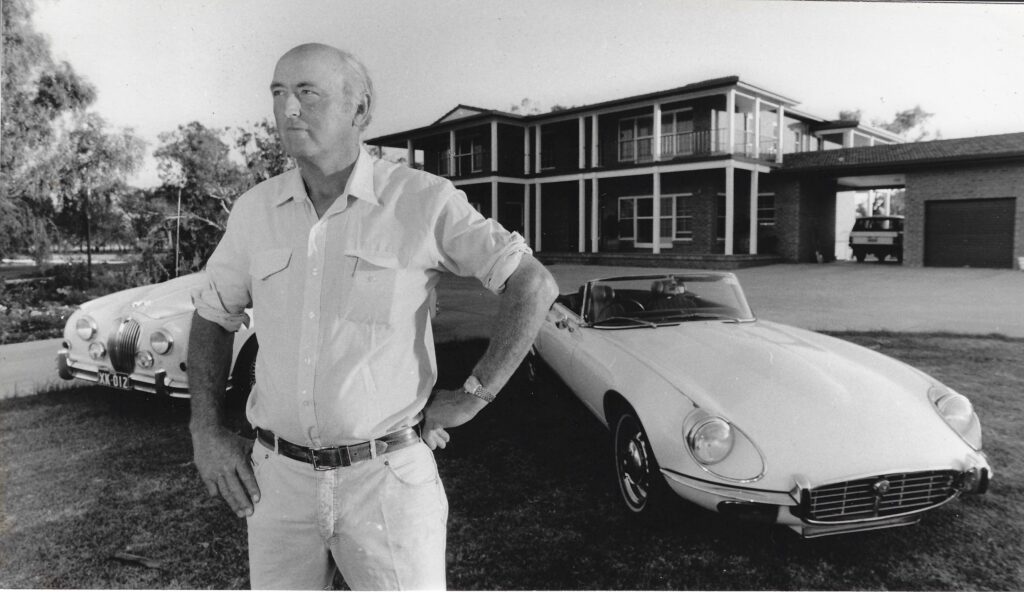
Vic Melbourne with two of his cars.
However, his love of fast cars meant he sometimes had to outmanoeuvre the highway patrol, particularly one officer determined to catch him.
Vic conducted reconnaissance drives in the old Land Rover before heading out in something faster.
Sometimes he succeeded, sometimes he did not, but the challenge delighted him.
He was not a man of flowery words, but his humour was dry and perfectly timed.
He taught through action, correction and the belief that people should learn by doing.
Deb remembered learning to drive in the old Datsun ute at the channel airstrip, instructed simply to drive up and down until she mastered the gears.
Tractor lessons unfolded the same way.
Vic would demonstrate the basics, then step aside with, “Righto, now get into it.”
Although firm, he showed affection in his own way.
Every grandchild, and later every great-grandchild, eventually reached the height that triggered one of Vic’s unspoken traditions, the hair-ruffle.
Once a child became tall enough, Vic’s large farmer’s hand swept across their head like he was checking the condition of a prize calf.
It was his quiet way of showing pride, affection and approval.
His grandchildren and great-grandchildren knew this gesture well and remember it with deep fondness.
Vic’s generosity extended beyond his immediate family.
He cared for people who worked with him and remained loyal to those who proved themselves.
Sally, recognised as his trusted right-hand woman, played a crucial role in keeping operations at ‘Yarral’ organised.
Vic valued her steadiness, loyalty and competence, speaking highly of her contribution to both the farm and his personal affairs.
In his later years, Vic reflected more deeply on his life and the people who shaped it.
He remained close to his sister Betty and her husband Frank.
The passing of Edna’s husband, Jim Foley, on the eve of Vic’s funeral was a poignant moment.
The presence of Edna and Jim’s children at the service was a testament to the depth of respect they held for him and the strength of family unity across generations.
The property Vic built into a thriving enterprise, ‘Yarral’, demanded hard work, strategic thinking and relentless focus.
Through droughts, floods, machinery breakdowns and fluctuating markets, he held firm.
He understood instinctively how to respond to seasonal pressures, how to anticipate challenges and how to turn opportunity into practical action.
He was a man who planned carefully, observed closely and acted decisively.
Vic’s ability to innovate set him apart.
As cotton machinery evolved, he embraced change and recognised the value of new technologies.
From the early days of two-row pickers and basket dump systems to the modern generation of round-bale pickers, he understood that efficiency and productivity improved only when farmers were willing to adapt.
His willingness to adopt innovation ahead of the curve meant that ‘Yarral’ remained at the forefront of cotton production for decades.
He was equally respected for his knowledge of irrigation.
Drawing from his travels in California and his lifelong fascination with water systems, Vic implemented practices that influenced farmers across the district.
He supported emerging growers, offered advice when asked and shared his insights without pretence.
Many attribute the growth and success of their own farming operations to the guidance Vic provided, either directly or by observing his methods.
His thinking, firmly grounded in experience, intuition and logic, played an important role in shaping the Namoi Valley’s cotton expansion.
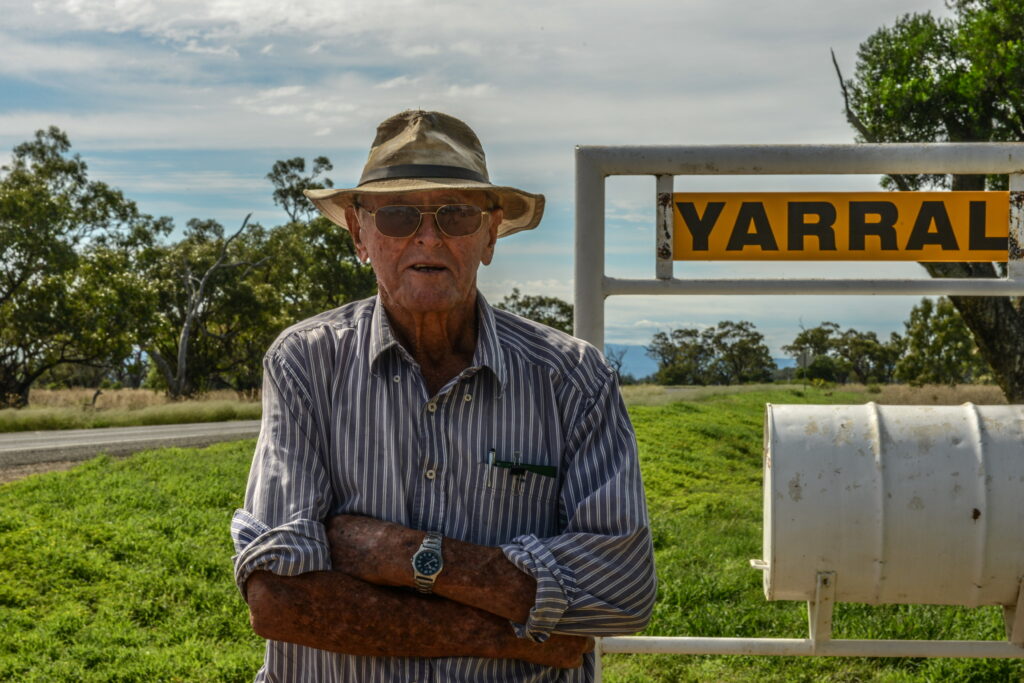
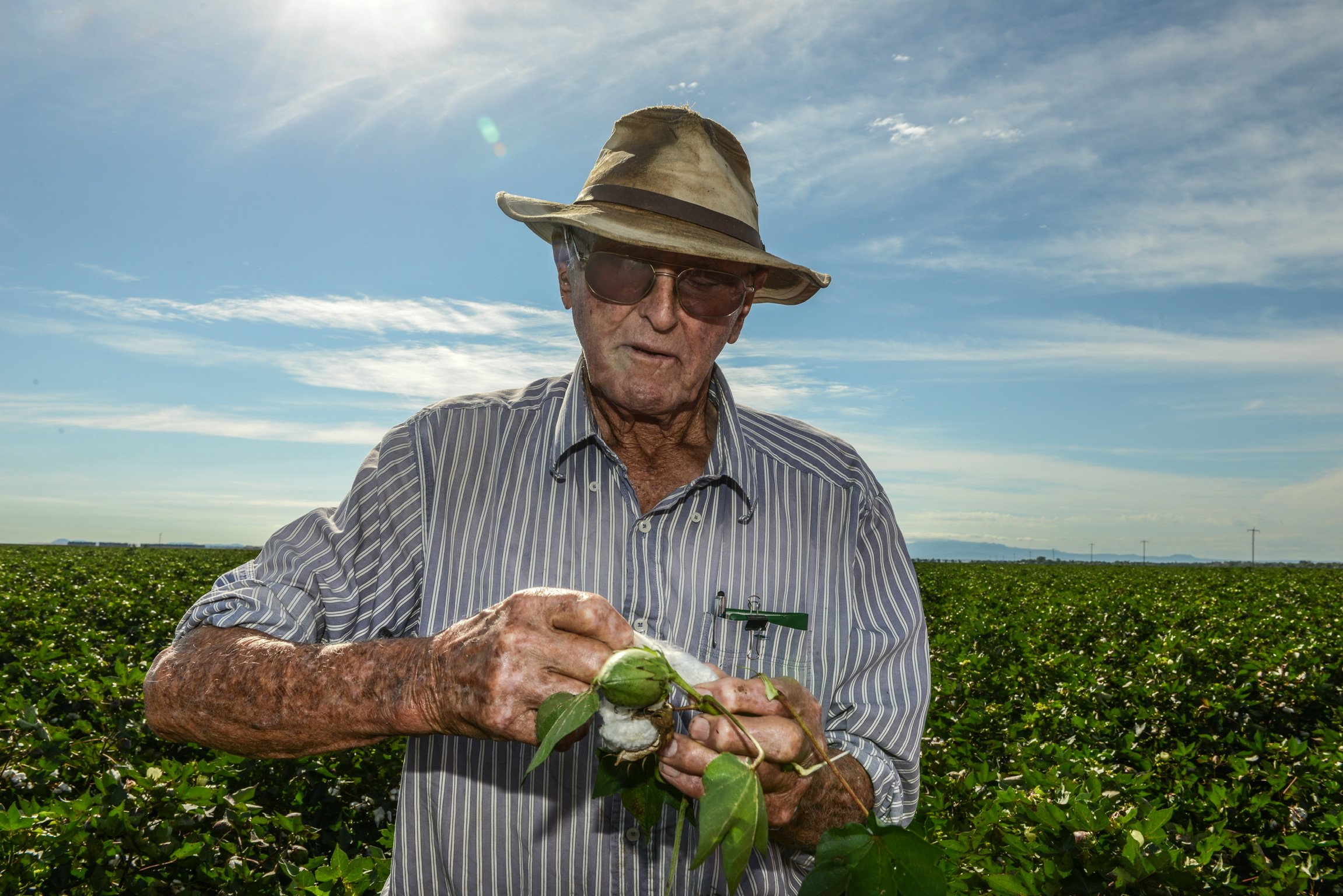
Vic Melbourne at the gate at ‘Yarral’.
Vic’s leadership extended beyond the boundaries of ‘Yarral’.
He cultivated relationships with suppliers, contractors and community members built on mutual respect.
His expectations were high, but he was fair, consistent and straightforward.
He valued work ethic, resourcefulness and dependability.
Those who worked with him understood that if Vic said something needed doing, it would be done.
He was a steady presence in a world that often shifted around him.
Vic’s sense of identity was deeply tied to the land.
He understood the rhythms of farming and the fragile balance between risk and reward.
His decision to plant cotton in 1963 placed him among the earliest pioneers of irrigated cotton in the region.
Over the years, he planted countless crops, adapting to new methods, machinery and environmental conditions.
His final crop in 2025 marked more than 60 years of cotton growing, an extraordinary achievement that reflected not only persistence, but passion.
Despite his reserved nature, Vic expressed affection through action and ritual.
He showed pride in his children and grandchildren quietly, often with simple gestures rather than lengthy speeches.
He supported them in ways that reflected his belief in independence, resilience and hard work.
For Vic, love was demonstrated through loyalty, expectation and presence.
In his final years, Vic remained engaged with the rhythms of the farm.
Even as his physical capacities shifted, his mind remained sharp and interested in the details of operations.
He continued to offer observations, ask questions and share opinions.
His connection to ‘Yarral’ was not merely practical, but emotional.
It was the landscape that shaped him, challenged him, supported him and gave meaning to his life’s work.
Vic’s legacy is multifaceted.
He leaves behind the physical legacy of a property built through years of hard work, strategic thinking and careful management.
He leaves the agricultural legacy of the cotton industry he helped pioneer and the many farmers who benefited from his insight.
He leaves the personal legacy of a man who lived with integrity, determination and generosity of spirit.
Most enduring, however, is the legacy embodied by the family which survives him.
Vic is survived by his children Deb, Mark, Michele, Nigel and Georgina, and their partners.
He is remembered with deep affection by his grandchildren Paul, Jessica, Tom, Claudia, Ruby, Max, Will, Patrick, Joseph, Anastasia, April and Clara and by his great-grandchildren Oliver, Ebony, Jack, and Dennis.
His youngest sister Betty remains as the final link to his earliest years at ‘Fairlight’.
Across more than 90 years, Vic lived a life marked by innovation, resilience and commitment to family.
He was a man who understood the land and the people who worked on it.
He valued connection, loyalty and hard work.
He faced challenges with determination and celebrated successes with modest satisfaction.
His was a life lived fully, shaped by the land he loved and the people he cherished.
Vic will be greatly missed by his family, friends, colleagues and the agricultural community that regarded him as a pillar of strength, wisdom and leadership.
His influence will continue to be felt across the Namoi Valley and through the lives of those who learned from him, worked with him and loved him.
He leaves behind a legacy as deep and enduring as the roots of the land he cultivated.
A pioneer, a father, grandfather, great-grandfather, a mentor and a man of vision, Vic Melbourne’s story will continue to be told for generations.
- by Michele Melbourne
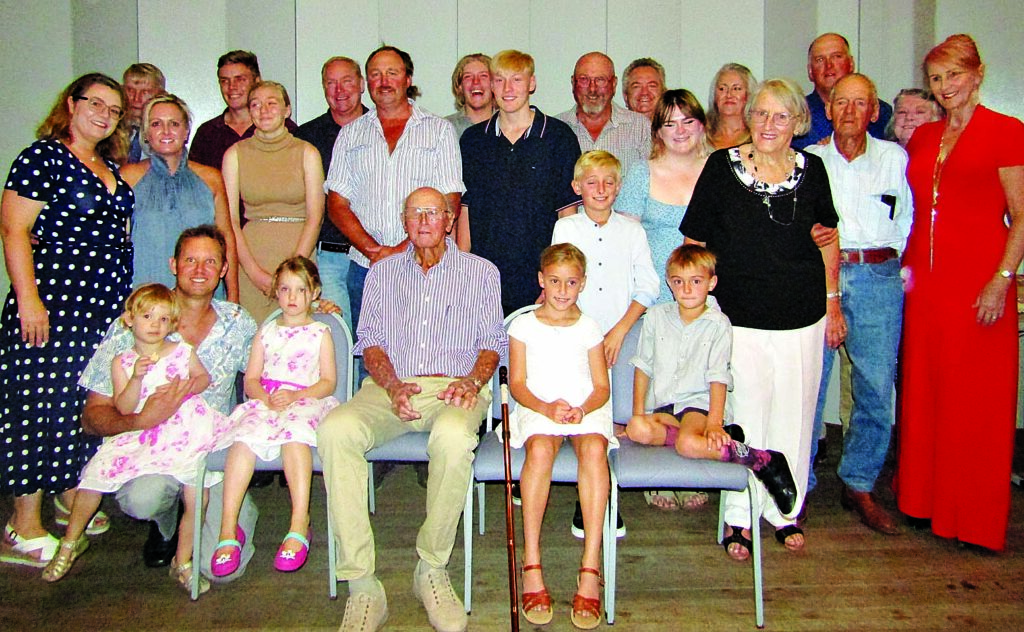
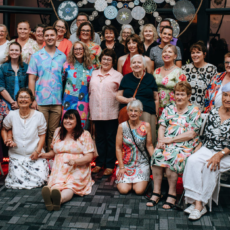
Some of the family, taken at Vic’s 90th birthday celebrations in 2021: Back, John Melbourne, Pat Melbourne, Nigel Melbourne, Bill Melbourne, Richard McLean, Michele Melbourne, Trevor Atkinson and Annie Atkinson, middle, Georgie Polzi, Laura Lehmann, Ana Melbourne, Paul Lehmann, Joe Melbourne, Damian Wales, Oliver Lehmann, Maddie Atkinson, Betty Atkinson, Frank Atkinson and Debbie Lehmann, front, Clara, Mike and April Polzi, with Vic Melbourne and Ebony and Jack Lehmann.