


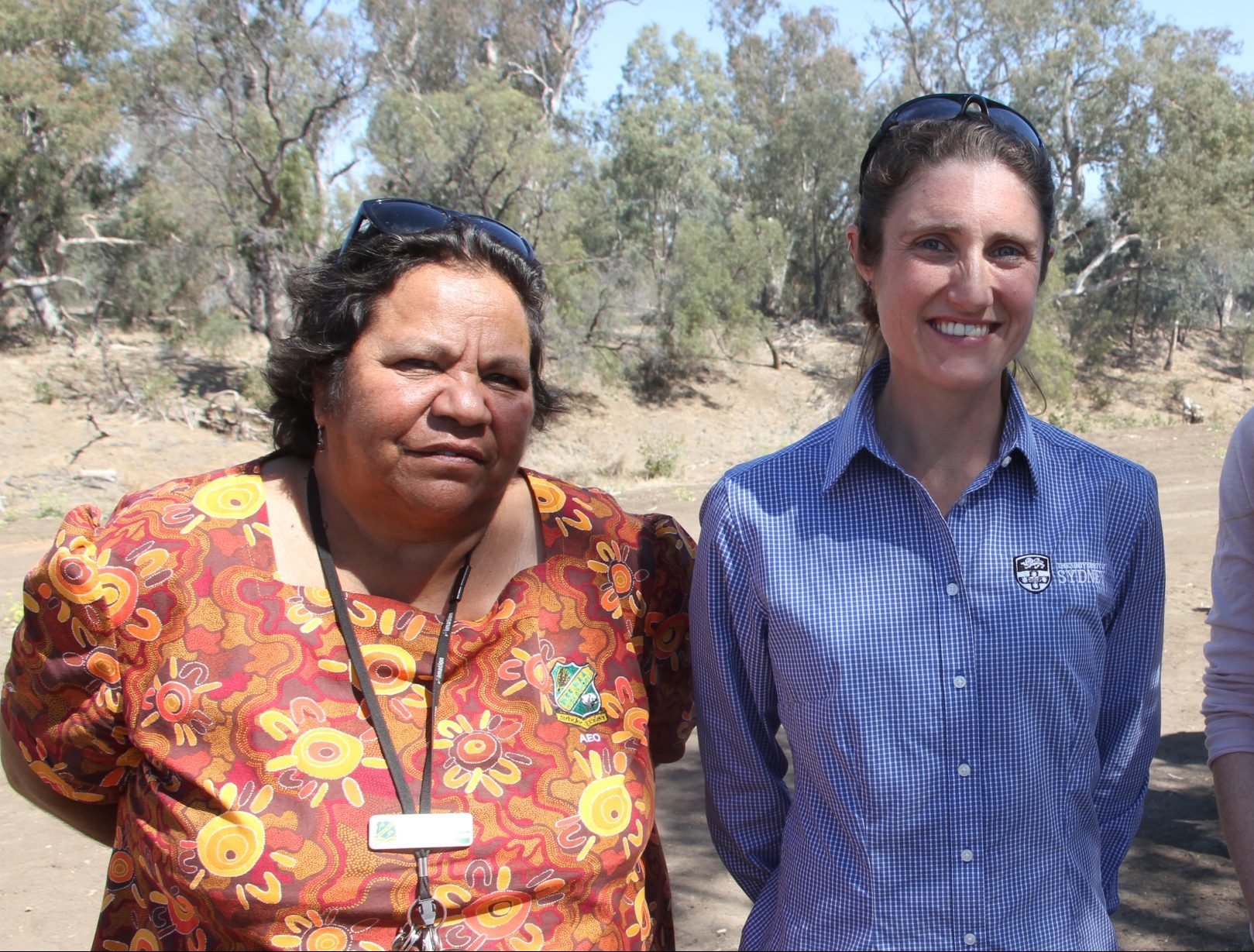
Researcher at Sydney University Plant Breeding Institute Dr Angela Pattison was surprised to learn last week that she had been nominated in the ‘Connecting Communities’ category of the 2020 NSW/ACT Regional Achievement and Community Awards.
Winners will be decided on September 23 and a gala presentation dinner held on November 20.
The Awards started in 2002, with the purpose of encouraging, acknowledging, and rewarding the valuable contributions individuals, communities and businesses are making throughout regional NSW and the ACT.


Dr Pattison has embarked on a project to study pre-colonial indigenous agriculture and the development and application of native grasses and grains.
Dr Pattison’s work, which has been underway for several years, has earned her the award nomination.
As part of her work, researchers and members of the Aboriginal community gathered at Tulladunna Reserve at Wee Waa in September last year to explore a new future for native grasses and grains, traditional foods of indigenous communities for thousands of years.
A feature of the day was the cooking of ‘Johnny cakes’ made from native grains, and some from wheat flour.
Dr Pattison’s work on native foods has drawn strong support. and she has a vision for the future of what can be a valuable industry.
“Dr Pattison, has a vision to create an Indigenous Foods Research Park for north west NSW and southern Queensland at Narrabri,” her nomination said.
“The ‘Food Park’ will unite local people from all walks of life with an interest in investigating and using native plant food species.
“Angela crystallised the idea for a Food Park in early 2017 and, together with colleagues from the University of Sydney, developed and delivered a series of workshops at Narrabri focussed on the potential of the Food Park for investigating Indigenous food and medicine plants and developing native grasslands for grain.
“The interest from local Indigenous communities has been more than encouraging with an average of 25 participants for each of the workshops held. For the past three years, engagement with local communities and businesses has gone from strength to strength.
“The second stage of the genesis of the Food Park has been to work together with local communities to strengthen connections by organising joint activities.”
Grant funding has been successfully sought to support research, training and outreach. The main theme of the grant applications has been to investigate the potential for growing native grasses as a source of grain, using Indigenous community input as a guiding tenet for how to do this well.
“A total of 30 hectares have been made available for education and research. At Narrabri, 10 hectares has been fenced, burnt and sprayed and three hectares, were sown in April 2020 for grass seed production. The remaining area will be sown later in the year when the weather warms up.
“Demonstration plantings have also been established.
“A further 10 hectares have been set aside at TAFE Moree for future native grain production. About 10 hectares of naturally occurring Mitchell Grass (Astrebla spp.) has been fenced off by a local farmer for seed collection and about three hectares of traditionally owned land with the same species has been set aside by Wee Waa LALC at Tulladunna.
“There have been more offers from local farmers and Aboriginal landholders.
“The long-term goal of the Food Park is to create a multipurpose research and educational facility that is open to everyone.”
To order photos from this page click here