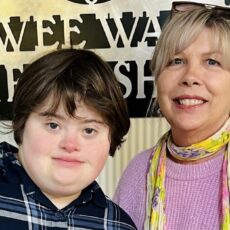



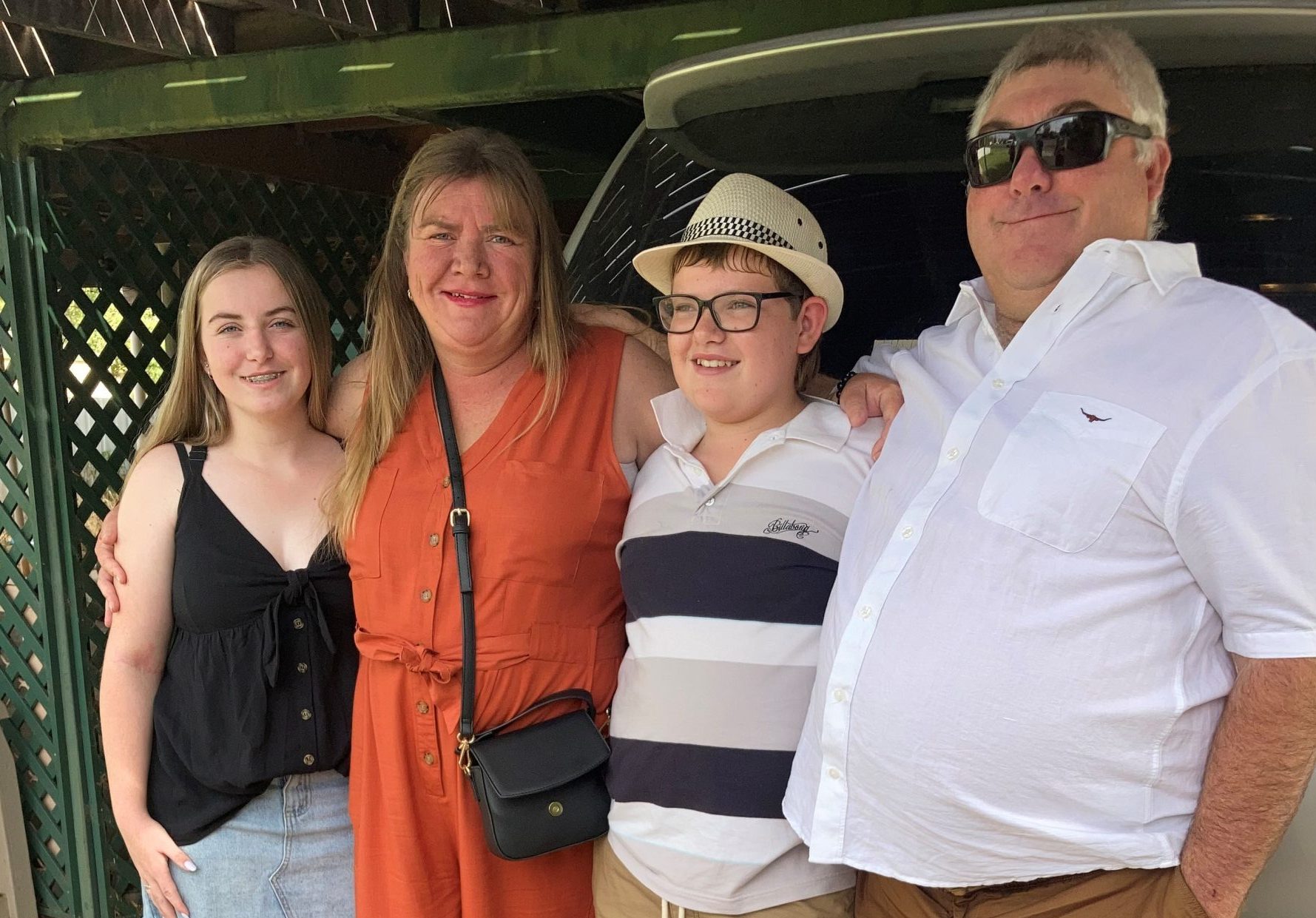
Barry and Robin Ford are full of praise for the prompt and professional attention their daughter Tracey Kiem received following a medical emergency recently.
On November 1, Tracey, 44, suffered a stroke while at work in Wee Waa.
Her daughter, Amelia, 16, was quickly called to take her to hospital, although Tracey protested that she was ‘OK’ and could just go home.


Fortunately, Amelia insisted on going to the hospital and Tracey was admitted to hospital for urgent treatment.
The time saved by Amelia’s insistence was critical.
It was a medical emergency when prompt, professional action at the right time saved Tracey from more serious implications.
Now, Tracey is on the mend.
“She is improving. It is now six weeks since her stroke,” said grateful parents, Robin and Barry Ford.
“We can’t thank the hospital staff and the ambulance enough – they were so good.
“Everything fell into place – the Westpac Rescue Helicopter Service was so good and flew Tracey to John Hunter Hospital and the team was waiting there and were ready to perform surgery as soon as the helicopter touched down.
“The staff at Wee Waa Hospital were just fantastic.
“We can’t thank everyone enough – everyone involved at every level.”
Meanwhile, Tracey is steadily recovering.
Her speech has returned and she has some mobility issues, but is going well, Barry and Robin said.
“The medical team call her the ‘stroke miracle’ because the severity of the stroke should have left her in a coma.
“This is all down to prompt action by everyone involved.”
The emergency is a reminder of the need to recognise stroke and act swiftly – think FAST, the Stroke Foundation urges.
Think FAST when you recognise stroke symptoms
Tracey Kiem’s daughter Amelia was a key figure in the response which saved stroke victim Tracey from a much more serious outcome.
The Courier invited Amelia to recount the emergency and its aftermath.
“As many are aware, Mum had a stroke on Sunday, November 1.” Amelia said.
“After taking her to Wee Waa Hospital when it was quite apparent that she was having a stroke, she was rushed to Tamworth, and then flown to John Hunter Hospital from there.
“She was operated on at 11.30(pm) Sunday night.
“They removed two clots from the right side of her brain, leaving her left side completely paralysed.
“The neurosurgeons, doctors and nurses were amazed with her level of consciousness and awareness only days after the stroke and the surgery.
“With her positive response to the clot removal operation, on November 4, we were brought back to Tamworth into the rehab facility for Mum to begin very intense physiotherapy.
“After about four-and-a-half weeks of physio, Mum has completely regained movement back in her right leg, and she is able to move around by herself.
“Her left arm is working and moving, however, her left hand and fine motor skills have not been fully regained.
“Over time we are hoping that it will continue to improve.
“Mum has been so determined to get moving again and that has helped her quick recovery.
“Now, after a long 35 days in hospital, we are very happy to say that Mum is home.
“On behalf of my whole family, I would like to thank everyone in our community who has continued to help us through this rough patch.
“The generous acts of kindness will never be forgotten by our family.
“Thank you Nettie and her family, as well as Anne and her family for looking after Jack and me while we were staying at home during Mum’s stay at hospital.
“A very, very massive thank you to Wee Waa Hospital staff and Ambulance officers.
“For such a small community we are so lucky to have such an experienced and knowledgeable team.
“Without your dedication, quick response and kindness the result could have been much different,” said Amelia.
“Remember to hug your loved ones tight.
“I never thought at such a young age, Mum would have a stroke.
“I’m not sharing Mum’s story to gain sympathy, but to help educate how instant and scary a stroke can be” Amelia said.
Amelia has re-stated the message from the Stroke Foundation to recognise a stroke – think F.A.S.T. Use the F.A.S.T. test which involves asking these simple questions:
F- Check the patient’s face -has their mouth drooped?
A- can they lift both arms?
S- is their speech slurred? Do they understand you?
T-time is critical, if you see any of these signs call 000 immediately.