


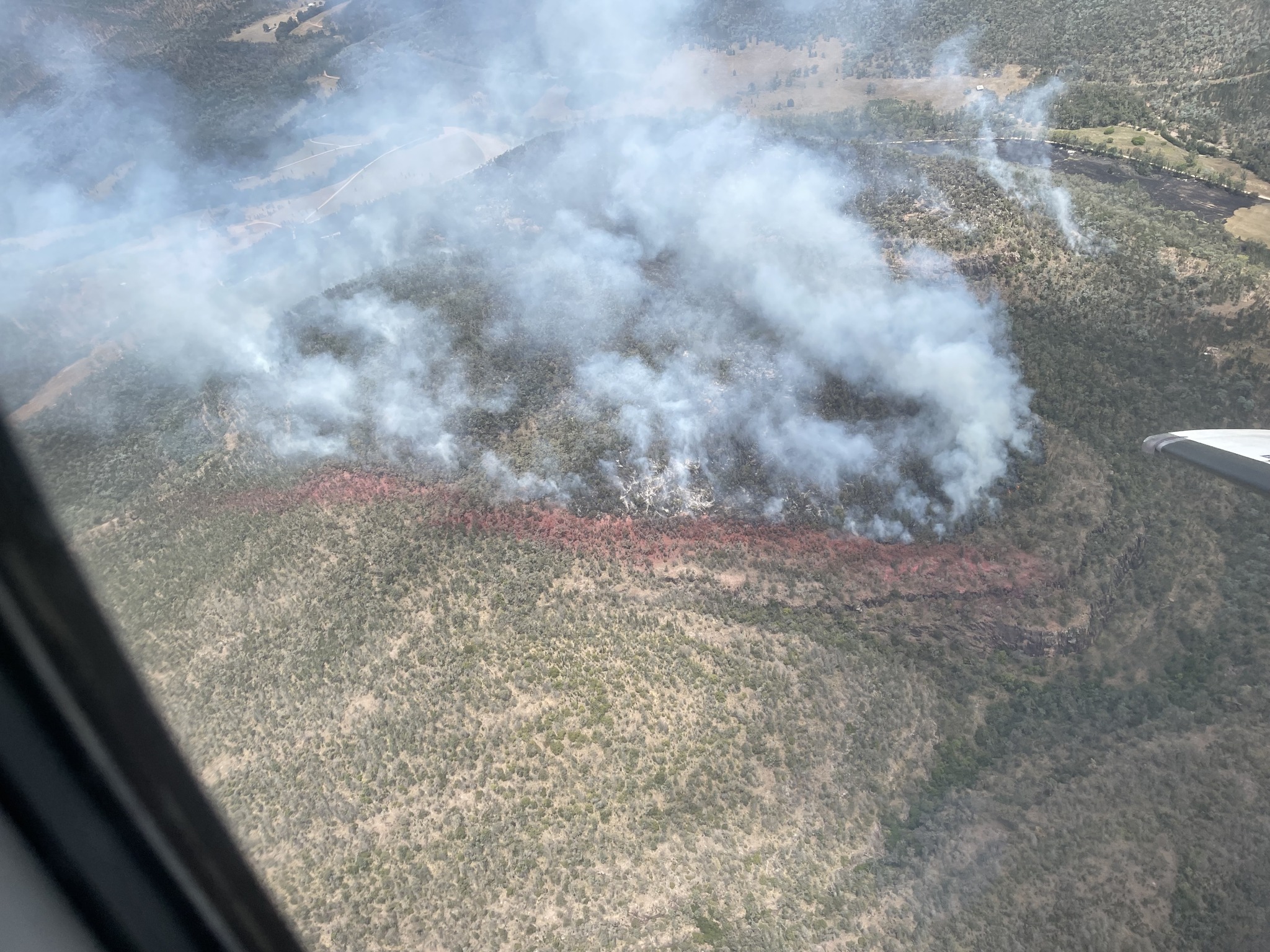
Firefighters from across the state joined local Rural Fire Service brigades to control a bush fire along Upper Maules Creek Road.
The bushfire broke out last Wednesday afternoon, with firefighting efforts spanning several days.
The bushfire initially burnt 107 hectares of land. Part of the land is within Mount Kaputar National Park in addition to privately owned land.


RFS crews were also joined by National Parks firefighters as well as aviation support to contain the blaze.
Air tankers were deployed to support firefighting efforts.
The Rural Fire Service advised the fireground was patrol only as of Tuesday afternoon.
On Wednesday afternoon, the RFS advised that fire activity had again picked up, however, the bush fire was brought under control.
Speaking to The Courier about the bush fire before its flare up on Wednesday, RFS Narrabri public liaison officer James Morris said crews would continue to monitor small hotspots located close to the containment line.
Local RFS brigades were joined by out-of-area strike teams from across the state, including the Lower North Coast, Central Coast, Greater Sydney and Southern Highlands.
Whitehaven Coal dispatched its bulk water tanker to assist in the control efforts.
“We will continue to monitor the situation closely and will respond units accordingly,” Mr Morris said.
The bush fire follows two grass fires near Narrabri in recent weeks – one fire on Kaputar Road and another near Yarrie Lake Road.
The fires serve as a reminder for people to be bushfire ready now that warmer and drier conditions have arrived.
“It is really important that our communities and people on farmland are prepared,” Acting Namoi/Gwydir district manager Shellie Smyth told The Courier recently.
“It is time to be thinking about your bushfire survival plan and making sure it is up to date.
“Make sure your family and friends know what you will do in the case of a bushfire.”
Ms Smyth said ideally, people should inspect their property, reduce the amount of vegetation and create fire breaks.
“Make sure an inner perimeter around the home is maintained,” Ms Smyth said.
General clean-up, including checking gutters and water sources, and the removal of combustible material is also advised by the RFS.
Current predictions from the Bureau of Meteorology indicate that the North West will see a higher rate of bush and grass fires following the end of the wet season.
“It is a significant risk now that it is heating up and we are getting more fire danger days,” Ms Smyth said.
The RFS has particularly urged people to familiarise themselves with the new fire danger ratings which were introduced in 2022.
The changes were designed to make the ratings simpler.
The new fire danger ratings are used across Australia, meaning the same system is used whether you’re at home or away.
When there’s minimal risk, like on days it’s raining, people will see ‘No Rating’ displayed on signs, apps and websites.
Ratings start at moderate, followed by high, extreme and catastrophic.
This bushfire season is the first for the new ratings system, and the RFS has stressed the importance of understanding the ratings.
The ratings and total fire ban information is available on the RFS website.
People are encouraged to ensure they have access to the Fires Near Me app.
To order photos from this page click here