


Pilliga State Conservation Area has been declared predator free after an elusive battle with a pesky fox has come to an end.
The frustrating fight to eliminate the fox, nicknamed ‘Rambo’, has spanned four-and-a-half years.
Australian Wildlife Conservancy staff have worked tirelessly to rid the fenced safe-haven in the area of the predator. ‘Rambo’ hasn’t been sighted in the area for six months despite intensive monitoring and tracking.


Officials believe the pesky predator was outfoxed by flood events late last year.
AWC has been on a mission to rid the Pilliga of ‘Rambo’ so it can move forward with an important wildlife reintroduction program which will eventually see six locally-extinct species return to the area.
The team is also now able to focus their efforts on management of pests and weeds outside the fenced area.
AWC’s operations manager Wayne Sparrow, based at the Narrabri office, said there was a combination of excitement and disappointment with the predator-free declaration.
“We’re all experiencing this unusual feeling of excitement, joy and disappointment because the team put much time and effort into this sizeable chase, only to have the fox leave on his own accord,” he said.
Mr Sparrow described the end of the battle with ‘Rambo’ as a long time coming.
AWC’s operations team dedicated many sleepless nights in the near five-year hunt for Rambo. The team dedicated 10,400 trap nights, 73 shoot nights, 3500 baits and more than 55 days of scent-tracking dogs. Despite this extensive and intensive effort, it is suspected that Rambo met his fate during one of two flooding events that hit the Pilliga in October last year.
After adhering to the eradication monitoring periods, which requires a fenced area to be clear of feral predators for a minimum of three months, AWC and NPWS marked the fox as ‘no longer’.
AWC conservation efforts in the Pilliga, conducted in phases, will now move to post-eradication monitoring.
Monitoring efforts will still continue to ensure the area is predator free.
“There is still lots of work to do, this is only a small piece of the puzzle,” Mr Sparrow said.
AWC’s Narrabri team will now be able to focus more of their efforts on the reintroduction of mammals back to the Pilliga.
“The main aim is getting the animals back on site and building population numbers,” Mr Sparrow said.
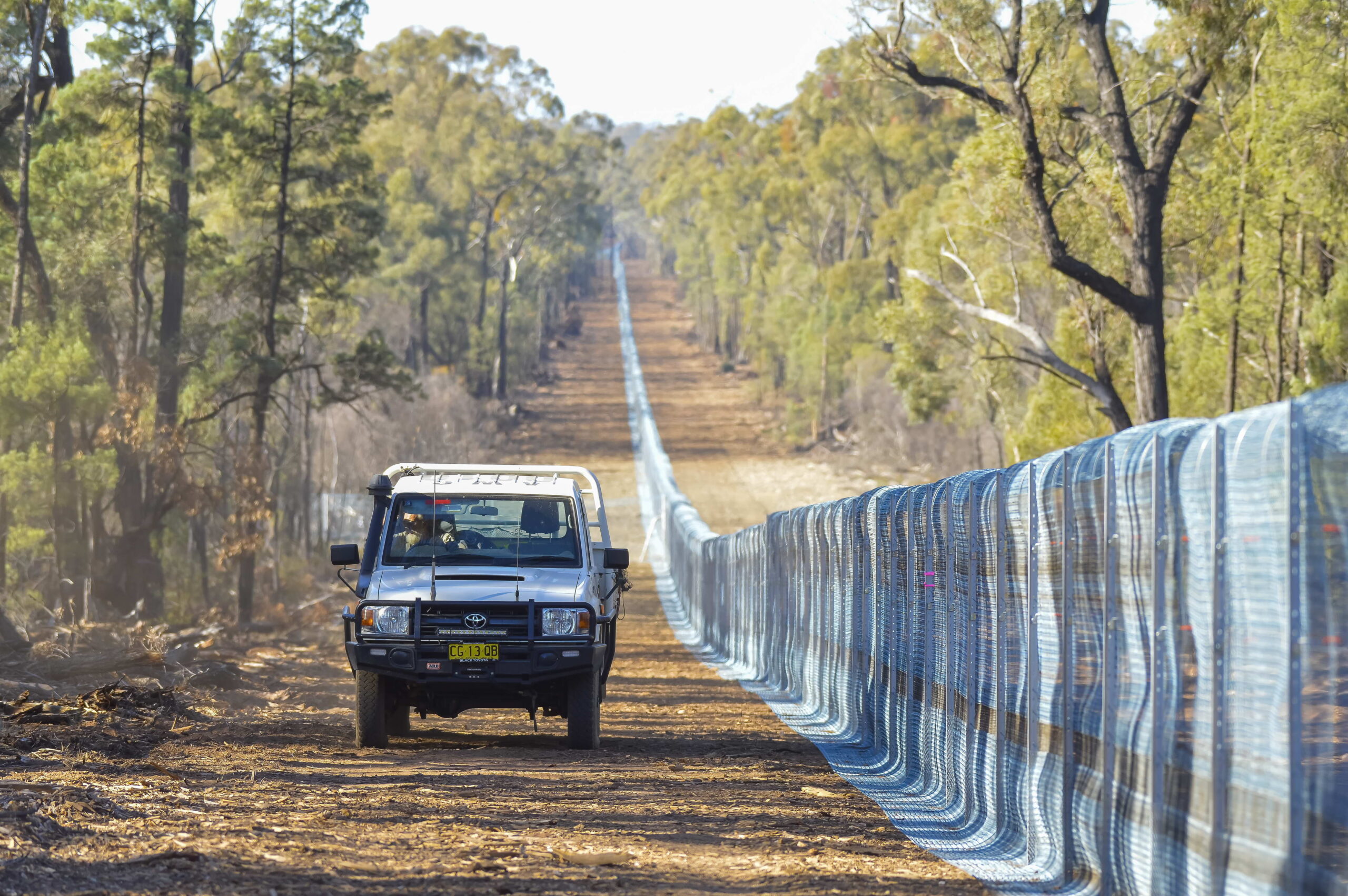
AWC with NPWS constructed the Pilliga fence in July 2018 for the reintroduction of six locally extinct species.
Due to Rambo’s presence, only three of the species were reintroduced within a smaller 680-hectare breeding area located within the larger fence. These were the greater bilby (2018), bridled nailtail wallaby (2019) and brush-tailed bettong (2022).
During a 2022 survey of the bilby and bridled nailtail wallaby, AWC ecologists found that both populations have grown within the safety of the breeding area and are almost at maximum capacity. In Rambo’s absence, AWC can confidently open the breeding area and move forward with further reintroductions.
Mr Sparrow said the breeding area fence is now open, allowing greater bilbies, bridled nailtail wallabies and brush-tailed bettongs access to the 5800 hectares.
“The timing is perfect,” said Dr Vicki Stokes, AWC senior wildlife ecologist.
“Good conditions in the forest over the last few years have meant that both populations are doing exceptionally well and it’s good to get them out into the wider area so they can flourish.
“We are also very excited to be able to move forward with reintroductions and we will be doing so very soon. We hope to release the vulnerable plains mouse before June and the Shark Bay bandicoot in September.”
Dr Stokes added that the plains mouse, in particular, is small enough to move between fence lines – reiterating the timeliness of Rambo’s departure.
To order photos from this page click here