



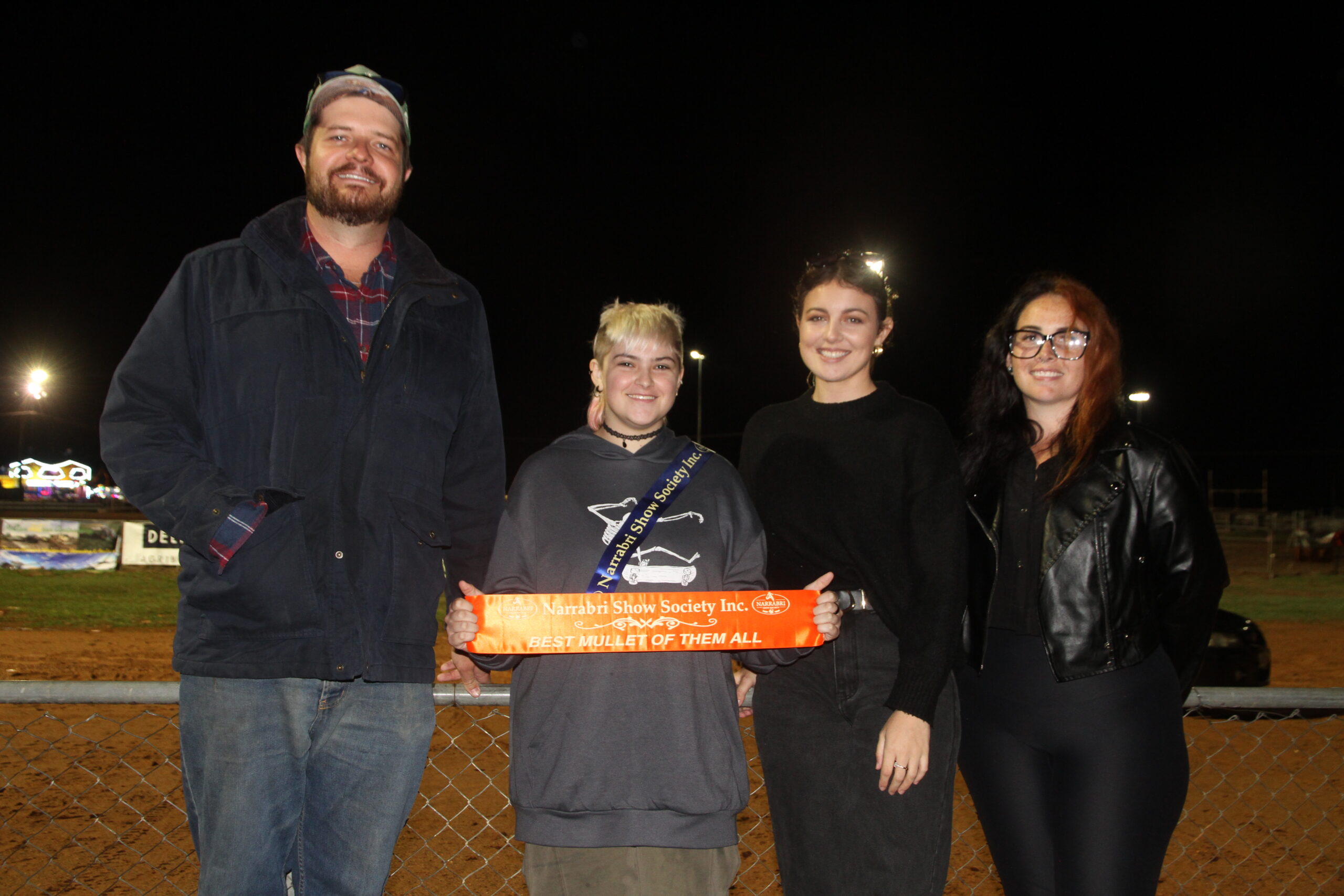
Mullets were out in full force at the Narrabri Show on Saturday as part of a new initiative raising awareness and funds for mental health.
The Rotaract Club of Narrabri staged its debut mullet competition at the show in support of the Black Dog Institute’s Mullets for Mental Health campaign.
A line-up of junior entrants displayed their mighty mullets to a gathering in front of the show secretary’s office.


In the senior category, entrants also proudly showcased their mullets to the audience.
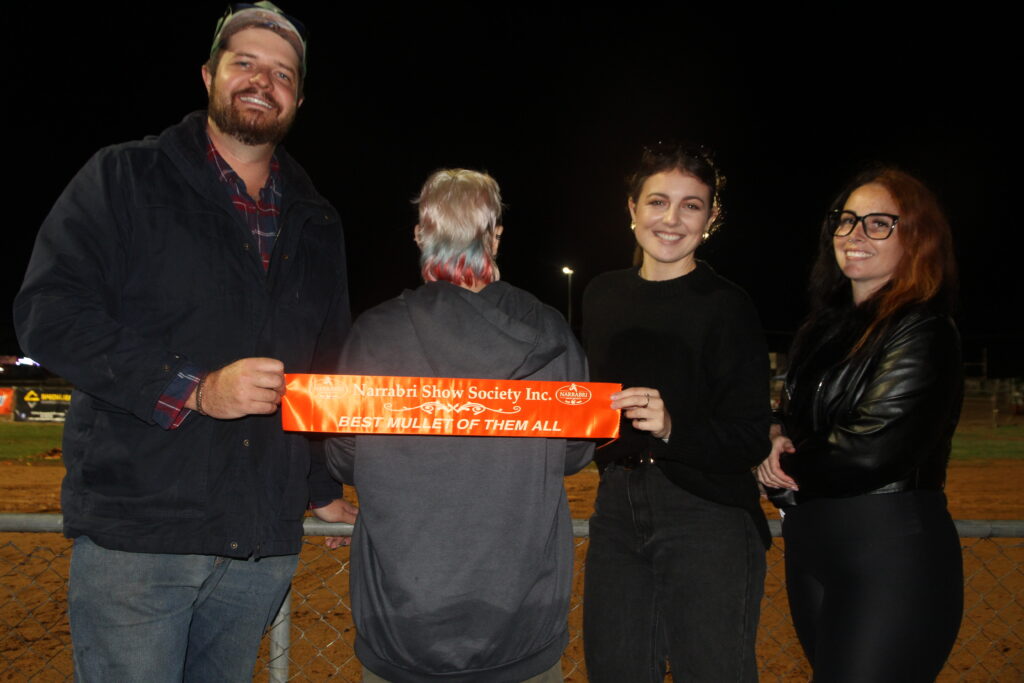
The junior competition was a tie between Veronica Weekes and Seb Alexander while Dylan Dwyer was the senior winner, judged by Jess Brown.
Veronica was sashed as the overall best mullet.
Narrabri Rotaract president Kodey Stanford addressed the gathering and thanked the show society for its support.
Ms Stanford provided the crowd with statistics relating to mental health.
One in five people will experience mental illness in any given year. In Australia, that’s almost five million people.
Fifty per cent of people won’t seek help and nine people die from suicide every day. More than 75 per cent of mental health problems occur before the age of 25.
Ms Stanford said this is a number that is way too high.
“All the funds that you donate are put towards providing an educator to go to high schools and teach mental health awareness,” she said.
“$500 alone can empower young people to manage their mental health by training one youth presenter.
“$5000 can deliver presentations to 10 schools.
“$50,000 can help health professionals care for more rural Australians by educating 150 health professionals on the latest mental health research and clinical evidence.”
Rotaract has also raised funds towards this initiative from one of its regular trivia nights and encouraged show-goers to contribute to the cause.
As the only medical research institute in Australia to investigate mental health across the lifespan, the Black Dog Institute’s aim is to create a mentally healthier world for
everyone.
“We do this through ‘translational’ research. Integrating our research studies, education programs, digital tools and apps, clinical services, and public resources to discover new solutions, foster connections and create real-world change,” information from the institute reads.
“Our partnerships with people with lived experience, federal, state and local governments, communities, schools, corporate Australia and others in the mental health sector enables us to drive evidence-informed change in mental health where it’s needed most.”
If you need immediate support, you can phone: Lifeline 131 114, Suicide Call Back Service 1300 659 467 or 13YARN 139 276.
To order photos from this page click here