


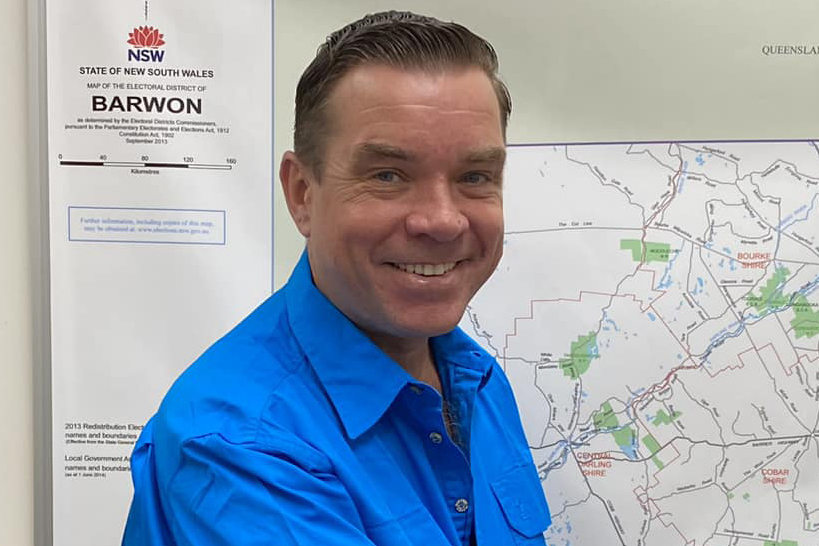
Clubs in regional areas often struggle for membership, or find it much harder than big city organisations to make the kind of revenue needed for projects like renovations or buying essential equipment, which is why the club grants program is so important.
I want to congratulate those organisations that were successful in the latest round of club grants. Across NSW, 46 projects have been selected to receive a share of the $6.4 million in grant funding.
The successful organisations in Barwon are:
• Baradine Preschool which will receive $225,120 toward the construction of the Long Day-care Centre.
• The Country Women’s Association of Wee Waa, who will be getting $84,00 for the upgrade of the CWA Hall.
• The CWA in Collie will be receiving $54,000 for the construction of a shade structure over an outdoor playground.
• The Warren Youth Foundation will be getting $93,550 for the upgrade of the Warren Youth Centre Community Hub.
Applications are also now open for Club Grants Category 3 Fund, Infrastructure Grants.
The Club Grants Category 3 Fund is managed by the Office of Responsible Gambling and funds infrastructure grants for arts and culture, community, disaster readiness, and sport and recreation.
Infrastructure Grants can be used toward the costs of construction, alteration, renovation, completion and fit-out of buildings and community infrastructure in the following areas:
• Arts & Culture: $50,000 to $200,000 available per project
• Community Infrastructure: $50,000 to $250,000 available per project
• Disaster Readiness: $50,000 to $200,000 available per project
• Sport & Recreation: $50,000 to $300,000 available per project
Broken Hill Power Outage
After high winds destroyed seven electricity towers south of Broken Hill on October 16-17, causing a power outage in the far west of NSW, teams worked to bring in backup generators and to restore the line linking the region to the grid. For almost two weeks the power supply to Broken Hill and many surrounding areas was badly disrupted, but was finally restored on October 31.
There have been no major problems since, but it is still taking some time for lives and businesses to get back to normal.
The Premier, Chris Minns, and I paid a visit to Broken Hill during a sitting week, and then I also accompanied Energy Minister Penny Sharpe out west. The government announced a payment of $200 per household as some compensation for losses due to the outage, but while visiting Broken Hill we heard, loud and clear, that this was not enough, so the compensation was adjusted to $200 for every adult in households in the affected areas.
IPART is already undertaking a review of the incident and I have successfully requested that there be a parliamentary inquiry.
On the Road with Minister Dib
Before I headed back to Broken Hill for the Community Cabinet, I accompanied Jihad Dib, the Minister for Customer Service and Digital Government, Minister for Emergency Services, and Minister for Youth Justice, on a tour of parts of Barwon.
We travelled to Cobar, Walgett, Bourke, Wanaaring, Tibooburra, Milparinka, Packsaddle before arriving in Broken Hill. Along the way we talked to community members about a range of issues including diversionary and early intervention programs to reduce youth crime and how to better coordinate the different emergency services across the electorate.
The trip was not without incident, the Ford Everest had two tyres blown out between Wanaaring and Tibooburra, fortunately I had the help of the Emergency Services Minister to help change the tyres in 40 degree heat.
I want to thank the Minister for taking such an interest in this part of the world. Everything he experienced will give him a much better perspective when making decisions relating to Barwon and regional NSW more generally.
Community Cabinet in Broken Hill
The NSW government came to Barwon. Premier Chris Minns and his cabinet all travelled to Broken Hill to meet with community members. The “Community Cabinet” was organised months ago, but, coincidentally, took place in the wake of the recent power outages in the far west, caused by the storm that took out seven electricity towers south of Broken Hill.
The Premier arrived on Thursday (November 7) and he and several of his ministers took the time to visit the Recovery Assistance Point (RAP) centre, talking to people who had been affected by the blackout.
On the Thursday evening the Premier and his ministers took part in a Q&A session at the Civic Centre. There was a great turnout, over 200 people registered to be in the audience. The questions they asked included some fairly specific issues like fire compliance problems with a local museum, lead contamination, upgrades to the runways at the airport and the need for a doppler radar in the far west, but there were also some broader topics like incentives to attract health workers to remote areas, mental health services and about the government’s commitment to early childhood learning.
I want to thank everyone who turned up and asked the government questions. It was great to experience the passion of the community and hear everyone ask the big questions of the decision-makers. In all it was very respectful and constructive.
On the Friday, the Premier and his cabinet made themselves available for a series of “speed dates”, or short meetings talking to organisations, councils, community groups, and even individuals about issues that are important to them—unfiltered by bureaucracy.
There were a lot of them but I was able to sit in on multiple meetings, and my team attended those I couldn’t. This level of access to the Premier and Ministers is great to see in Far Western NSW.
I would like to thank Premier Chris Minns and all the Cabinet ministers for coming from so far away and giving their time to the people of the Far West. I also want to thank the great staff of Service NSW who came from all over the state to help out at the RAP centres and to make sure that the Community Cabinet and the “speed date” meetings went smoothly.