



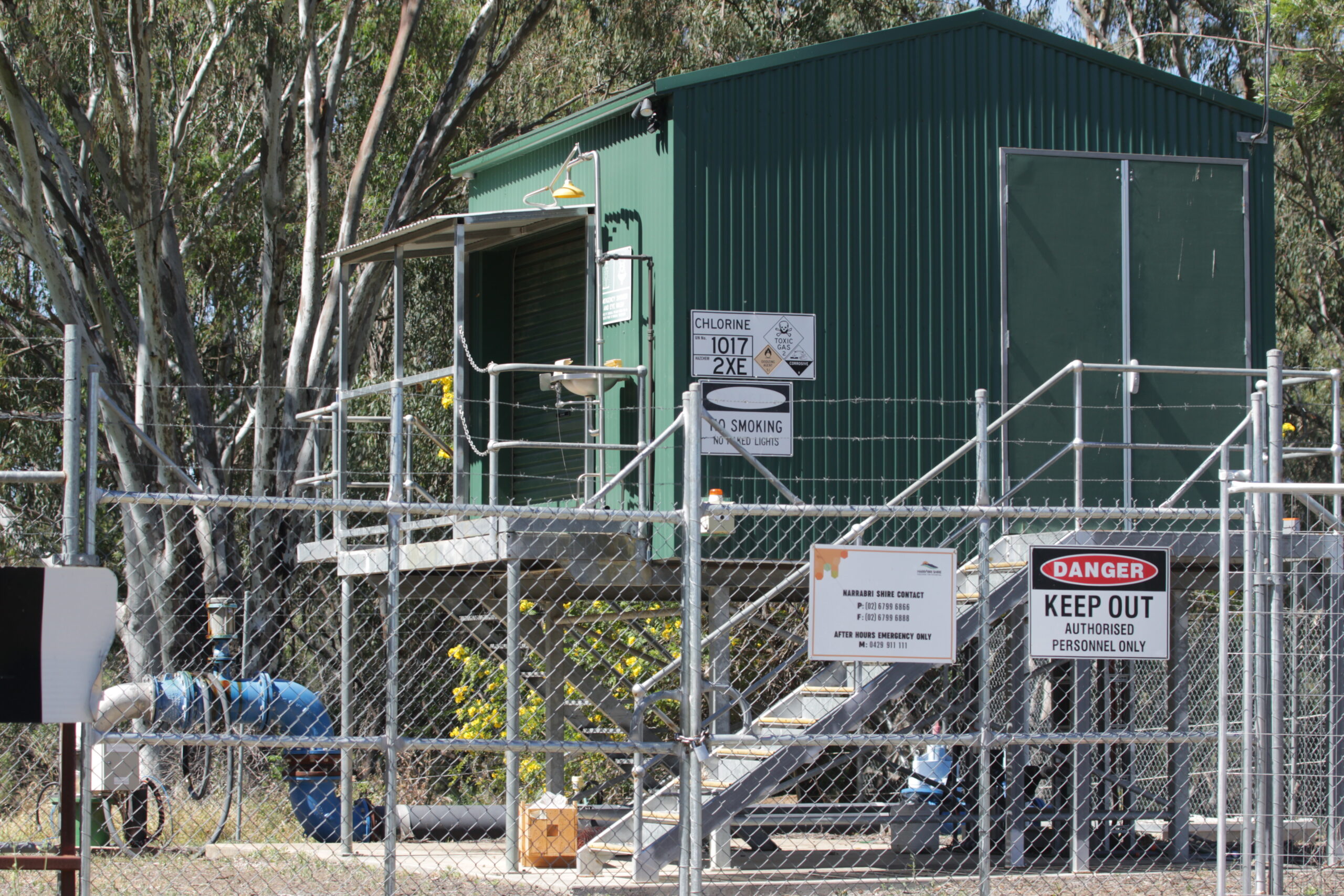
In a further update late last week, Narrabri Shire Council said it had received approval from the NSW Department of Health to blend water from the Tibbereena Street bore with water from the Elizabeth Street bore to supplement the town’s supply.
While the Tibbereena Street bore has previously returned PFAS readings above the Australian drinking water guidelines, council has consulted with the Department of Climate Change, Energy, the Environment and Water and the Department of Health experts to determine a safe ratio for blending the two water sources.
Under this arrangement, the Tibbereena Street bore can be used for up to 20 hours daily.


This allows a portion of water from the Tibbereena Street bore to be mixed with water from the Elizabeth Street reservoir, resulting in water quality that meets Australian drinking water guidelines.
These calculations assume PFAS levels remain stable and are continually verified through regular testing and ultimately allow council to “top up” its available water supply.
Council will implement an enhanced testing regime to ensure the ongoing safety of Narrabri’s drinking water, as supported by the Department of Health, including weekly testing for the first month, fortnightly testing for the second month, and monthly testing thereafter.
The Department of Health has advised that while short-term PFAS variations may occur as the blending regime stabilises, these are unlikely to impact public health, as the guideline values are designed to minimise risk over a lifetime of exposure.
While this approval provides a small increase in available supply, it will not be enough to resolve the current situation entirely, council said in its update.
Level four water restrictions will remain in place to help rebuild the reservoir and secure water for essential use.
Council continues to call for urgent action to be taken by the state government to help regional water utilities meet the new PFAS standards introduced in July.
Across much of NSW, local councils are responsible for providing safe drinking water to their residents.
Despite this, the state government implemented the new PFAS guidelines, knowing that some councils could not meet them immediately, and did so without offering adequate transition support or funding, council’s update said.
Narrabri Shire Council formally requested a transition period to allow time to identify and secure a compliant water source, but that request was denied.
Council’s general manager Eloise Chaplain said the current situation demonstrates the urgent need for a more practical approach to water management in regional NSW.
“Council has done everything possible to manage this situation responsibly and transparently,” Ms Chaplain said.
The new national guidelines were introduced without a realistic pathway for small regional utilities to achieve compliance, council’s update said.
Local councils have been left to find immediate, complex and costly solutions to a problem the state government knew existed.
“We have essentially been given an extremely challenging task. However, council is committed to work with all stakeholders to achieve a long-term sustainable solution,” Ms Chaplain said.
“The state government knows better than anyone else the approvals pathway and timeframes for the solutions to this issue, yet they still proceeded to implement these new guidelines without considering the burden that would be left to council to manage compliance within the state government’s revised drinking water guidelines.
“We are committed to ensuring Narrabri’s water remains safe and reliable and look forward to working with the state government to make that possible.”
To order photos from this page click here