


The NSW Parliament will formally call on the federal government to establish a Royal Commission in water after an independent Member of Parliament succeeded in placing the issue in the spotlight.
Member for Riverina Helen Dalton successfully sought the support of lower house members to seek a federal inquiry. Mrs Dalton also requested that the New South Wales government to fully cooperate with a royal commission, including the compulsory production of all water modelling, data, licences, compliance records, enforcement actions and intergovernmental agreements.
Mrs Dalton’s motion noted that the current water management framework has failed rural communities, irrigators and regional towns; is based on deeply flawed, opaque and contested modelling; has been characterised by systemic compliance and enforcement failures; and has resulted in a profound loss of trust in government institutions responsible for water management.


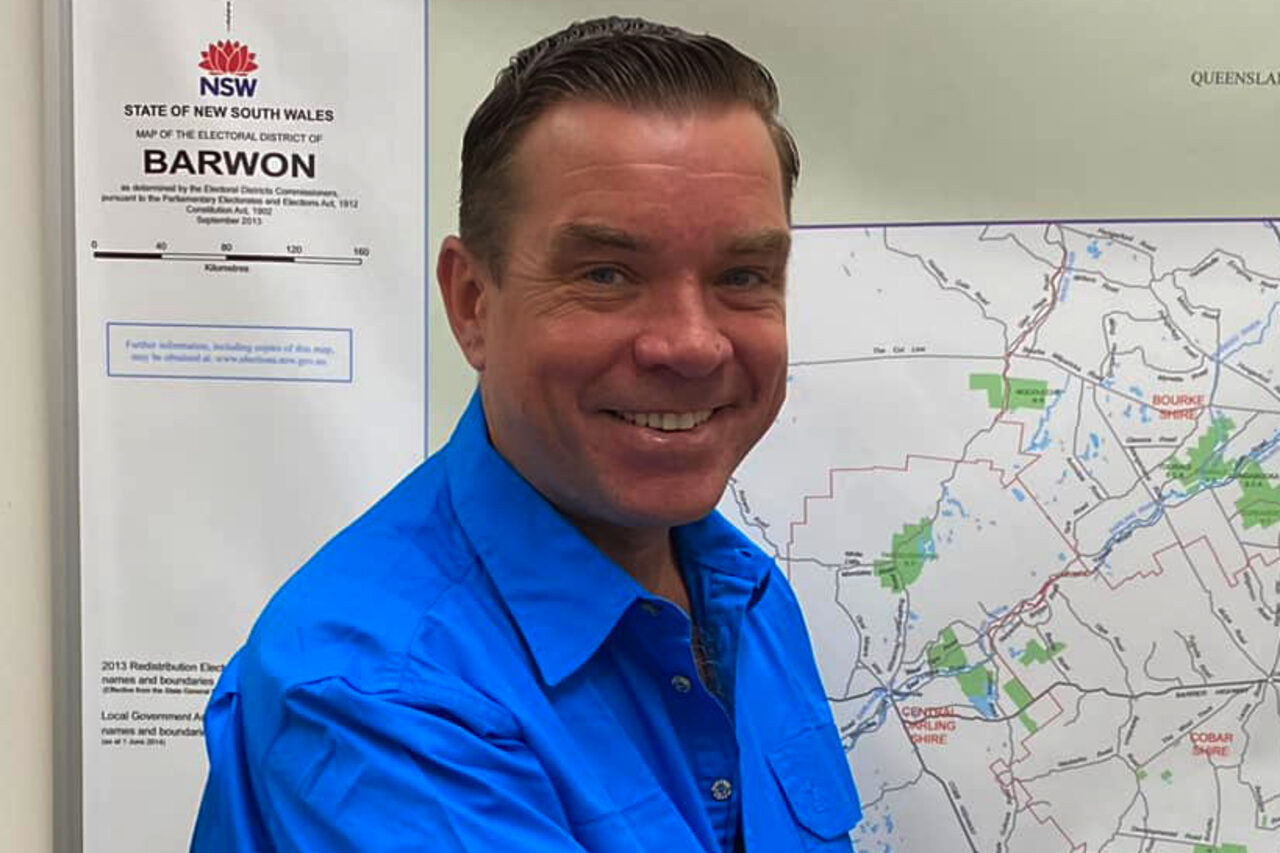
The motion, tabled in parliament last week, was also backed by independent Member for Barwon Roy Butler.
“The debate has been had many times in this chamber, and nothing seems to change because here we are again. The longer governments resist transparency and accountability in water management, the harder it becomes for the public to have confidence that all is well in water,” Mr Butler said.
“Major inquiries in 2019 such as the South Australian Murray-Darling Basin Royal Commission, the Vertessy report investigating the Menindee fish deaths and the Natural Resource Commission’s Keniry report and review of the Barwon-Darling water sharing plan have all identified significant issues with how water is being managed in New South Wales.
“Those findings are well known to communities across the state. Knowing who holds the interests in water is essential for restoring trust in government decisions that affect people living along our rivers.
“When water rights were attached to land, ownership was transparent. Why should we resist returning to a system that provides that same visibility? While water trading is a national issue requiring Federal action, transparency around water ownership is a critical first step to ensuring that decisions are made in the public interest, not shaped by private interests.
“At present, the perception is that private interests are being served, and that perception is eroding trust in government. A federal royal commission represents the highest standard of transparency and accountability.
“Unlike other inquiries, it compels full disclosure; people cannot choose whether they show up and give evidence. If they are told to show up, they have to show up—that was the problem in South Australia. Every card should be on the table, not just the convenient ones.
“The need for a federal royal commission has been reinforced by bureaucrats refusing to give evidence at the South Australian royal commission, the concerns about state-based bias and the limitations of existing processes.”
Mr Butler said trust was at the heart of the issue.
“If we want members of the public to believe that water decisions are being made fairly and in their interest, a federal royal commission is the necessary first step in rebuilding that trust. Too often governments treat information as something to guard rather than share,” he said.
“Last year I attempted to amend the Water Management Act to prohibit the state from entering into an intergovernmental agreement with another jurisdiction about matters concerning the Murray-Darling Basin until 15 days have passed after a draft of the intergovernmental agreement had been made available to members of the Legislative Assembly and Legislative Council.
“That was off the back of multiple intergovernmental agreements being signed that were not always in the interests of the people of New South Wales.”
Mrs Dalton said the Murray Darling Basin Plan is one of the largest public policy interventions in Australian history.
“It involves billions of dollars of public money and affects millions of Australians, including farmers, Indigenous communities, rural towns, irrigation districts and downstream environments. When reform is that large, the standards must be simple. People must be able to see the evidence, understand the decisions and trust the accounting,” she said.
“Yet too often, decisions have felt murky to the communities most affected. Science and modelling are contested. Assumptions are disputed. Accountability is fragmented across jurisdictions. The deeper problem is that trust has broken down.
“Communities do not trust the process. Farmers do not trust the numbers, and the environmental outcomes are disputed. Governments do not trust stakeholders, and stakeholders do not trust governments.
“After massive water recovery and enormous disruption, environmental outcomes remain unclear in the eyes of many basin communities. We still see the fish kills—we have one today. We still see blue-green algae; they are all over the State. We still see river systems under stress.
“We oppose the Murray-Darling Basin Plan and further water buybacks in the absence of clear, independently verified economic, social and ecological outcomes.”
Mrs Dalton said a federal royal commission would finally examine the whole picture to deliver real results, without treating communities as collateral damage.
“A further critical issue is the science modelling and data integrity. Different experts using the same data reach different conclusions,” she said.
“A royal commission is the only way to deliver. It shines a light, and it forces bureaucrats and politicians to tell the truth, which is what we want.
“Communities who live with water policy every day deserve to know which decisions are transparent and defensible. Australians deserve the truth, and a Federal royal commission is how we get it.”
To order photos from this page click here