


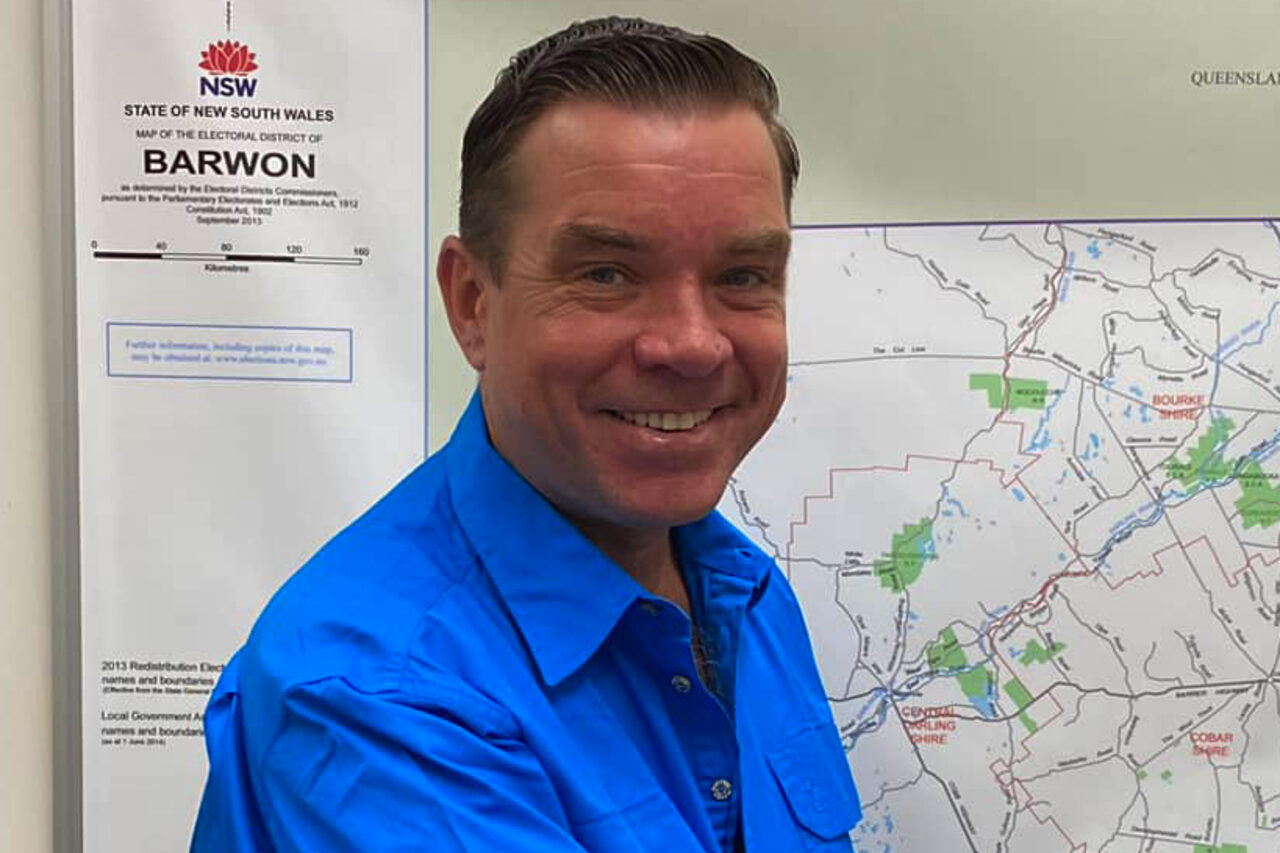
Member for Barwon Roy Butler has delivered his second reading speech on legislation that would impose new conditions on land acquisitions for National Parks.
The National Parks and Wildlife Amendment (Land Boundaries and Acquisitions) Bill 2026 is a response to feedback from Mr Butler’s survey on local views on National Parks in late 2025.
The Bill’s provisions would require the Minister, before acquiring land under the National Parks Act, to obtain a report on the policy objectives of the acquisition. The local council, where the land is located, would nominate a temporary member to the regional advisory board to prepare the report.


The Bill would also prohibit the acquisition of land under the Act until alternative arrangements are made to apportion the cost of fencing boundaries under the Dividing Fences Act 1991 and to apply local government rates to the land reserved under the National Parks Act.
In Mr Butler’s second reading speech, he said the purpose of this Bill is to ensure that, when land is acquired for the National Parks estate, the purchase adds value not only in environmental terms but also to the local community where the land is located.
“We have a situation in NSW where the alleged environmental value of land is often prioritised over the social impacts on small communities bordering National Parks. This is not good enough,” Mr Butler said.
“In a survey I conducted late last year, 78 per cent of respondents reported seeing no environmental benefits from national parks, 82 per cent reported seeing no economic benefits and 90 per cent did not support the acquisition of more parks. We talk a lot in this place about the need for social licence, but it does not seem to matter when it comes to national parks and regional communities.
“The simple fact is that national parks are not being managed effectively. In fact, 95 per cent of survey respondents are unhappy with how parks are managed. The biggest issue is the proliferation of feral animals. A little-known fact about how parks are managed is that often watering holes from the previous business, or the previous use of the property, are filled in, which forces animals—both native and feral—to look farther afield for water on neighbouring properties.”
Mr Butler said during periods of low rainfall, this added pressure on farmers is overwhelming when stock needs to be prioritised.
“When we combine the issue of feral animals with the reputation of the National Parks and Wildlife Service for not maintaining boundary fences, and then add on that they do not have to pay rates, we have a significant problem. It should not be the neighbouring landholders who bear the cost of damage caused by poor management, nor should residents of the surrounding shires have to pay for an ever-increasing environmental footprint.”
To order photos from this page click here