


The Murray-Darling Basin Plan has come under review for the first time in 14 years.
In the wake of the Millennium drought, the Basin Plan was established in 2012 to help combat the overextraction of the Murray-Darling Basin.
From there, $13 billion was put into the Basin Plan, and is now up for review in accordance with the Water Act of 2007.


On Thursday, February 5 the Murray-Darling Basin Authority (MDBA) released a discussion paper.
The paper raises concerns over river health, global warming, community input including first nations involvement, and how this has affected the basin beyond just limiting water use.
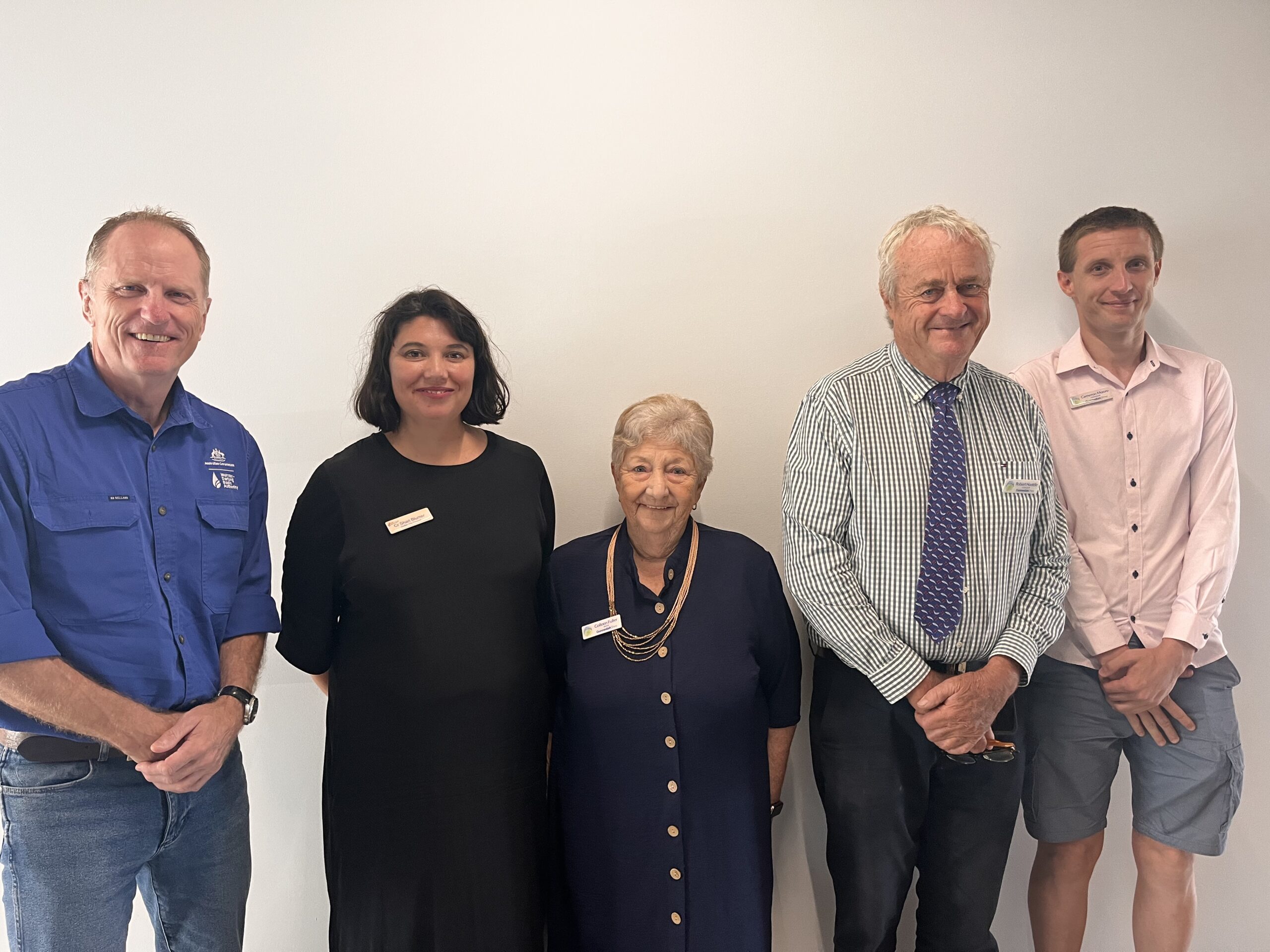
A forum was held in Gunnedah on Thursday, February 26 and was attended by over 40 people both online and in person. With special guests and speakers including CEO of MDBA Andrew McConville, national president of Murray Darling Association Cr Shari Blumer, executive officer of NW Water Directorate Brendan Guiney and CEO of NSW Irrigators’ Council Dr Madeline Hartley.
Gunnedah Shire councillor Robert Hoddle said that the meeting’s main purpose is to be able to provide the community with access to information from key speakers within the Murray-Darling Basin Plan.
“The purpose of today’s meeting is to bring key speakers here so that we can get information from them and so they can hear what things we want to put in our submission,” Cr Hoddle said.
“It’s a really important time for water and the basin. We’re looking at a number of issues in the basin, and it varies right across, but we want to know where the MDBA are going with their water plan.
“The last water plan was about buybacks, and it’s caused a lot of grief across the whole basin. We want to put an end to the buybacks and look at efficiency of use and where the water should go and how we can do better with the water to get the best possible outcomes for the communities.”
Mr McConville is focused on the future of the basin.
He hopes to adjust the plan to reflect the nuances of the northern area and look to strategies already in place to help keep it and the environment healthy and thriving.
“I think the basin plan, as it’s currently drafted, is probably a bit of a blunt tool for the north,” he said
“The north is an ephemeral system, that means it goes wet and it goes dry, so it has different flow patterns. A lot of the environmental water that we use here has to be delivered in-stream, in episodic events. We can’t store environmental water to achieve an outcome; we’ve got to be opportunistic.
“This part of the world is very dependent on groundwater as well, so how do we manage a groundwater ecosystem is different to how we might manage surface water.
“Understanding those differences and recognising actions that communities are taking around farm management practices, land use, managing the riverine environment, dealing with water
quality issues like carp. Taking steps that aren’t just about a volume or a flow of water.
“And rather than pulling one lever, which could be a restriction on use, say how about we use what we’ve done really well, look at other things we can do to help the efficiency with which we’re using water, and then maybe say, do we have enough?
“I don’t think we’ve necessarily gone through that process. We sort of jumped to the end and said, we have enough or we don’t. I think it’s more complex than that.”
For Mr McConville, now is the chance for people to really share their thoughts with the MDBA, and he hopes people supply a submission.
“The fact that people keep turning up asking good questions shows that A. this matters and B. they have real important views to bring forward, it speaks volumes about how important water is in this part of the world,” he said.
“We want to encourage people to make submissions, and that’s my biggest call to action is to make a submission.”
Dr Hartley who has spent her whole career working in water, water efficiency and water ethics, she said that the discussion paper released by the MDBA is significant for what it does not mention.
“The current framing of the Basin Plan Review discussion paper is striking for what it doesn’t say,” Dr Hartley said.
“There’s very little focus on communities and their irrigation efficiency improvement that have been delivered over the last 30 years of water reform.
“Irrigation in the basin today is not what it was in the 90s. On-farm efficiency, metering, compliance, automation, water use efficiency have all materially improved at cost to water users and their communities.
“Communities have restructured around smaller, less reliable water pools. That adjustment has not been cost-free to water users or their communities, and this must be recognised. Some of the policies driving these impacts have been cost-free to governments at a state or federal level and that needs to be questioned.
“If reform narratives are only describing what still needs to change and not what has already improved, they’ll start to sound punitive and not progressive and this is how governments will lose their social license to drive the next stage of reform.”
Dr Hartley also challenged what the MDBA meant by connectivity, noting the actuality of what that would look like differs from the MDBA and communities in NSW.
“Reform cannot be stacked like we’re saying through connectivity,” Dr Hartley said.
“It must be sequenced. It must acknowledge past effort and not just future demands, and it must expect efficiency of all water users, which includes the environment.
“What we can’t risk is water-use dependent communities like the Peel, the Namoi, the Gwydir disengaging from this discussion. Not because you reject sustainability, but because you may no longer believe the system is fair to water-efficient users and their communities.
“The MDBA has a role to highlight the work we’ve done in the past and you have a role to highlight this in your discussions. Water reform has always been hard, but after 30 years we should be at least getting better at it, and I would personally like to recognise the materially different approach the MDBA is taking to lead the conversation this time.
“For this reform to achieve future long-term success, community-led discussions will be critical.”
The Basin Plan has been under controversy for years, with the balance between communities, farmers, indigenous communities, as well as environmental factors making a difficult balance to meet.
The MDBA, however, did bring forward positive changes that have been witnessed over the years since the implementation of the Basin Plan.
“Overall across the basin, groundwater’s in pretty decent shape,” Mr McConville said.
“We’ve seen improvements in the last four or five years, which has been really positive.
“Our objective is a healthy working basin for all Australians and what we’ve got to try and do is make sure that we’ve got enough tools that when things get tough, that maybe we need to turn the lever one way and when we’ve got a bit more, we turn the lever the other way.”
In the coming months, MDBA is hoping to receive as much feedback as possible.
Submissions for feedback can be put through the Murray-Darling Basin Authority website.
Submissions close on Friday, May 1 at 5pm.
To order photos from this page click here