


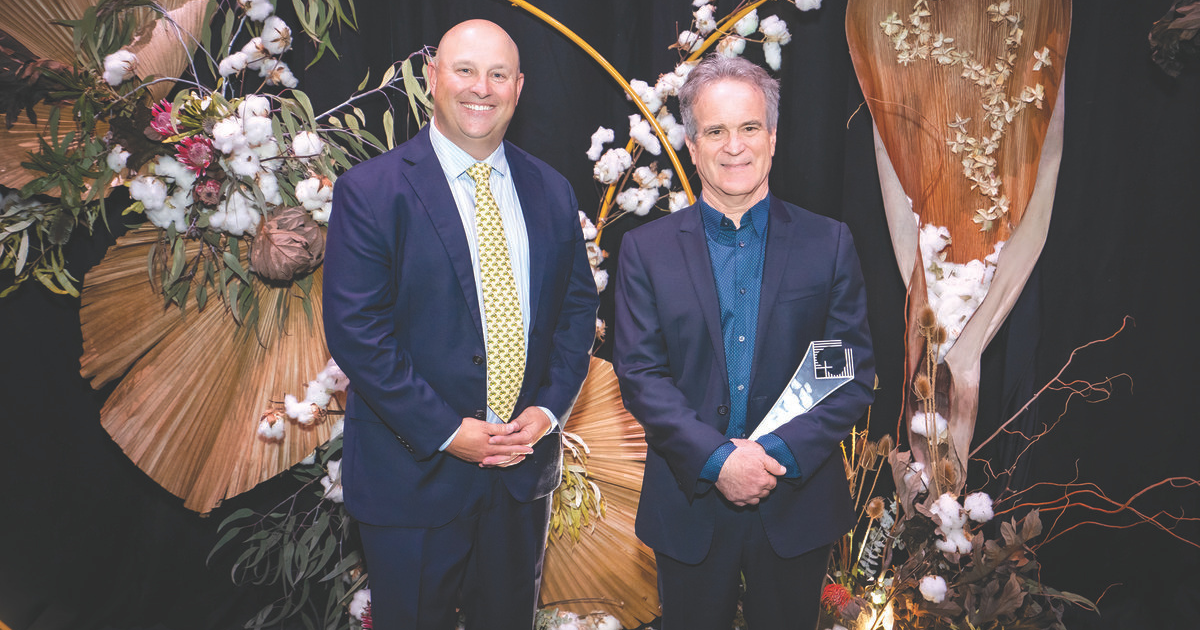
Two champions of the Australian cotton industry were honoured for their decades of leadership and advocacy, receiving the 2026 John Deere Service to Industry Award at the Cotton Industry Awards Dinner, held as part of the 2026 Australian Cotton Conference on the Gold Coast.
Allan Williams and the late Elizabeth Alexander were named recipients of the prestigious award, which recognises individuals who have made a lasting contribution to the Australian cotton industry through leadership, advocacy, innovation, research, education or long-term support for growers and the broader industry.
Cotton Australia chief executive officer Adam Kay said the dual award acknowledged two people whose influence had strengthened cotton communities, improved grower outcomes and helped enhance the reputation of Australian cotton at home and overseas.


“Allan and Liz have each made extraordinary contributions to Australian cotton, not through one single achievement, but through decades of commitment, practical leadership and service to others,” Mr Kay said.
“The Service to Industry Award is about recognising people who give their time, expertise and energy to help the industry move forward.
“Allan’s work in research, sustainability and best management practice has created enduring value for growers, while Liz’s passion and community spirit helped bring people together and inspired many others to step into leadership.”
Mr Williams has served the Australian cotton industry for more than three decades, with roles spanning research and development, sustainability governance and best-practice systems.
Raised on a cotton farm near Wee Waa, he has built a career translating research, policy and sustainability expectations into practical systems that support growers and regional communities.
As executive officer of the Australian Cotton Growers Research Association in the 1990s, Mr Williams led the development of the Australian cotton Best Management Practice program, which became the foundation for myBMP.
He later contributed internationally as senior agronomic advisor to the Better Cotton Initiative, helping shape the agronomic and sustainability foundations of what has become the world’s largest cotton sustainability program.
Since joining the Cotton Research and Development Corporation in 2012, Mr Williams has held senior leadership roles including research and development manager, general manager for research and development investment, and executive director.
He has also contributed through the National Landcare Advisory Committee and, from 2006 to 2026, as chair of the International Cotton Advisory Committee’s Expert Panel on the Social, Economic and Environmental Performance of Cotton.
Receiving the 2026 Australian Cotton Industry Service to Industry Award was a fitting tribute and especially meaningful because Mr Williams has recently stepped down as executive director of CRDC, bringing to a close a 14-year career at the Narrabri-based organisation.
“It was an absolute honour, and even more so as my father was also a recipient of the award in 1990,” Mr Williams told The Courier/Wee Waa News/Gunnedah Times.
“It was a really nice end to my career in cotton.”
Mr Williams said he was “a bit numb and very surprised” when he learned he would be presented with the award.
“It is humbling to be recognised by my peers,” he added.
Mr Williams said being described as a ‘champion of the Australian cotton industry’ sat with him “a bit uncomfortably, to be honest”.
“So many people contribute to the success of the industry, and my career would not have been as enjoyable and impactful as it was without the support of so many people over the years,” he said.
“Industry achievements are not the work of any one person or organisation. They reflect the efforts of many people over many years. Researchers, growers, consultants, extension specialists, industry bodies and tech providers have all contributed to building an industry that is recognised globally for its innovation, productivity, quality and willingness to embrace change.
“I am grateful to the people who supported me and gave me a chance, especially in the early days.”
Mr Williams praised his co-recipient of the award, the late Elizabeth Alexander.
“I had the pleasure of working with Liz during my time with the Australian Cotton Growers Research Association developing the Best Management Practice Program.
“Liz was a regional manager and supported the roll-out of the program in Emerald, and then when I was working for CRDC she was on the Board.
“Liz was a passionate advocate for the industry and for regional Australia, and understood the importance of being proactive when it came to the industry demonstrating its environmental credentials, and the opportunities that technology could provide to make life easier for growers.”
Mr Williams said his connection to the cotton industry began early, growing up on a cotton farm near Wee Waa, although a career in cotton was not always part of the plan.
After moving to Sydney to study, he completed a Bachelor of Science majoring in soil science and anatomy, along with an honours law degree, before working as a lawyer for two years.
It was the sudden passing of his father Richard in 1990 that helped Mr Williams decide to bring his family back home, to be near his mother, and ultimately set him on the path to a long career in cotton.
“Once I started my career in the cotton industry, as well as the fantastic people I got to work with, there was so much opportunity and variety given the focus on research and research policy,” he said.
“What’s the cliche? You can take the boy out of Wee Waa, but you can’t take Wee Waa out of the boy.”
Mr Williams’s father, Richard Williams, was an early supporter and promoter of research and development, understanding its value and importance if cotton was to become a sustainable industry for Australia.
“Dad’s lifelong passion was cotton and science, which led him to be a part of the group who formed the Australian Cotton Growers Research Association, which he chaired from its establishment in 1972 until his passing in 1990. He was Chair of Cotton Seed Distributors for 21 years, from 1968 to 1989,” he said.
“Dad believed in collaboration, vision, support and direct grower involvement in setting research priorities, which I believe are as important today as they were in the 1960s.”
Richard Williams was also involved in the establishment of CRDC in 1989–1990, when it initially had a staff of three, and highlighted the critical importance of grower feedback on research and development needs and priorities.
Mr Williams said the decision to leave Sydney and corporate life and move his family to Narrabri had been “momentous” at the time, but one he had never regretted.
“Our kids loved growing up in the country,” he said.
Mr Williams said his own rural upbringing had a positive impact on his outlook.
“Growing up on a farm certainly teaches you about accepting what is inside and outside your control,” he said.
“As well as the ongoing challenge of insect management, we had a series of floods in the 1970s, for example, and on one of the farms, seemingly regular hailstorms.
“But rather than packing it in, the response was always: what do we need to do to manage these risks?”
The theme of the 2026 Cotton Conference was ‘Future Fit Cotton’, and when asked about what was ahead for the industry, Mr Williams said: “The future is looking very bright.
“I was absolutely blown away by the number of people at the conference and how many younger people there were.
“Over my time in the industry, there has been an amazing increase in the number of women participating, and this was evident at the conference.
“It is an exciting time for the industry.”
Mr Williams also commented on the impressive array of technology on display.
While stepping away from his formal role marks the end of an important chapter, Mr Williams said he felt fortunate.
“I’ve been able to have such a great career, working nationally and internationally, and also enjoy the benefits of a rural home life,” he said.
“There is a lot I will miss, but I don’t think I’ll miss all the travelling.”
To order photos from this page click here