
Namoi Water rejects proposals to take water from Keepit or Split Rock dams to supply Tamworth and supports Gunnedah Shire Council’s concerns about the consequences for downstream communities, agriculture and regional economies.
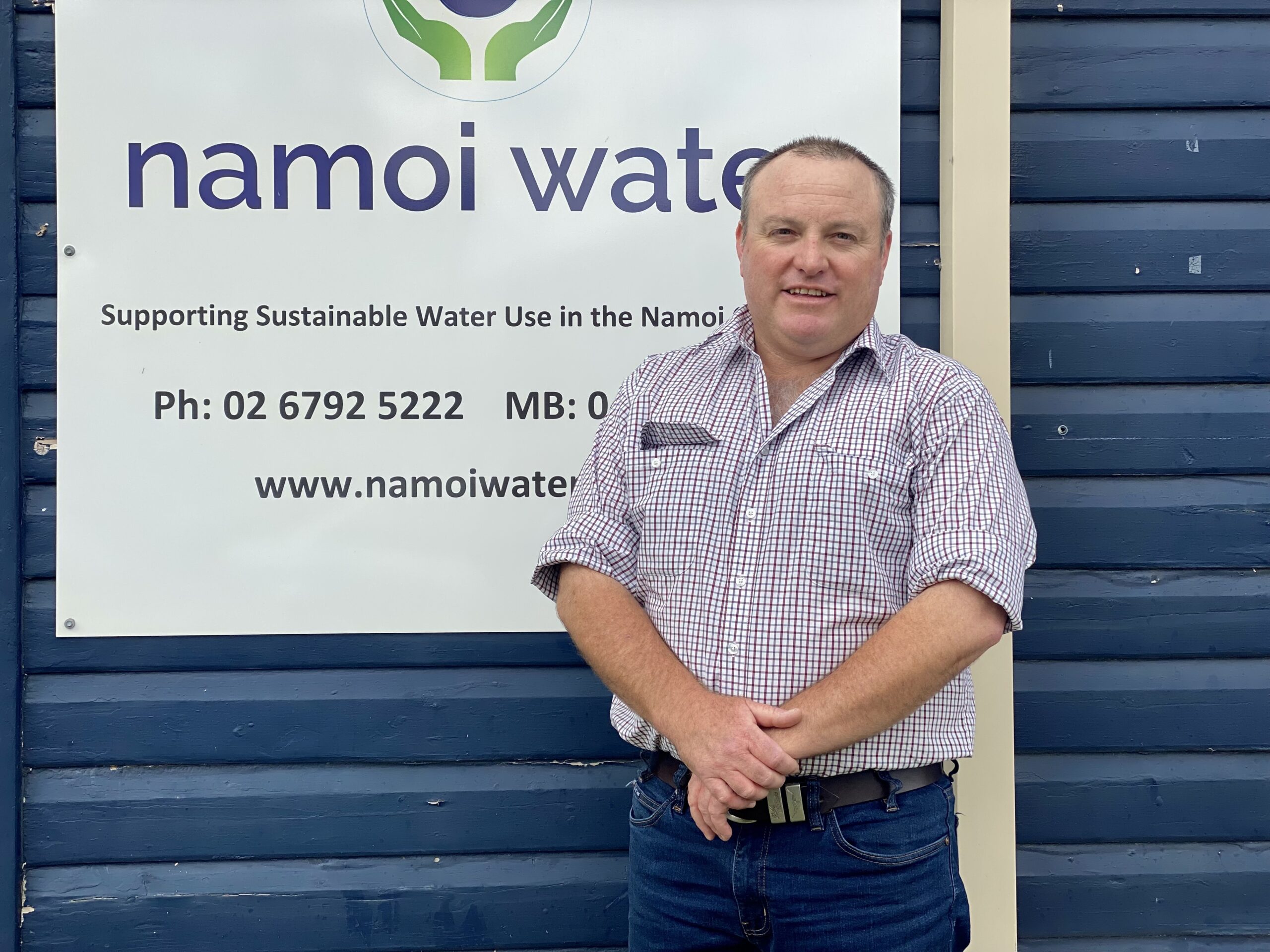
Responding to reports on Tamworth Regional Council’s draft water security plan, Namoi Water executive officer Mick Coffey said the organisation’s opposition extended to pipelines, storage reservations and changes to allocation rules that would redirect Namoi water to Tamworth.
“Namoi Water’s position is unequivocal. We oppose water being taken, reserved or reallocated from Keepit or Split Rock dams to supply Tamworth,” Mr Coffey said in a media statement.


“We support Tamworth securing its water future. That cannot come at the expense of the water security, livelihoods and future of communities across the Namoi Valley.
“The water in these dams already supports existing users, agricultural production, downstream communities and environmental requirements. It is not surplus water waiting to be redirected.”
Namoi Water supports investigation of the Manning-to-Peel alternative, including the potential use of existing Barnard River Scheme infrastructure, said the statement.
“That work should establish available water, environmental safeguards, engineering requirements and costs. It deserves serious investment as an alternative to redistributing scarcity within the Namoi,” Mr Coffey said.
“Recycling, demand management and other supply options must also receive proper consideration.
“We reject the Keepit and Split Rock options and support solutions that strengthen regional water security without diminishing it for downstream communities.”
Mr Coffey said suggestions that Gunnedah would be unaffected because its town supply comes from groundwater fundamentally missed the concerns being raised.
“Gunnedah’s interests extend well beyond the source of water coming out of household taps. Its farmers, businesses, workers and tourism operators depend on the wider Namoi system and the economic activity it sustains.
“We agree with Gunnedah that Tamworth’s water security must not be achieved at the expense of surrounding communities. Those concerns deserve a substantive response.
“Tamworth’s discussion appears to stop at Gunnedah. However, the Namoi River does not. Boggabri, Baan Baa, Narrabri, Wee Waa, Burren Junction, Pilliga and Walgett all have economies supported by the surface water stored in Keepit and Split Rock dams. Nor do the implications stop at Walgett.
“Flows from the Namoi contribute to the Barwon–Darling system, supporting communities, productive industries and river health further downstream.
“Whether a particular town draws its drinking water from a bore or a river does not remove its dependence on the farms, businesses and jobs that rely on those storages.
“Tamworth Council’s own plan acknowledges that it shares the Peel and Namoi systems with other water users.
“That recognition must extend to the downstream communities whose farms, businesses and jobs depend on Keepit and Split Rock. Their water security deserves the same consideration as Tamworth’s.”
Mr Coffey said the proposal also needed to be considered in the context of the existing water supply systems.
“Tamworth already draws on Chaffey Dam on the Peel River and Dungowan Dam on Dungowan Creek, both within the Peel catchment, which forms part of the broader Namoi catchment. Keepit Dam, on the Namoi River, and Split Rock Dam, on the Manilla River, support the Regulated Namoi system and the communities and industries that depend upon it.
“WaterNSW’s own history records why these dams were built. Keepit was constructed to boost agricultural production in the Namoi Valley. Split Rock was subsequently built to supplement Keepit and meet increased agricultural demand,” Mr Coffey said.
“The farms, businesses and downstream towns that developed around those investments are central to their purpose. Namoi water users continue to contribute to the cost of operating, maintaining and financing this infrastructure through their water charges. The NSW Government also funds a share on behalf of the broader community.
“Any proposal to redirect water to Tamworth must confront what that means for the communities these dams were built to support, and the existing users who continue to help pay for them.
“The water held in Keepit and Split Rock already supports an established balance of social, environmental and economic needs across the Namoi Valley. It sustains agricultural production, regional employment, community water supplies and river health,” Mr Coffey said.
“Any assessment of Tamworth’s proposal must consider that same triple bottom line for downstream communities. Why should improving Tamworth’s water security be considered acceptable if it diminishes the water security, economic opportunities or environmental outcomes of those downstream?
“A benefit to Tamworth cannot, on its own, be presented as a benefit to the region. The consequences for the communities supplying that water must carry equal weight.”
“If Wee Waa proposed a pipeline from the Barwon to underpin its future growth—taking water from communities in hotter, drier country and pumping it back towards a cooler, wetter area—it would be laughed out of the room. Why should Tamworth’s proposal to draw on Namoi storages be judged any differently?
“Calling it water security for Tamworth does not explain why another community should carry the resulting insecurity.”
Namoi Water also rejected the suggestion that water conserved by Tamworth residents was simply being given away to others.
“Tamworth residents’ conservation efforts deserve recognition. But describing water released from Chaffey as being ‘given to someone else’ overlooks the entitlements, operating rules and downstream requirements governing a shared river system,” Mr Coffey said.
“Water management decisions must account for everyone who depends on that system. Water remaining in a dam does not automatically become an unrestricted reserve for one council.”
Mr Coffey said the proposed trigger of 20 per cent storage in Chaffey Dam did not resolve the central questions about either pipeline.
“A construction trigger tells us nothing about whose water would be transferred, what would need to be reserved beforehand, or how existing users would be affected.
“Changing allocation rules instead of building a pipeline would still be unacceptable if it redirected Namoi water or reduced the reliability of existing users’ supplies.
“Presenting these proposals as occasional drought measures does not answer whether securing that emergency supply would require ongoing reservations or operational changes affecting other users.”
Namoi Water has previously sought disclosure of proposed extraction volumes, storage reservation assumptions, hydrological modelling and downstream economic impacts.
“The Government has advised that modelling has been undertaken. The assumptions and consequences must be made public so affected communities can scrutinise them,” Mr Coffey said.
“Claims of regional benefit must account for the costs and risks imposed on the whole region, including downstream communities.
“Our opposition is absolute. The future of the Namoi Valley is not negotiable collateral for Tamworth’s growth.”
To order photos from this page click here