


The time has never been better for Australians considering a ‘tree change’ to make the move and call regional Australia home.
Australia’s population clock ticked past 25.6 million this month; most of which is contained within the nations four largest cities – Sydney, Melbourne, Brisbane and Perth – and forecasts indicate the national population will continue to grow by around 400,000 (the equivalent population of Canberra) every year for the next 30 years.
However, the recent COVID-19 Pandemic may have ‘freed’ city workers from the idea that they need to be in a Central Business District to have a worthwhile career, as many workplaces found that ‘working at home’ is not a barrier to productivity.

Minister for Decentralisation and Regional Education Andrew Gee said, following the release in June of the Regional Australia Institute report The Big Movers: Understanding Population Mobility in Regional Australia, the time has never been better for Australians to make the move and call regional Australia home.
The report found that more than 1.2 million people moved to or within regional Australia between 2011 and 2016 – while 80% of Australians living in country Australia said they had no intention of leaving.
“After being stuck inside throughout the COVID-19 pandemic, I think a lot of Australians are dreaming of a ‘tree change’, and there’s no better time,” Minister Gee said.
“One of the biggest barriers people face when considering moving to the country is their career.
“COVID-19 has taught us that working from home is possible, with virtual technologies such as Zoom, Microsoft Teams and Google Meet helping to bridge the gap between the workplace and home.
“Decisions such as what to study, what career path to take, and whether to rent or buy are no longer tied to a city location.
“You can now have it all, and do it all, from a country location.”
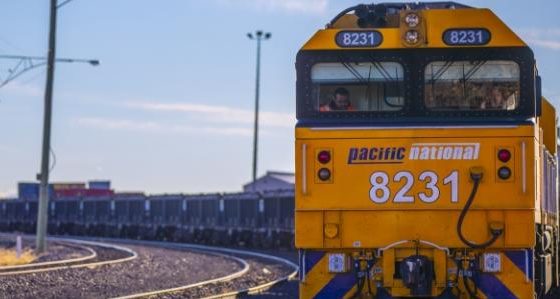
And Narrabri could be an ideal location for ‘tree changers’ as the next section of Inland Rail soon begins construction.
Inland Rail is set to revolutionise the nation’s freight and logistics sectors and logistics companies are already exploring relocating services from major cities to regional areas which have lifestyle and economic benefits for its workers.
Inland Rail will attract strategically placed intermodal depots for freight transfer as well as other businesses looking to capitalise on regional advantages such as cheaper land prices, stable work forces, affordable housing and the ability to establish a modern purpose-built facility.
Along the alignment a few regional centres already have benefits to spruik with Wagga Wagga (first), Albury-Wodonga (third) and Toowoomba (fouth) all ranked in the top 10 cities nationally in the 2014 Suncorp Bank Family Friendly City Report.
This report ranked cities based on factors including crime rates, health and availability of health resources, education resources and quality of schooling, housing costs and unemployment, income, childcare resources, broadband internet connectivity and community spirit.
The Federal Government’s House Standing Committee on Infrastructure, Transport and Cities has also been conducting an inquiry into the Australian Government’s role in city development and tabled a report in September 2018 calling for the development of a national plan of settlement across the country for the next 50 years, which will also sharpen the focus on regional development.
With recent debates about the level and impact of immigration on Australia, decentralisation also provides not only a means to help bridge the city-country divide, but also a mechanism to take the heat off population pressures on cities such as Sydney and Melbourne.
If existing patterns of settlement continue, an Australia of 50 million would mean a Sydney of over 10 million and a Melbourne of almost 10 million.
Given the challenges this would pose for transport, infrastructure, housing affordability and the still sought-after “Australian dream” of a home and backyard, the case for a more even geographical distribution of the national population is more than compelling.
The coming of Inland Rail may well be the beginning of reconciling the city with the country and reinvigorate the rural heartland of our nation as not simply a “nice place to live” but as a fresh frontier for free-enterprise and job creation.
Minister Gee said COVID-19 has unshackled workers from city CBDs, with major businesses now recognising that you can work from home while achieving a productivity boost at the same time.
“Simply put, working from home is here to stay and there is no reason why it has to be limited to the suburbs of the big cities,” he said.
“Affordable housing and unparalleled surroundings are just some of the attractions that saw over 400,000 people make the move interstate in 2018-2019, up 2.9 per cent from the previous year.
“We are likely to see this trend continue, as interstate property searches skyrocket.
According to Domain, in NSW alone interstate property searches were up 39 per cent for the far west region and 35 per cent for the Hawkesbury, Dubbo and Orana region (March 26 to May 4).
“Regional Australia offers an unbeatable quality of life, so we’d love to see more of our city cousins making the move. They’ll get a big warm country welcome when they do.”
To order photos from this page click here