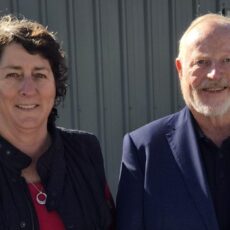


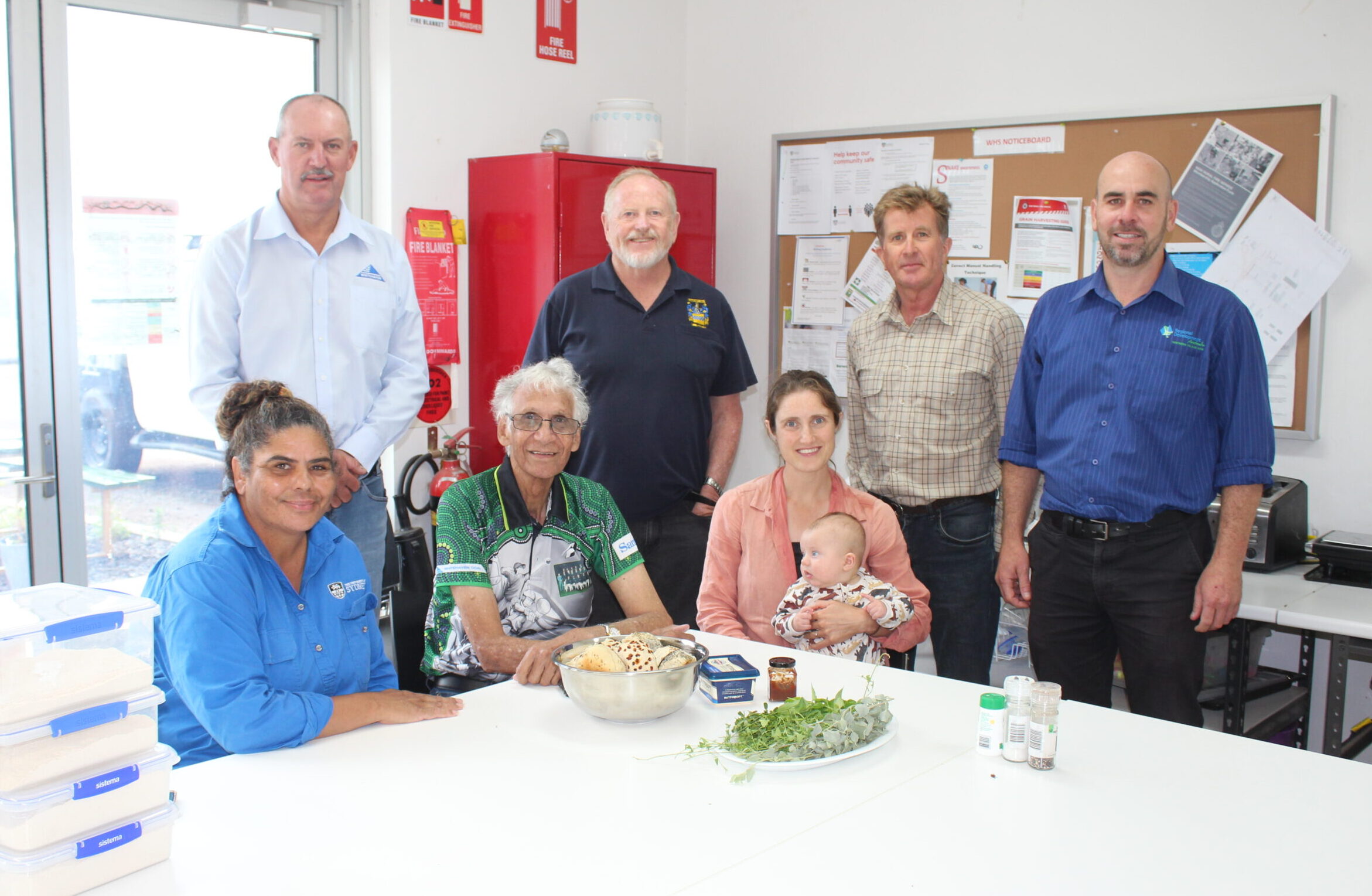
Gomeroi man Les Knox and Yinarr-Ma founder Kerrie Saunders are two of the local people interested in the commercialisation of traditional native grains.
They’re backed by science through an ongoing relationship with Dr Angela Pattison and the University of Sydney Plant Breeding Institute (PBI).
The three locals want to share the edible Australian grasses and seeds, of which there are a variety of species in the local area and beyond, by tapping into the national food market.


After years of brainstorming and collaboration, they are ready to take the next step in their journey towards commercialisation.
Last week, they met with stakeholders from the local and neighbouring communities.
Dr Pattison, Aunty Kerrie (who also works at the University of Sydney) and Uncle Les hosted a meeting at the PBI, with Narrabri and District Chamber of Commerce president Russell Stewart, Whitehaven Coal community relations manager Darren Swain, and Regional Development Australia (RDA) Northern Inland’s representatives David Thompson and Nathan Axelsson.
The native grains team shared their expertise with the guests, explaining the work that has been done so far.
“There’s a range of edible seed varieties in local grassland species, such as pigweed, salt bush and other common grasses,” Dr Pattison explained.
“The conditions for these plants varies, with some preferring winter and others prospering in summer.
“And these native grains have a lot of potential when it comes to eating and cooking – some can be consumed raw as kibble, others can be popped like popcorn, boiled like rice, and even ground up into a variety of flours.”
Uncle Les spoke of his hopes to share the grains, as well as the indigenous culture they represent, with consumers across the country.
“I certainly see a great opportunity here,” he said.
“We have a great network of potential connections which we can collaborate with, including researchers, growers and local experts.”
Dr Pattison shared a supply system diagram with the meeting attendees, to give a visual idea of the product potential.
“The supply chain for native grains is a little more complex than that of the horticulture industry,” she said.
“For example, working backwards from buying an apple at the supermarket is generally straightforward.
“You purchase the fruit, which has been secured by the grocery store from a wholesaler, who has usually ordered from the growers and pickers on-farm.
“Whereas, with native grains, the system has a few more steps.
“They start in the field, where the seeds are harvested.
“Next, the product is cleaned off-site – this produces the raw food-grade grain.
“Branching off from that, the seeds are milled or otherwise processed, often at another external site.
“This creates the flour, which can be sold off for cooking – from here, it can be distributed to either a wholesaler, retailer or restaurant.
“So, there’s a few different options in terms of where a potential product can fit along this chain.”
Dr Pattison went on to explain the different types of native grains available locally.
“I suggest targeting specific grain varieties, including native millet (guli), mitchell grass (ganalay), purslane (dhamu, known as pigweed), salt bush (binamaya) and acacia seed,” she said.
“And, in growing and harvesting these species, we’d rather a native grassland as opposed to a farm crop for its healing potential for country and people.
“Which is where groups like Whitehaven come in.”
With 27,000 hectares of local land dedicated to flora rehabilitation, Whitehaven have great experience in growing native grasslands.
Apart from livestock feed, mine sites are the main buyers of unprocessed native grain seeds.
“We’re more than happy to be involved however we can,” Mr Swain said.
“We already have existing agreements with rehabilitation groups that allow us to grow native grains so there would be potential to collaborate with an Indigenous grains project too.
“Obviously, there’s an advantage to mine site rehabilitation, because you’re starting fresh and you can be sure that only the target species are grown and harvested there.
“This is certainly a partnership Whitehaven would be interested in pursuing.”
The external support continued, with the chamber’s Mr Stewart also keen to help out however possible.
“I think this is a great opportunity for the local economy, and for the Gomeroi culture,” he said.
“It’s backed by science, which tells us the grains have great nutritional value, and supports the traditional culture of our lands.
“The Aboriginal people have the oldest continuous culture in the world, and they lived off the land, so our health can benefit greatly from incorporating more of these native foods into our diet.”
Aunty Kerrie echoed Mr Stewart’s comments, explaining the healing potential of rediscovering historically significant foods like these native grains.
“When I first started learning about traditional ingredients, and how to use natives in my cooking, it was a very empowering feeling,” she said.
“There’s a lot of talk about healing country and culture, and a product like this can help do exactly that.
“Back in the old times, some of these plants had up to five or six uses, so there’s definitely potential to explore some of those traditional methods even now.
“Plus, thanks to the academic support of Angela and the university, it’s like we’re putting together the pieces of the puzzle – the old people knew all those years ago how good native grains are for health, and now we’re able to prove that fact with science.”
Dr Pattison expanded further on the benefits of native grains, explaining why the product would be considered a health food in the Australian market.
“Some of these seeds have up to 25 per cent protein in them – that’s more than a legume,” she said.
“Science also suggests that native grains are good for gut health and digestion. Plus, they’re naturally gluten free, which makes the product even more marketable.
“But ultimately, this is about so much more than a saleable product – native grains have the potential to heal, educate and connect.”
As far as the group is aware, Aunty Kerrie’s Yinarr-Ma is the only commercial outlet exploring the potential of native grains in north west NSW .
Her small business shares bushwalking and the gathering of bush food, medicine and materials across Gomeroi country.
However, Aunty Kerrie’s capacity is restricted by how much product can be harvested by hand.
She also has limited access to the processing resources needed to mill the seeds into flour.
These problems may be solved if the native grains can be planted and harvested over large areas, hence the discussion with Whitehaven for a partnership with mine rehabilitation sites.
If they are successful, the collaboration could be the first in Australia to sell native grain flour commercially.
The RDA team was very interested in supporting the project, saying they’d crunch some numbers and chat with other experienced growers to establish yield data estimates.
“Defining the market size and supply potential is our main priority,” Mr Thompson and Mr Axelsson told the group.
They gathered contacts from Uncle Les to study further, before everyone sat down to share lunch together.
Attendees ate locally foraged native salad greens, quandong jam on spelt bread rolls with dhamu, binamaya or cooba kibble, prepared by Dr Pattison.
To order photos from this page click here