


UPDATE – 2.53pm, Tuesday:
The NSW SES is directing people in the following area(s) to EVACUATE BEFORE 7:00 pm Tuesday due to expected rising flooding:
- Narrabri Big Sky Caravan Park and surrounding low lying areas.
You must evacuate before this time because of rising flood water.


Evacuation Information
- Narrabri Showground, 13 Wukawa Street, Narrabri NSW
If you remain in the area, you may become trapped without power, water, and other essential services. It may be too dangerous for NSW SES to rescue you, and buildings may not be able to withstand the impact of flood water.
Original story – 2.04pm, Tuesday:
The Bureau of Meteorology has advised the Narrabri Creek at Narrabri is currently at 4.40 m and steady, below the minor flood level.
The Narrabri Creek at Narrabri is likely to exceed the minor flood level (4.90 m) Tuesday afternoon.
The creek may exceed the moderate flood level (6.40 m) Wednesday afternoon. The creek may reach around the major flood level (6.70 m) overnight Wednesday into Thursday.
Further rises are possible as upstream flows arrive.
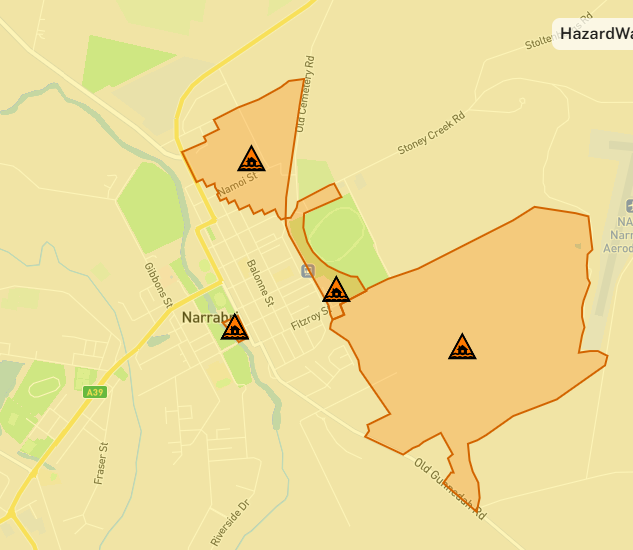
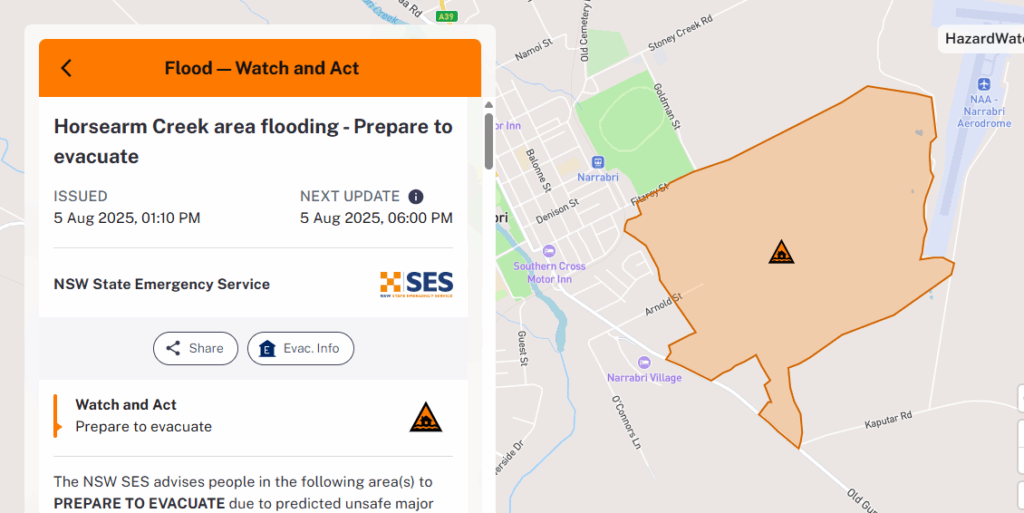
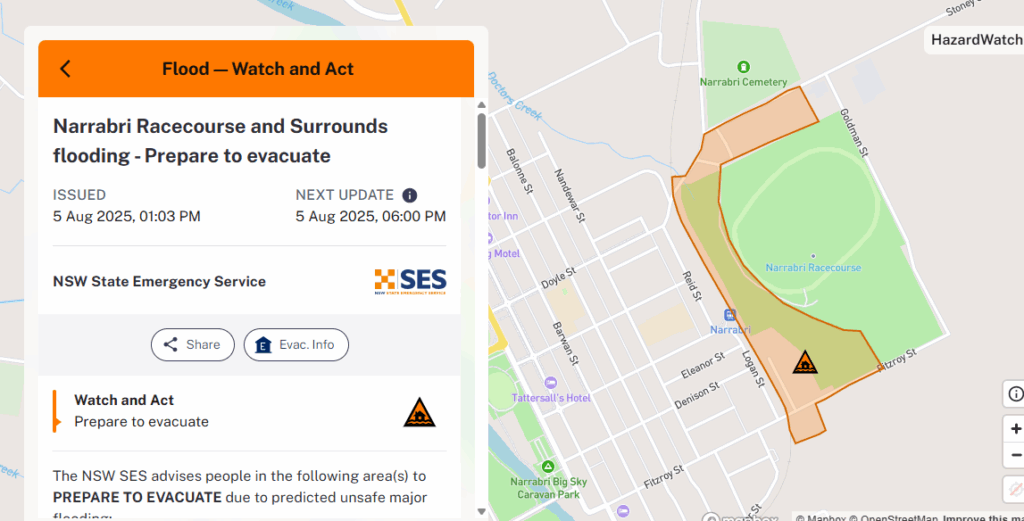
Based on predictions from the Bureau of Meteorology, the following areas may be impacted by dangerous floodwaters:
- Parts of Narrabri between Francis Street and Old Cemetery Road
- Narrabri Industrial Estate
- Parts of Namoi Street
- Narrabri Caravan Park
- Narrabri Racecourse and surrounds
- Eastern parts of Narrabri between the racecourse and the airport
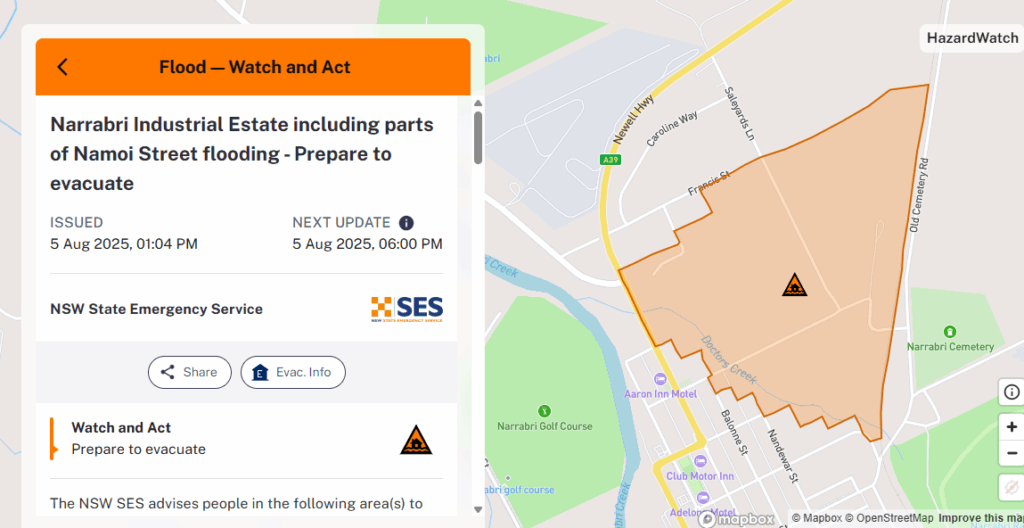
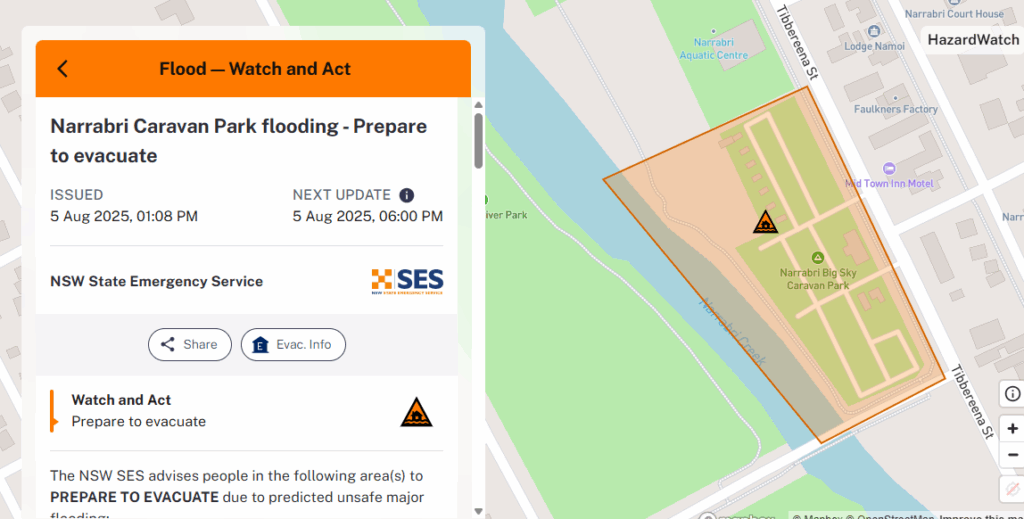
This event may change quickly. NSW SES will monitor the situation and update warnings if the situation changes.
According to information from the SES, if you are unable to find accommodation, evacuation centres have been set up at:
- Crossing Theatre, 117 Tibbereena Street, Narrabri
- Narrabri Showground, 13 Wukawa Street, Narrabri (for people needing to leave Narrabri Caravan Park)
If you remain in the area, you may become trapped without power, water, and other essential services. It may be too dangerous for NSW SES to rescue you.
What you need to do:
- If you have a Home or Business Emergency Plan, follow it. Otherwise, have a conversation and plan for what you will do and take with you if you need to evacuate.
- Have your mobile phone close and pack your charger, battery-powered radio, medicine, rain gear, warm clothes, blankets, baby and pet items, water, food, torch, something to attract attention, and valuables like photos and insurance or banking records.
- Wear enclosed shoes and pack warm clothes for at least three days to manage unseasonably cool conditions.
- Check your vehicle fuel levels and towed equipment (e.g., horse floats, trailers) to ensure you can safely evacuate.
- Arrange to evacuate to the home of family or friends who are in a safe location away from present and potential flooding. Consider how to transport your pet(s) and companion animals.
- Lift important belongings up onto tables, beds, benches, and shelves above predicted flood levels.
- Collect or create sandbags by filling pillowcases or shopping bags with sand and place them around doorways and in toilets and over drains to prevent rising sewage.
- Relocate waste containers, chemicals, and poisons well above flood level.
- Investigate whether there are other hazards (e.g., severe storms, landslip, flash floods) that will impact your ability to evacuate.
- Avoid storm drains and pipes, ditches, ravines, creeks, and rivers.
- Never drive, walk, ride through, play or swim in floodwater – it is dangerous, toxic, and may void your car insurance. If it’s flooded, forget it. Fines apply.
- Obey all signs about road closures and instructions from emergency services.
- People working or camping along the river should monitor river heights and be prepared to relocate to higher ground.
- Farmers should consider moving pumps and farm equipment to higher ground.
For more information:
- Listen to your local ABC radio station which can be found at reception.abc.net.au
- Listen to your local ABC radio station, ABC New England North West 99.1FM
- Download the Hazards Near Me app and set your watch zones to get warning information for your areas.
- Follow us on social media @NSWSES or visit our website at www.ses.nsw.gov.au
- Learn about your risk at www.ses.nsw.gov.au/knowyourrisk
- Check latest weather, warnings, rainfall and river heights at www.bom.gov.au/nsw
- Check road closures at www.livetraffic.com.au or 132 701 or your local Council.