


The Coalition has announced a proposed Fuel Price Shield that would automatically halve fuel excise when the two-week average closing price of Brent crude rises above US$100 a barrel.
Under the proposal, the tax reduction would be worth about 27 cents a litre, or around $15 for a typical tank of fuel.
The policy would also temporarily reduce the heavy vehicle road user charge to zero, which the Coalition says would provide direct relief to truck and bus operators while reducing costs across the broader economy.

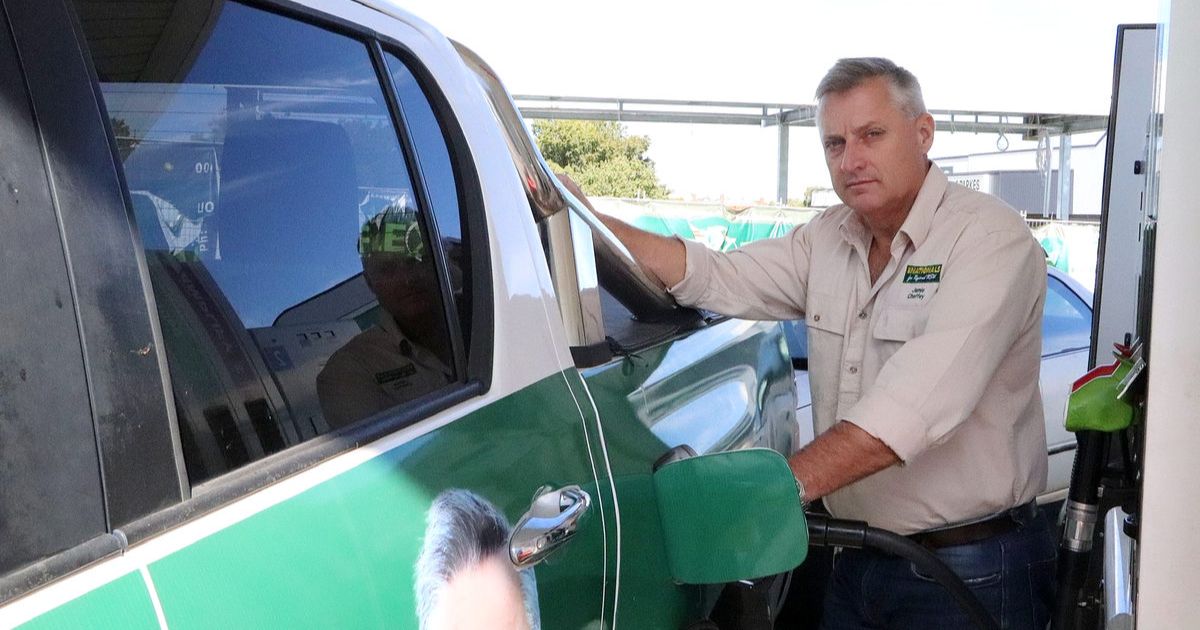
Federal Member for Parkes Jamie Chaffey said sharp increases in global oil prices quickly flowed through to households and businesses in regional communities.
The state government’s Fuel Check site showed regular unleaded prices ranging from $2.39 to $2.539 in Narrabri, $2.42 to $2.479 in Wee Waa, $2.495 in Boggabri, and $2.375 to $2.429 in Gunnedah late last week.
Diesel prices varied from $2.79 to $2.99 in Narrabri, $2.85 in Wee Waa, and $2.799 to $2.829 in Gunnedah. Premium diesel prices were closer to the $3 mark.
“Fuel is not a luxury,” Mr Chaffey said.
“Families and businesses in the Parkes electorate need it to get to work, take the kids to school and keep their businesses running.
“When global events send oil prices through the roof, families should know there is a clear automatic safeguard in place to provide temporary and targeted relief.
“The Fuel Price Shield would provide certainty.
“When a serious oil shock hits, the tax comes down automatically.
“When oil prices return to more normal levels, the ordinary rate is restored.
“For a family filling a typical tank, the Fuel Price Shield would mean around $15 staying in their pocket instead of going in tax.”
Mr Chaffey said higher fuel costs had a particularly significant impact in regional Australia, where residents often had to travel long distances for essential services.
“In regional Australia including the electorate of Parkes you cannot just decide to stop driving.
“People often need to travel long distances for work, school, medical appointments and the weekly shop.
“Higher fuel prices also flow through the entire economy.
“They increase the cost of moving food, freight and supplies around our country.
“The Fuel Price Shield is designed to provide temporary relief when international oil markets experience an exceptional shock, while ensuring the ordinary arrangements return once that shock has passed.”
Under the proposal, the changes would take effect from the Monday after the trigger date.
The shield would remain in place until either the eight-week average Brent crude price falls below US$100 a barrel or three months have passed since it was triggered.
The government could extend the measure after reviewing global oil prices and market conditions.
The heavy vehicle road user charge would be reduced from 32.4 cents per litre to zero cents per litre.
The Coalition says this would allow truck and bus operators to claim the full 26.85 cents per litre value of the fuel excise back as a Fuel Tax Credit, which could then be used to offset GST obligations when lodging Business Activity Statements.
According to Coalition analysis, the Fuel Price Shield would have been triggered twice in the past five years – during the global oil price shocks of early 2022 and March 2026.
The Coalition says the measure would have operated for about six months during the 2022 shock and three months during the March 2026 shock.
The policy is estimated to cost about $950m for each month it is activated.
The current federal budget assumes that oil prices will return to around US$80 a barrel by mid-2027.
The announcement forms part of a broader Coalition fuel security plan, which includes more than doubling minimum stockholding requirements for critical fuels to 60 days and establishing an $800m Australian Fuel Security Facility to support more than 1 billion litres of new fuel storage capacity, with a focus on diesel.
The Coalition also plans to establish a daily public fuel dashboard showing fuel supply levels in real time.
It would also support investment in new and prospective refining capacity through the Fuel Security Services Payment, and remove barriers to increasing Australian fuel supply.
In response to the Coalition’s proposal, Treasurer Jim Chalmers described it as uncapped and unfunded.
Mr Chalmers was also reported as saying that the government had not been discussing or considering a cut to the fuel excise.
To order photos from this page click here