


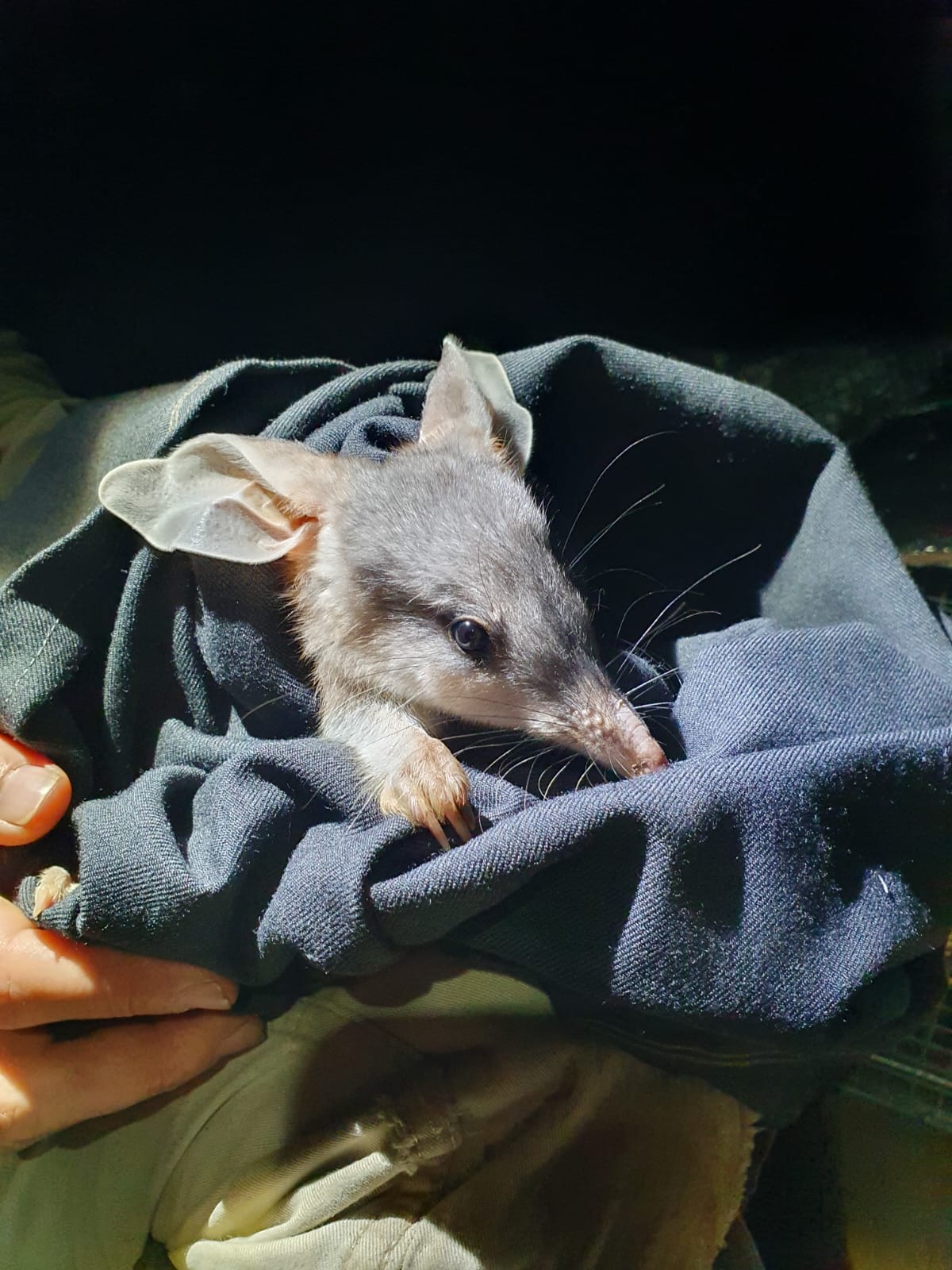
Population of the bilby is continuing to grow in the Pilliga State Conservation Area.
Australian Wildlife Conservancy estimates numbers have reached 175, 20 more than the previous year and three times the founding population.
The news came as part of AWC’s annual bilby census.


Since the greater bilby was reintroduced to the Pilliga State Conservation Area in 2018, the population has undergone boom and bust in line with weather conditions.
Last year, despite the turmoil of two flood events, bilbies maintained good numbers with a population estimate of 175 individuals and signs of successful reproductive recruitment.
Bilbies were reintroduced to the Pilliga almost a century after disappearing from the north-west NSW landscape. AWC with NSW National Parks and Wildlife
Service (NPWS) released 60 individuals into a 680 ha feral predator-free breeding area, where they have stayed until the final predator, a red fox, could be removed from the wider 5800 ha fenced area. Fortunately, the predator was ‘outfoxed’ by a couple of floods in October/November 2022 – just as the bilby population neared maximum capacity in the breeding area.
During a trapping survey in December 2022 (the eighth survey on the population), ecologists captured 110 individuals. Of these, 48 bilbies were captured for the first time and 17 of the 25 females caught were carrying pouch young. This led to a population estimate of 175.
Although the December 2022 population estimate is lower than that obtained from the July 2022 survey (335), it is almost three times the founding population.
Dr Vicki Stokes, AWC senior wildlife ecologist, said survey results indicate that the population is doing well and they are likely to thrive in the wider fenced area.
“The Pilliga experienced two extreme weather events in October and November last year which we believe contributed to the discrepancy between survey results and population estimates in July and December 2022,” Dr Stokes said.
“High rainfall and flash flooding of creeks and forest areas may have resulted in mortality of some bilbies, particularly if burrows were impacted by the floods.”
“However, the high proportion of females with pouch young encountered during the December 2022 survey coupled with the healthy body weights and body condition of captured animals and sightings of numerous juveniles in February, suggest that the species continues to do well.”
The annual bilby census was conducted in the last 12 months at six AWC protected areas – Mount Gibson (WA), Yookamurra (SA) and Scotia (NSW) Wildlife Sanctuaries along with the newly introduced population at Newhaven Wildlife Sanctuary (NT) and two partnership project areas in the Pilliga and Mallee Cliffs National Park (NSW).
In 2023, the overall estimated bilby population at AWC sanctuaries is at least 3315, more than double the 1480 estimated individuals in 2022 and 1230 in 2021.
The increase in numbers can be attributed to several factors – a new population established at Newhaven Wildlife Sanctuary, the first estimate of a population established for several years at Mt Gibson Wildlife Sanctuary, and generous rainfall across most of Australia which replenished the landscape and provided good conditions for breeding.
Dr John Kanowski, AWC’s chief science officer welcomed the increase in the overall bilby population, saying it reiterates AWC’s position as a global leader in successful threatened species reintroductions.
“The greater bilby once occurred across 70 per cent of mainland Australia, and sadly, is now only found within some 20 per cent of its former range,” said Dr Kanowski.
“This decline represents the loss of our natural heritage, the loss of cultural heritage for Indigenous people, and the disruption of important ecological processes – for example, as ‘ecosystem engineers’, bilbies turn over several tonnes of soil per annum to create fertile pockets and perfect germination conditions for plants.”
“Through fenced refuges, such as those established by AWC, we have been able to return the bilby to six ecosystems from which they’ve become extinct and provide them with safe environments in which they can safely breed and fertilise their numbers.
“Re-establishing the species across its former range is also important for maintaining long-term adaptive potential.”
During surveys over the last year, ecologists were thrilled to encounter several juveniles and pouch young – 17 of 25 females captured during Pilliga’s December survey were carrying pouch young, while Newhaven Wildlife Sanctuary recorded its first photo evidence of a juvenile in November and observed juvenile tracks during a tracking survey.
Detections of young animals are a significant measure of the bilby’s ability to survive into adulthood within the safe havens.
The process of breeding also means new recruitment of individuals for the protected populations which will contribute to larger population estimates in the near future.
To order photos from this page click here